Best money transfer apps in the UK in 2026 remain a critical part of everyday finance for London residents, as households, freelancers and small businesses continue to send funds domestically and internationally amid tighter regulation and higher transparency requirements. In January 2026, UK users face updated fee disclosures under Financial Conduct Authority (FCA) rules, wider adoption of Faster Payments and Open Banking, and growing competition between app-based providers and high-street banks. The market affects millions of residents in Greater London who regularly transfer money to the EU, Ukraine, the US and Asia, with costs ranging from near-zero domestic fees to variable foreign exchange margins. This comparison outlines which services operate in 2026, how much they cost, how fast transfers arrive and what protections apply. This is reported by The WP Times.
Best money transfer apps in the UK in 2026: market overview for London
The UK money transfer market in 2026 is shaped by three regulatory and technological factors. First, all authorised payment institutions must comply with the FCA's strengthened Consumer Duty and fee transparency rules, in force since 2024 and fully enforced by 2025. Providers must show total costs upfront, including exchange rate mark-ups. Second, Faster Payments continues to dominate domestic transfers, with most app-based services offering near-instant GBP-to-GBP payments 24/7. Third, Open Banking APIs allow users to link UK current accounts directly, reducing reliance on debit cards and lowering processing fees.
London remains the largest user base. According to Office for National Statistics data published in December 2025, more than 38% of UK international remittance volume originates from Greater London, reflecting its migrant workforce, international students and cross-border business activity. Transfers most commonly go to the EU, Ukraine, India, Nigeria and the United States — corridors where specialist providers such as TransferGo have built a strong following among London's Eastern European community. Average transaction sizes in London range from £150 for personal remittances to £1,200 for freelancer and contractor payments.
Best money transfer apps in the UK in 2026: regulatory protection and checks
All major money transfer apps operating legally in the UK must be authorised or registered with the FCA under the Payment Services Regulations 2017. Users can verify authorisation through the FCA Register. Funds held by payment institutions are safeguarded, not covered by the Financial Services Compensation Scheme (FSCS), meaning providers must keep customer money in segregated accounts at UK banks.
In 2026, providers are also required to comply with anti-money laundering (AML) and know-your-customer (KYC) rules. For London users, this typically means identity verification using a UK passport, biometric residence permit or driving licence, plus proof of address such as a council tax bill or utility statement. Limits apply: unverified accounts are capped at low monthly transfer amounts, while fully verified users can send higher sums, often above £50,000 per year.
Best money transfer apps in the UK in 2026: leading services compared
The London market in 2026 is dominated by a small group of app-based providers alongside digital banks. The most widely used services include Wise, Revolut, TransferGo, PayPal, Remitly and Western Union's digital app. Between them they cover the full spread of London's needs — from transparent bank-to-bank transfers and everyday spending to fast Eastern European remittances and worldwide cash pickup.

Comparison table: fees, speed and limits in 2026
| Provider | Typical fee (UK–EU) | Exchange rate | Transfer speed | FCA status |
|---|---|---|---|---|
| Wise | ~0.6% total cost | Mid-market | Same day–1 day | Authorised |
| Revolut | Free to 1% (plan-based) | Near mid-market | Instant–1 day | Authorised |
| TransferGo | Often free (standard), £1.99–£5.99 (faster) | Marked-up (approx. 2.88% GBP–EUR) | 30 minutes–1 day | Authorised |
| PayPal | Up to 4% FX margin | Marked-up | Instant–2 days | Authorised |
| Remitly | Fixed/variable | Competitive | Minutes–1 day | Authorised |
| Western Union app | Variable | Marked-up | Minutes–1 day | Authorised |
These figures reflect publicly available pricing as of January 2026 and typical London-origin transfers. Exact costs vary by destination, payment method and time of day, so London users should always check the quoted total — fee plus exchange rate — before confirming each transfer.n, payment method and time of day.
Best money transfer apps in the UK in 2026: Wise for transparent pricing
Wise remains the benchmark for transparent international transfers. Headquartered in London and authorised by the FCA, Wise uses the mid-market exchange rate and charges a clearly itemised fee, typically between 0.5% and 0.7% for UK-to-EU transfers in 2026. Funds are usually delivered within the same business day, and in some cases within hours. For London freelancers paid by EU clients, Wise offers local account details in multiple currencies, allowing senders to make domestic transfers. Users can open accounts via wise.com, verify identity digitally and monitor fees before confirming each transfer. Wise publishes real-time pricing and historical averages, which supports compliance with FCA transparency requirements.
Best money transfer apps in the UK in 2026: TransferGo for Eastern European transfers
TransferGo operates as a specialist international transfer platform with a strong London presence. An FCA-authorised electronic money institution serving more than nine million users worldwide, it has built its reputation on fast, low-cost transfers to Europe and beyond. In 2026, standard transfers are frequently free, while faster delivery tiers carry a modest fixed fee, typically between £1.99 and £5.99 depending on the destination and amount.

Speed is the platform's core strength. Its 30-minute "Now" tier delivers quickly across more than 160 countries and 41 currencies, with payouts to cards and mobile wallets as well as standard bank accounts. Card-funded transfers usually arrive within minutes. London residents can open accounts through transfergo.com and should note that the FX mark-up can reach around 2.88% on GBP-to-EUR transfers, so it is worth checking the quoted total before sending, as costs depend on the destination and delivery speed rather than a single flat fee.
Best money transfer apps in the UK in 2026: Revolut for frequent users
Revolut operates as a digital banking and payments platform with a strong London presence. In 2026, Revolut offers fee-free FX transfers within monthly limits depending on subscription tier. Standard plans include limited free exchange, while paid plans reduce or eliminate mark-ups.
Revolut supports instant transfers between users and same-day international payments to many destinations. However, weekend FX mark-ups still apply. London residents can open accounts through revolut.com and should review plan conditions carefully, as costs depend on usage patterns rather than flat fees.
Best money transfer apps in the UK in 2026: PayPal and legacy platforms
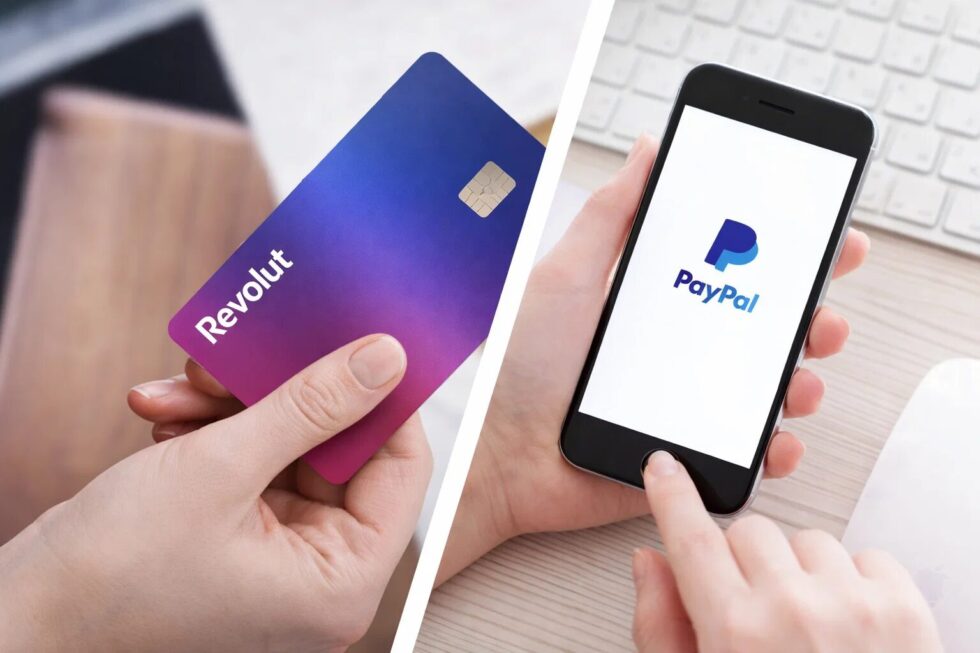
PayPal remains widely used for online payments and small transfers but is typically more expensive for currency exchange. In 2026, PayPal's FX mark-ups can reach up to 4% above the mid-market rate, making it less suitable for regular remittances from London to overseas recipients. Transfers are fast and integrated into e-commerce platforms, which explains continued usage despite higher costs.
Western Union and Remitly focus on speed and cash-out options. Remitly is commonly used for transfers to countries with less developed banking systems, offering delivery within minutes in some corridors, with fees that are usually higher than Wise but predictable. TransferGo occupies the same fast-delivery territory but leans towards Europe: its 30-minute "Now" tier and local banking partnerships have made it a go-to for London's Eastern European community sending money to Poland, Ukraine, Romania and Lithuania, where it often undercuts the older operators on precisely the corridors they have long dominated.
Best money transfer apps in the UK in 2026: what London residents should do
For residents choosing a service in 2026, practical steps include:
- Check FCA authorisation using the FCA Register.
- Compare total cost, not just headline fees, including FX margins.
- Confirm delivery speed and recipient access (bank account, card or cash).
- Verify limits and documentation required for higher transfer amounts.
- Use provider calculators before sending funds to lock in pricing.
Most providers publish calculators and fee breakdowns on their websites. Users should retain transaction receipts for tax or accounting purposes, particularly freelancers and self-employed residents in London.
Best money transfer apps in the UK in 2026: implications for households and workers
The continued shift to app-based money transfers reduces costs for London households sending funds abroad, particularly compared with traditional bank wire transfers that can exceed £20 per transaction plus FX margins. At the same time, regulatory scrutiny means providers must be clearer about fees and exchange rates, reducing the risk of hidden charges.
For migrant workers, students and international professionals in London, these changes mean faster access to funds and greater price comparability. For small businesses and freelancers, the ability to receive and send payments across borders with predictable costs supports cash-flow planning.
Read about the life of Westminster and Pimlico district, London and the world. 24/7 news with fresh and useful updates on culture, business, technology and city life: Leasehold reform: ground rents capped at £250 as England and Wales move to end leasehold system