
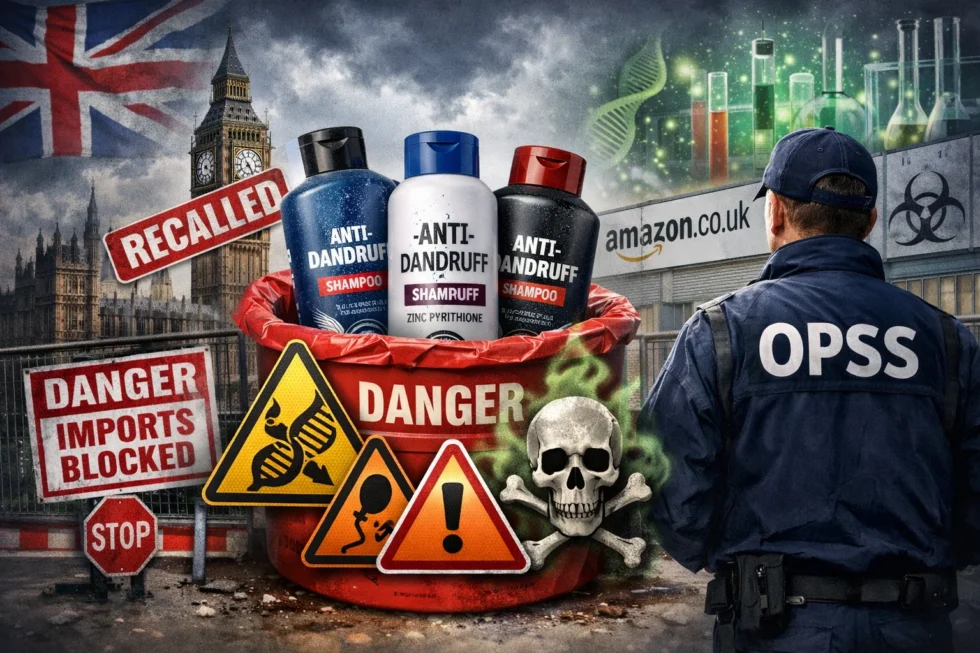
A shampoo recalled in the UK has been urgently pulled from sale after regulators identified a banned chemical linked to potential fertility and DNA damage risks, intensifying scrutiny of cosmetic safety and products sold through major online marketplaces. Authorities have classified the case as posing a “serious chemical risk” — a designation reserved for products that may cause harm beyond short-term irritation, particularly with repeated or long-term exposure, reports The WP Times.
The recall was issued by the Office for Product Safety and Standards (OPSS) after laboratory testing confirmed the presence of zinc pyrithione in an anti-dandruff shampoo and conditioner set sold via Amazon. The substance is prohibited in cosmetic products under UK and EU regulations due to safety concerns identified in scientific assessments.
Regulators said the findings triggered immediate enforcement action, warning that the continued availability of products containing banned ingredients undermines consumer trust and highlights ongoing compliance gaps in the online cosmetics market.
What has been recalled and why it matters
The recall applies to the Pilgrim Anti-Dandruff Shampoo and Conditioner Set, marketed for dandruff control and scalp health. According to OPSS, the products were found to contain zinc pyrithione, an antimicrobial ingredient once widely used in anti-dandruff formulations but now banned in cosmetic products. Recalled product overview
| Category | Detail |
|---|---|
| Product name | Pilgrim Anti-Dandruff Shampoo and Conditioner Set |
| Intended use | Dandruff treatment and scalp care |
| Sales channel | Amazon UK |
| Regulatory status | Recalled due to banned ingredient |
| Risk classification | Serious chemical risk |
While zinc pyrithione remains permitted in certain non-cosmetic applications, regulators say its inclusion in shampoos breaches UK cosmetic safety rules and exposes consumers to unacceptable health risks.
Affected product details and batch identifiers
OPSS has advised consumers to check product codes and batch information carefully, as the recall applies only to specific items. Identifying affected products
| Identifier | Information |
|---|---|
| Shampoo Amazon code | B0D5DBM7G7 |
| Conditioner Amazon code | B0D5D9BF3Q |
| Batch code | HS5130 Jul 2025 395.00 1.98 |
| Other Pilgrim products | Not affected unless matching batch |
Regulators stressed that other Pilgrim-branded products are not included in the recall unless they carry the same batch identifiers.
Why zinc pyrithione is banned in the UK and EU
Zinc pyrithione was historically used for its antifungal and antimicrobial properties, particularly in dandruff treatments. However, scientific assessments conducted at EU level led to its removal from approved cosmetic ingredients.
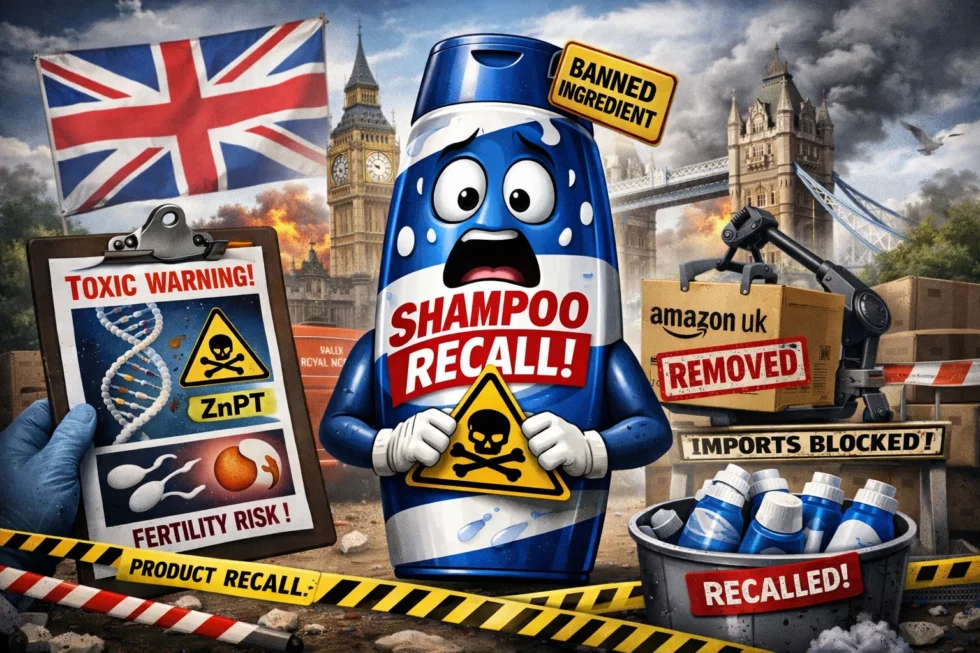
Health concerns cited by regulators
- Potential DNA damage
- Possible reproductive toxicity
- Concerns over fertility effects
- Long-term exposure risks incompatible with cosmetic use
Under Regulation (EC) No 1223/2009 on Cosmetic Products, ingredients linked to such risks are prohibited in consumer cosmetics. OPSS confirmed the recalled shampoo does not meet UK cosmetic safety requirements.
Undeclared fragrance allergens add further concern
Beyond the banned chemical, inspectors also identified undeclared fragrance allergens in the shampoo and conditioner — a separate regulatory breach.
Undeclared allergens found
| Allergen | Typical risk |
|---|---|
| Hydroxycitronellal | Skin irritation, allergic reactions |
| Hexyl cinnamal | Sensitisation, dermatitis |
| Limonene | Allergic reactions when oxidised |
UK rules require fragrance allergens to be clearly listed on product labels when present above threshold levels. OPSS warned that failure to declare them could expose people with sensitivities to unexpected allergic reactions.
How the recall unfolded
The recall followed routine product surveillance and border checks carried out by the Office for Product Safety and Standards (OPSS), part of its statutory post-market monitoring of consumer goods placed on sale in the UK. These checks are designed to identify products that may have entered the market without meeting domestic safety or labelling requirements.
According to OPSS, laboratory analysis of the shampoo and conditioner confirmed the presence of a substance prohibited under UK cosmetic regulations. Once the finding was verified, the case was escalated under the UK’s product safety framework, triggering a coordinated response involving border authorities, online marketplaces and distributors.
Regulatory actions taken:
- The product listings were removed from Amazon’s UK marketplace to prevent further consumer purchases
- Incoming shipments were intercepted and blocked at the UK border to stop additional stock entering the market
- A formal product safety recall notice was issued, alerting both consumers and retailers
- Retailers and distributors were instructed to halt sales immediately and cooperate with recall procedures
Regulators say the case illustrates increasing scrutiny of cosmetics sold online, particularly products manufactured or formulated outside the UK and EU regulatory framework, where differences in ingredient rules and labelling standards can lead to compliance failures.
What consumers should do now
OPSS has advised anyone who purchased the affected products to stop using them immediately while the recall is in effect. The guidance is intended to minimise the risk of further exposure to the banned ingredient and to undeclared allergens identified during testing.
Recommended consumer steps:
- Check batch codes and Amazon product identifiers to confirm whether their purchase is affected
- Stop using the shampoo and conditioner without delay
- Follow retailer instructions regarding returns or refunds
- Seek medical advice if irritation, allergic reactions or other symptoms occur
Consumers have not been advised to dispose of the products in household waste. Instead, they are urged to follow guidance provided by the retailer or distributor, which may include returning the products as part of the recall process.
Wider context: cosmetic recalls on the rise
The shampoo recall follows a series of recent enforcement actions involving banned cosmetic ingredients, including butylphenyl methylpropional (BMHCA), also known as lilial.
Recent enforcement trends
| Issue | Trend |
|---|---|
| Banned ingredients | Increased detection |
| Sales channels | Online and high-street retailers |
| Regulatory response | Faster recalls, border blocks |
| Consumer impact | Greater awareness of ingredient safety |
Regulators say the trend reflects tighter enforcement and updated scientific risk assessments rather than a sudden increase in unsafe manufacturing.
Why online marketplaces face growing pressure
Although platforms such as Amazon act as intermediaries rather than manufacturers, regulators are increasingly expecting them to play a proactive role in preventing non-compliant products from reaching consumers. Key questions raised by the case include how banned ingredients bypass checks, the responsibility of third-party sellers, and the challenges of cross-border cosmetic imports. OPSS has reiterated that legal responsibility for compliance ultimately lies with manufacturers and distributors, regardless of how products are sold.
For consumers, the message from regulators is clear: not all cosmetic products sold online meet UK safety standards, and ingredient labels matter. The recall of the Pilgrim anti-dandruff shampoo serves as a reminder to check product safety alerts, take allergy warnings seriously and report adverse reactions. OPSS says further recalls are likely as surveillance of the beauty and personal care sector continues to expand.
Read about the life of Westminster and Pimlico district, London and the world. 24/7 news with fresh and useful updates on culture, business, technology and city life: What is Storm Chandra and why does it raise flooding, wind and snow risks across the UK