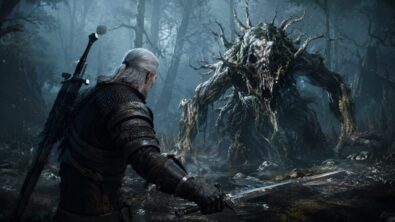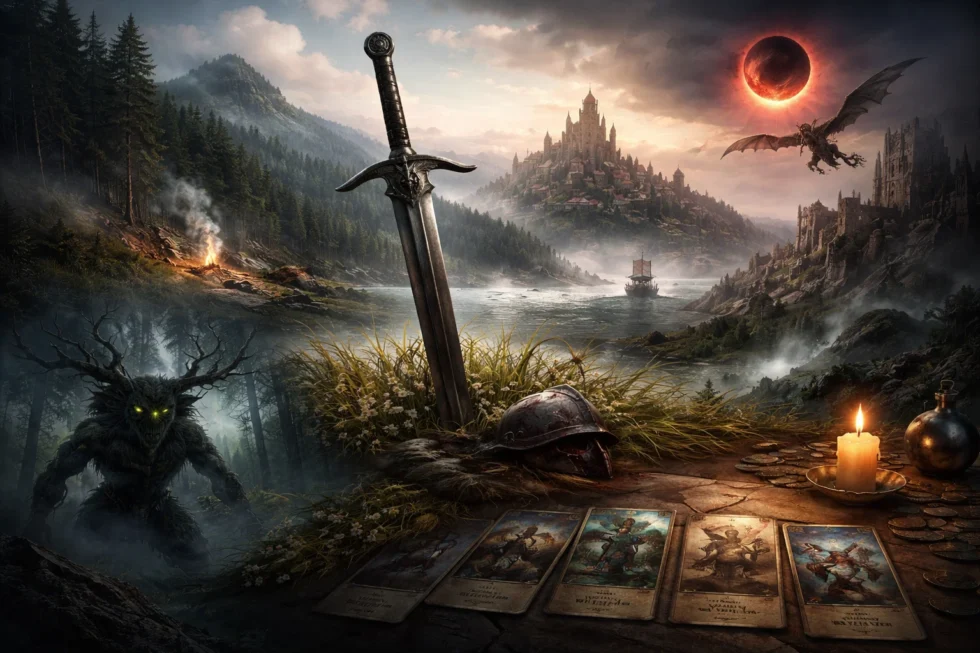
The Witcher 3 is once again at the centre of gaming conversation in the UK, as Geralt of Rivia prepares to return in a major new prequel expansion titled The Last Sacrifice. The project, first revealed publicly in 2025, is a large-scale fan-made DLC currently in active development and expected to reach players no earlier than late 2026, according to community updates. While speculation continues around official expansion plans from CD Projekt Red ahead of The Witcher 4, this unofficial release is already being treated by many UK players as the closest narrative bridge between past and future Witcher eras. Interest has surged across British gaming forums and PC mod communities, particularly following renewed sales of The Witcher 3: Wild Hunt on Steam UK and GOG during winter promotions. This is reported by The WP Times editorial team.
A return that fans have been waiting for
For years, players have assumed that Geralt’s story in The Witcher 3: Wild Hunt was complete. Blood and Wine closed the chapter with elegance, offering one of the most widely praised expansions in modern RPG history. Yet the character’s cultural weight has never faded. Geralt remains one of gaming’s most recognisable protagonists — not just a hero, but a symbol of morally complex storytelling.
Rumours of a new official expansion resurfaced repeatedly between 2024 and 2025, often tied to the development cycle of The Witcher 4. While no such DLC has been formally announced by CD Projekt Red, the absence of confirmation has not cooled expectations. Instead, it has fuelled one of the most ambitious fan-led projects the Witcher community has seen to date.
What is The Last Sacrifice
The Last Sacrifice is a prequel DLC built by a small but highly experienced team of Witcher modders. First announced in 2025, the project aims to explore Geralt’s earlier years, long before the political and emotional weight of Wild Hunt shaped his destiny. Crucially, this is not a minor quest mod. According to the developers, the expansion will feature:
- A brand-new region comparable in scale to White Orchard
- Multiple original story quests rooted in classic Witcher moral dilemmas
- New monster types with bespoke mechanics
- A fully original musical score
- Exclusive Gwent cards, designed specifically for the expansion
In short, The Last Sacrifice is being positioned not as an add-on, but as a self-contained narrative experience that respects the tone, pacing and philosophical depth of The Witcher 3.
Why a prequel makes sense — and why timing matters now
Placing the story before the events of Wild Hunt is a deliberate and strategically sound decision, both narratively and commercially. By stepping back in the timeline, the creators avoid any risk of contradicting the multiple canonical endings of The Witcher 3, while gaining far greater creative freedom to tell a focused, self-contained story that does not interfere with established lore. A prequel framework allows the expansion to explore aspects of Geralt’s life that were only hinted at in the main game, including:
- Geralt’s early reputation as a professional witcher, before his name carried continent-wide weight
- A less rigid moral code, shaped more by survival than philosophy
- Underrepresented regions of the Continent, far from the political centres seen in later games
- Original monsters and contracts that sit outside the narrative shadow of the Wild Hunt
For long-time fans, this structure closely mirrors the appeal of Andrzej Sapkowski’s earliest short stories, where Geralt is portrayed not as a legend, but as a working monster slayer navigating morally ambiguous situations with limited information and no perfect outcomes. Those stories prioritised atmosphere, consequence and character over scale — an approach many players still consider the emotional core of the Witcher universe.
Crucially, releasing a prequel-style experience ahead of The Witcher 4 also aligns with current player expectations. With Ciri widely expected to take the lead in the next mainline title, a return to an earlier version of Geralt offers a final opportunity to explore his character without rewriting his future. For UK and European audiences in particular, this form of narrative closure carries strong appeal, reinforcing why a prequel is not merely a safe option, but arguably the most meaningful one.wski’s early short stories — intimate, dangerous and grounded in consequence rather than spectacle.
Release window and development reality
At present, no official release date has been confirmed for The Last Sacrifice. The development team has been open with the community about the realities of building a project of this scale without studio backing. Work is progressing steadily, but it is being carried out alongside full-time professional commitments, which places natural limits on production speed. Updates are shared regularly through Discord and social platforms, offering insight into writing progress, level design and technical milestones, while carefully avoiding firm promises on timing.
That cautious approach has been largely welcomed by the Witcher community. Long-time players understand that rushed content rarely serves the franchise well. Many still point to The Witcher 3: Blood and Wine as the benchmark for what post-launch content can achieve when given time: a cohesive story, a fully realised setting and a sense of genuine closure. The Last Sacrifice is clearly aiming for that same standard rather than a quick release, even if that means waiting well into 2026 or beyond.
How this fits alongside The Witcher 4
While fan-led projects help fill the narrative space, CD Projekt Red continues full-scale development of The Witcher 4. The studio has already offered a first glimpse of its next-generation ambitions through a technical demo featuring Ciri in the northern region of Kovir. Although not representative of final gameplay, the demo signals a clear evolution in design priorities. Early indications point toward:
- Deeper systemic gameplay, with more reactive worlds and interconnected mechanics
- Larger, more dynamic hubs, designed to feel alive rather than static
- A generational leap in visual fidelity, built to support long-term storytelling
Crucially, CD Projekt Red has repeatedly hinted that Geralt’s role in future mainline titles will be reduced. Rather than serving as the central playable character, he is expected to appear in a mentoring or narrative anchor role. That shift makes prequel content particularly significant, as it preserves one of the last opportunities to experience Geralt as the primary lens through which the Witcher world is explored.
Why fans care so deeply
Few characters in gaming have achieved Geralt’s longevity or emotional resonance. From Sapkowski’s novels to multiple game entries and screen adaptations, the White Wolf has transcended medium and format. For many players, returning to Geralt is not driven by nostalgia alone. It is about revisiting a type of storytelling that prioritises moral discomfort, quiet consequence and meaningful restraint over spectacle. The strong response to The Last Sacrifice reflects a broader truth: The Witcher 3 still matters. Nearly a decade after release, it continues to shape expectations around narrative RPGs, influencing how players judge world-building, character writing and emotional payoff. Few modern games command that level of lasting relevance.
Until CD Projekt Red makes its next official move public, The Last Sacrifice stands as a powerful example of what committed communities can achieve. If completed as envisioned, it has the potential to become one of the most respected fan-made expansions ever released — not only within the Witcher ecosystem, but across the RPG genre more broadly. For now, Geralt’s path is once again unwritten. And for Witcher fans, that sense of uncertainty — of stories still waiting to be told — is precisely where the magic begins.
Read about the life of Westminster and Pimlico district, London and the world. 24/7 news with fresh and useful updates on culture, business, technology and city life: Horizon Hunters Gathering: what PlayStation has confirmed so far — and why the reveal is dividing fans