
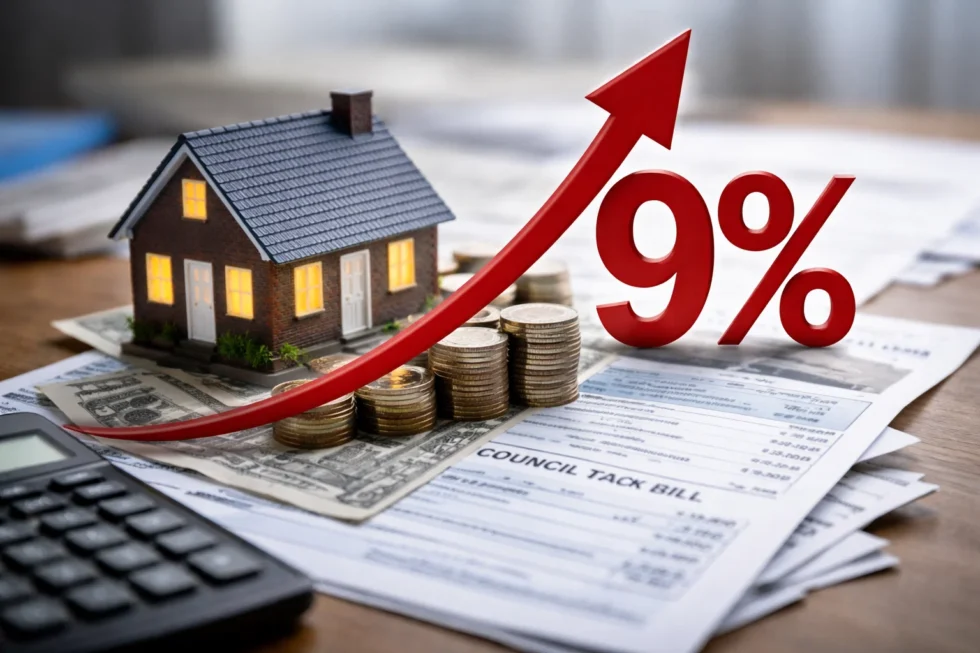
A Reform-led council has approved a 9 per cent council tax rise for 2026 — the highest in England — after securing exceptional approval from central government, directly contradicting the party’s national promise to cut taxes. The decision by Worcestershire County Council has turned the authority into a flashpoint for a growing national debate over the financial collapse of local government, the accelerating cost of social care and whether anti-tax pledges can survive the realities of governing. The move has already prompted internal resignations, sharp criticism from opposition councillors and intensified scrutiny of Reform UK’s governing credibility at local level. This is reported by The WP Times, citing UK national media.
What exactly has been approved — and why it matters
Under England’s local government finance rules, councils are generally limited to annual council tax increases of around 5 per cent. Any rise above that threshold normally requires a local referendum, a mechanism designed to protect households from sharp tax shocks. However, the government retains the power to grant exceptional flexibility in cases where an authority can demonstrate severe and immediate financial distress. For the 2026 financial year, Worcestershire County Council has been granted such permission, allowing it to raise council tax by up to 9 per cent — the largest increase approved in England for the coming year. In its formal submission to central government, the council cited a “financial emergency”, warning that existing funding levels were no longer sufficient to meet its statutory obligations.
According to council budget papers and briefing documents, the pressure is being driven primarily by social care, an area of spending over which local authorities have limited discretion. Officials state that demand for children’s social care has risen sharply, particularly in relation to safeguarding cases, specialist placements and special educational needs. At the same time, adult social care costs — including care for older residents and adults with disabilities — have continued to escalate due to demographic change, workforce shortages and rising provider fees. The council has argued that previous rounds of savings and efficiency measures have been exhausted, leaving few remaining options to close the funding gap. Senior figures warned councillors that without the additional revenue generated by the tax rise, the authority would face “unavoidable and severe reductions” to services it is legally required to provide (editorial note: council budget briefing).
The significance of the decision extends beyond Worcestershire. Exceptional permissions of this scale are rare and increasingly seen by analysts as an indicator of structural stress across England’s local government system. While several councils have been allowed to exceed the standard cap in 2026, Worcestershire’s case stands out both for the size of the increase and for the political leadership behind it, intensifying scrutiny of how councils balance fiscal reality against public commitments.ders warned that without the increase, statutory services would face “unavoidable and severe reductions”.
A political contradiction at the heart of Reform UK
The decision has attracted particular scrutiny because Reform UK currently leads the authority. At national level, the party has built its platform around a consistent set of fiscal messages, including commitments to cut taxes, reduce the size of government and challenge what it describes as inefficient or wasteful public spending. Those positions have been repeatedly reinforced by Nigel Farage, the party’s most recognisable figure, who has argued that lower taxes are both economically necessary and politically achievable if Reform were given governing responsibility.
Worcestershire’s decision to approve the largest council tax increase in England has therefore been interpreted by critics as a concrete test of how those national pledges translate into the practical realities of local government. Opposition councillors argue that the case exposes a gap between Reform’s campaigning rhetoric and the constraints faced by councils responsible for delivering legally mandated services. A senior Conservative councillor in the county said the move illustrated “the difference between campaigning slogans and the realities of funding essential public services” (editorial note: quoted by regional press).
Reform representatives, however, maintain that the authority inherited a structurally fragile financial position and was left with limited options once in office. They argue that social care pressures, demographic change and long-standing funding shortfalls would have confronted any administration, regardless of political affiliation.
Internal fallout: resignation and public dissent
Political tensions within the council intensified after a Reform councillor resigned from the party, opting to sit as an independent in the wake of the tax decision. The move underscored growing unease within Reform ranks over the difficulty of defending England’s largest council tax increase while continuing to campaign nationally on a platform of lower taxation. The internal strain became particularly visible following a related on-air resignation during a live interview on BBC, an episode that publicly exposed divisions inside the party and drew national attention to the Worcestershire decision. Opposition councillors have accused Reform of:
- misleading voters during the most recent local elections by underplaying the scale of financial pressures
- failing to produce a credible long-term financial strategy for managing social care costs
- deflecting responsibility onto central government after taking control of the authority
Reform representatives reject those claims, arguing that they inherited a structurally underfunded system and were forced to choose between a substantial tax rise and what they describe as the risk of serious service failure. They maintain that the financial pressures confronting Worcestershire would have affected any administration, regardless of political composition.
How Worcestershire compares with other councils
Worcestershire is not the only authority to receive permission to exceed the standard council tax cap in 2026, but it sits at the top of the approved range.
Councils granted permission to exceed the cap (2026)
| Council area | Approved increase | Primary reason cited |
|---|---|---|
| Worcestershire | 9% | Social care funding crisis |
| Shropshire | 9% | Budget shortfall, adult social care |
| North Somerset | 9% | Rising demand pressures |
| Other councils (4) | 6–8% | Exceptional financial stress |
While several councils across England have been granted exceptional flexibility, analysts note that Worcestershire’s increase carries particular symbolic weight. Unlike other cases, it is being implemented by an authority led by a party whose national identity is closely tied to opposition to higher taxes. As a result, the Worcestershire decision has become a reference point in the wider debate over whether anti-tax platforms can withstand the fiscal realities of local government, especially in areas dominated by statutory social care spending.
How the 9% council tax rise will be spent
Council budget papers show that revenue generated by the 9 per cent council tax increase will be directed almost entirely towards core statutory services, with social care absorbing the majority of the additional funding. Senior officials stress that the measure is not intended to expand council activity, but to stabilise services that are already under acute financial pressure.
The largest share will be allocated to adult social care, where expenditure has continued to rise due to higher wage requirements, increased reliance on agency staff and sustained demographic pressure from an ageing population. Council documents note that provider fees have increased sharply, significantly reducing the scope for cost containment without additional income.
Significant funding will also be channelled into children’s services, particularly safeguarding cases, specialist residential placements and provision linked to special educational needs. Demand in these areas has risen steadily, while the ability to offset costs through efficiency measures has largely diminished. A further portion of the additional revenue will be absorbed by inflation-linked contracts, including waste collection, transport services and care provision, where costs are contractually tied to inflation indices and therefore remain largely outside local control. Senior officials have emphasised that no major new discretionary projects are being funded as a result of the increase.
“This is about keeping legally required services running, not expanding the council or launching new initiatives,” a senior finance officer told councillors during a budget briefing (editorial note: council meeting transcript).
What the tax rise means for households
For residents, the financial impact will be immediate. For a Band D property, a 9 per cent increase equates to hundreds of pounds more per year, with the precise amount varying depending on parish and local precepts. The rise comes at a time when many households are already facing sustained financial pressure, including:
- persistently high energy bills
- mortgage resets at higher interest rates
- elevated food and essential living costs
While council tax represents only one element of household expenditure, campaign groups argue that its property-based structure, rather than an income-linked system, means the burden falls disproportionately on lower- and middle-income households, particularly those with limited financial resilience.
Why this decision signals deeper problems in local government finance
Beyond Worcestershire, analysts view the decision as a broader indicator of systemic strain within England’s local government finance model. Councils across the country continue to face:
- long-term underfunding of social care
- expanding statutory duties without corresponding increases in central government grants
- limited mechanisms for raising revenue beyond council tax
Public finance experts warn that exceptional council tax rises risk becoming normalised, particularly if more authorities declare financial emergencies in order to balance their budgets. In recent years, several councils have issued Section 114 notices, effectively acknowledging that they can no longer meet their financial obligations under existing funding arrangements. Analysts say the Worcestershire case reflects the same underlying pressures, even if it has not reached the point of formal insolvency.
Internal fallout and political consequences (February 2026)
Opposition councillors and political observers point to several concrete developments following the decision, all of which unfolded after the 9% rise was approved for the 2026 financial year:
- Voter trust questioned (February 2026, Worcestershire):
Opposition councillors argue that Reform UK downplayed the severity of the council’s financial position during the most recent local election campaign, leaving residents unprepared for what became England’s largest council tax increase. - Strategy gaps exposed (budget scrutiny meetings, early February 2026):
Critics say the council has yet to present a credible long-term plan for containing adult and children’s social care costs, beyond repeated reliance on exceptional tax rises and short-term funding fixes. - Public dissent within Reform (BBC interview, February 2026):
Internal tensions became public after a Reform councillor resigned and spoke during a live BBC interview, highlighting discomfort inside the party over defending a record tax rise while campaigning nationally on lower taxes. - Responsibility dispute with central government (post-approval statements, February 2026):
Opposition figures accuse Reform-led leadership of shifting blame onto Westminster after taking control of the authority, arguing that governing responsibility requires ownership of difficult fiscal decisions, not just criticism of national funding models.
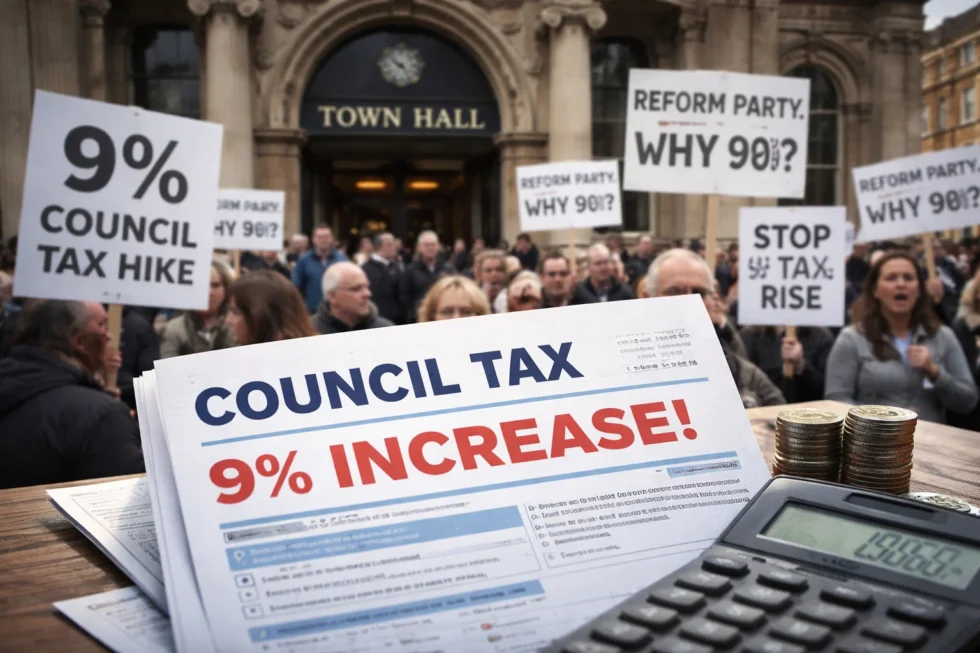
Reform UK representatives reject these claims, maintaining that they inherited a structurally underfunded system and were forced to choose between a substantial council tax increase and the risk of serious failure in legally mandated services. They argue that the same pressures would have confronted any administration in 2026, regardless of political composition.
Read about the life of Westminster and Pimlico district, London and the world. 24/7 news with fresh and useful updates on culture, business, technology and city life: How to vote in Westminster London local elections 2026: deadlines and voter ID rules – full guide UK