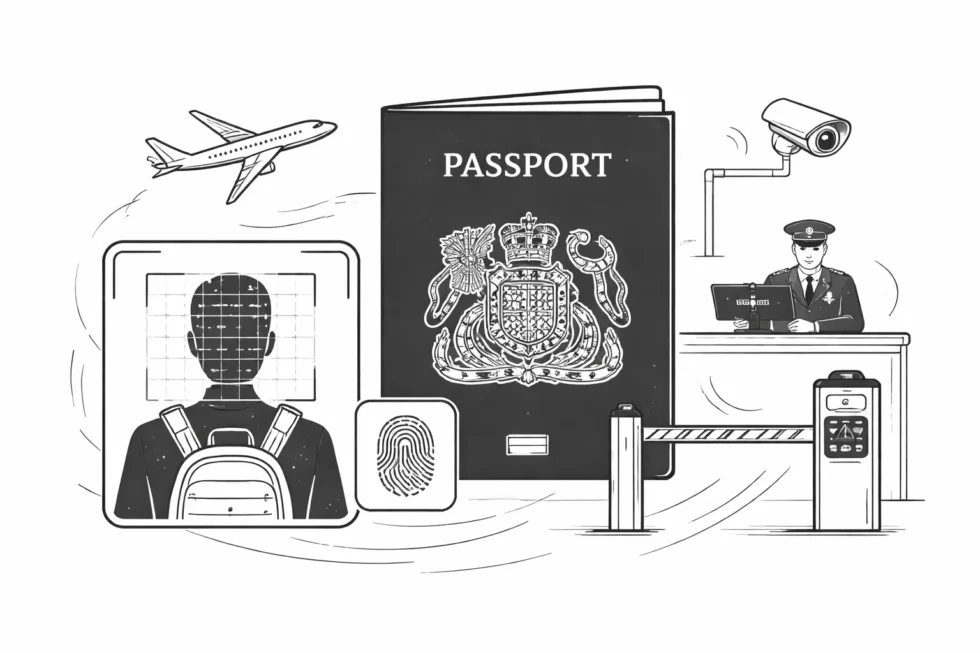
Travelling abroad in 2026 is no longer defined by spontaneity. For British travellers, crossing borders has become an exercise in regulatory compliance, shaped by the expansion of biometric controls, automated border databases and a growing layer of costs increasingly passed directly to passengers. The shift reflects a convergence of post-Brexit border policy, EU-wide digitalisation and tighter international security standards, reports The WP Times, citing European border regulations, UK government guidance and aviation policy briefings.
The changes stem primarily from the phased introduction of the EU Entry/Exit System (EES), updated border enforcement practices and a wider international move towards biometric travel verification, according to documents and official statements from the European Commission, the UK Home Office and the US Department of Homeland Security.
Governments continue to insist that international travel remains open and accessible. In practice, it has become more bureaucratic, more expensive and less predictable than it was only a few years ago. This shift is not the result of a single policy decision, but of dozens of legal, technical and operational changes introduced since the pandemic and the UK’s departure from the European Union. Many of the frustrations now expressed by travellers surfaced during a recent reader Q&A hosted by Simon Calder. Questions ranged from fingerprinting at European borders to social media scrutiny when entering the United States. The underlying concern, however, was broader: the gradual disappearance of friction-free travel.
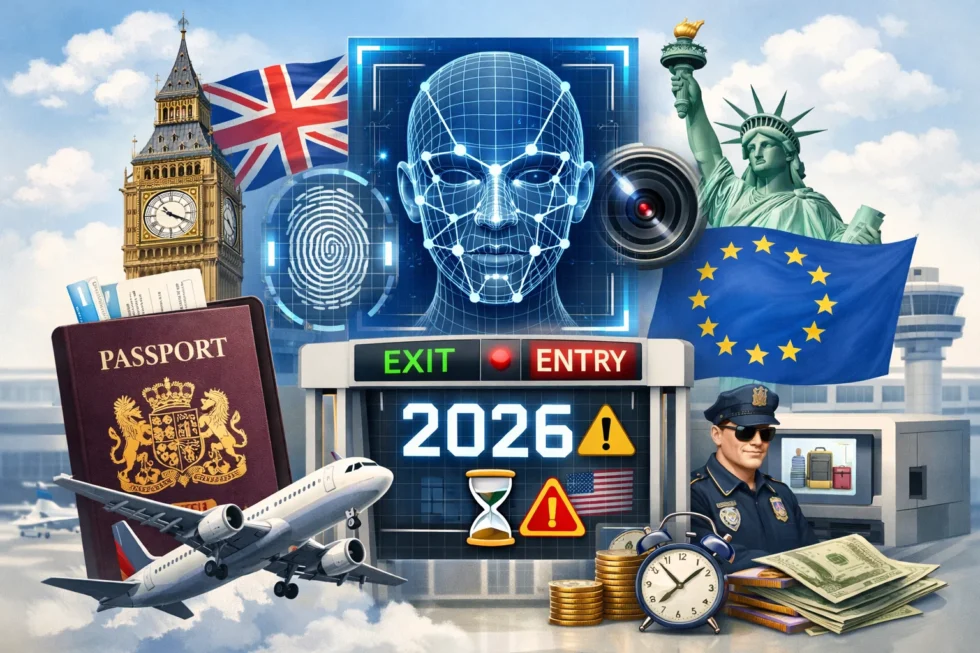
The most significant change facing UK citizens is the introduction of the European Union’s Entry/Exit System, known as EES. Rolling out across the Schengen area during 2025 and 2026, it replaces passport stamping for non-EU nationals with a fully digital record. First-time visitors are required to provide facial biometrics and fingerprints, with exemptions for children under 12. Each entry and exit is logged electronically, and personal data may be retained for up to three years.
Legally, the system is clear. Operationally, it is not. While EES is mandated at EU level, its implementation varies widely between member states and even between individual airports. Differences in staffing, equipment readiness and border layout have already produced sharply contrasting passenger experiences. For travellers, this unevenness is likely to persist throughout 2026.
The move to automated border records also removes a degree of flexibility that once existed. Under passport stamping, errors could sometimes be corrected informally or overlooked. Under EES, overstays are flagged automatically, and disputes become harder to resolve retrospectively. The long-standing Schengen rule — allowing stays of up to 90 days in any rolling 180-day period — remains unchanged. Enforcement, however, has become far stricter.
Automation is also reshaping the use of electronic passport gates. Contrary to popular belief, Brexit did not legally bar UK citizens from using EU e-gates. Restrictions introduced after 2021 were largely operational, reflecting staffing pressures and the need to stamp passports manually. As biometric registration becomes standard, EU and non-EU travellers are increasingly expected to use the same gates. The transition, however, remains uneven, and access cannot be assumed.
Beyond Europe, scrutiny has also intensified for travel to the United States. UK citizens continue to travel under the Visa Waiver Program, but US border authorities retain broad discretionary powers. There is no general legal requirement to disclose social media accounts, yet officers may question travellers about online activity, review publicly accessible profiles and refuse entry without providing detailed justification. These powers are long-standing, but they are now exercised more visibly.
Airport security rules illustrate a similar tension between technology and regulation. Despite the deployment of advanced CT scanners capable of screening larger quantities of liquid, the 100ml rule remains in force at many airports. Aviation security law prioritises risk minimisation over passenger convenience, and until international standards align, reversals and inconsistencies are likely to continue. Costs, meanwhile, are rising in ways that are less immediately visible. Across Europe and beyond, governments are increasingly funding tourism and transport infrastructure through direct user charges rather than general taxation. Tourist taxes, environmental levies, entry fees for historic centres and airport operational charges have become routine. They are lawful, mandatory and frequently excluded from headline prices.
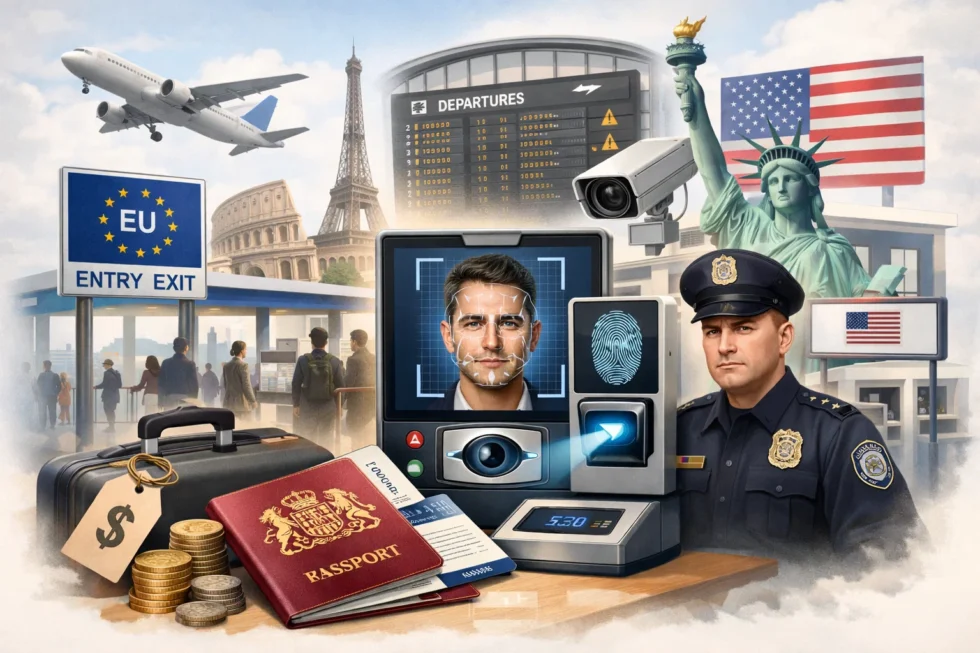
The UK’s own border policy has also shaped travel patterns. The continued refusal to accept EU national identity cards for entry is among the most restrictive approaches in Europe. While legally permissible, the policy has reduced ease of access compared with neighbouring countries, with measurable consequences for inbound tourism. Rail travel reflects similar pressures. Post-Brexit border controls, compounded by biometric requirements, have made the reopening of international rail stations in Kent financially unattractive. Operators are under no legal obligation to serve regional routes, and any return is likely to depend on public subsidy or future competition. None of this suggests that international travel is coming to an end. Flights will continue to operate, and holidays will still be taken. But the era of informal, low-friction travel has passed. In its place is a system defined by automation, compliance and cost — one in which preparation matters more than optimism, and assumptions are increasingly punished by reality.
Read about the life of Westminster and Pimlico district, London and the world. 24/7 news with fresh and useful updates on culture, business, technology and city life: What is happening with M5 traffic today and why are delays still affecting Bristol and the airport