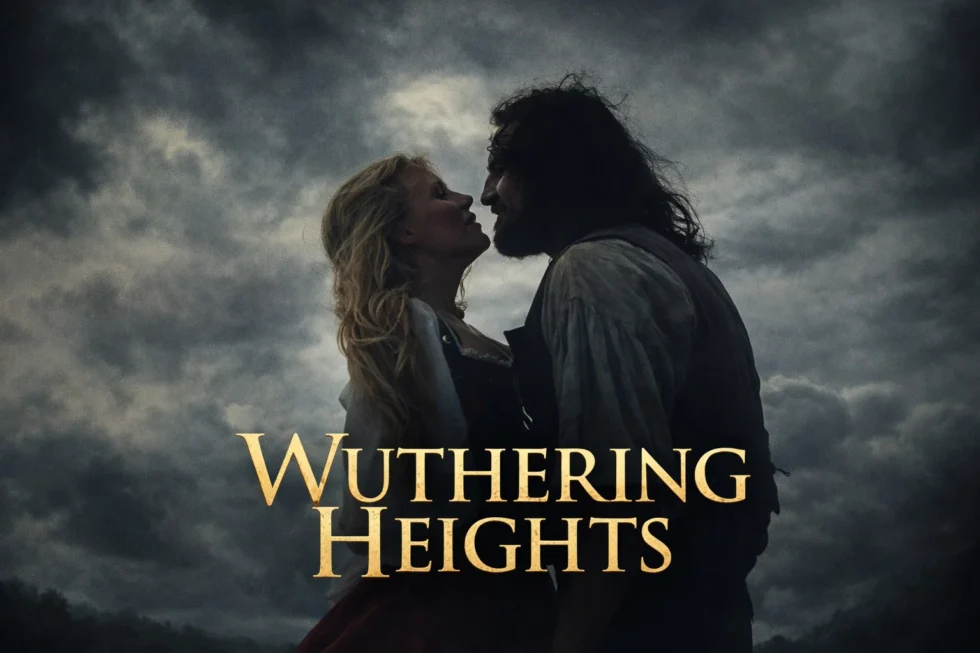
The new Wuthering Heights review examines Emerald Fennell’s adaptation of Emily Brontë’s 1847 novel, starring Margot Robbie and Jacob Elordi as Catherine and Heathcliff. Directed and written by Emerald Fennell, the film runs 2 hours 16 minutes and adapts only the first volume of Brontë’s classic. Critic Manohla Dargis published the review on February 12, 2026, updated February 13, 2026. This Wuthering Heights film foregrounds heightened sexuality, expressionistic production design and stylized performances. Robbie and Elordi portray the tortured lovers against storm-lashed moors, as Fennell reframes Brontë’s Gothic romance with overt symbolism and visual intensity. This is reported by The WP Times , citing NYtimes.
A Selective Adaptation of Emily Brontë’s Novel
Emerald Fennell’s Wuthering Heights, produced by Warner Bros. Pictures, revisits one of the most frequently adapted novels in English literature. First published in 1847 under the pseudonym Ellis Bell, Emily Brontë’s only novel has inspired numerous interpretations across film, television and theater. Fennell’s film incorporates only the first half of the book, concentrating on Catherine Earnshaw and Heathcliff’s destructive emotional bond.
The narrative follows the novel’s initial trajectory. Catherine’s father returns from Liverpool with an orphaned child described in the text as a “dirty, ragged, black-haired child,” who is named Heathcliff. Raised within the Earnshaw household, he becomes Catherine’s closest companion and central emotional counterpart. Their relationship, defined by volatility and obsessive attachment, culminates in tragedy in Brontë’s original structure.
Visual Symbolism and Production Design
Fennell introduces structural and tonal changes. The film opens with Catherine and Nelly witnessing a public hanging, a sequence that explicitly links sexuality and death. The condemned man’s final moments are presented in a way that emphasizes the director’s blunt thematic framing. Heathcliff’s arrival soon follows, and the childhood roles transition to Margot Robbie and Jacob Elordi as the adult Catherine and Heathcliff.
Production design functions as a dominant narrative tool. The Heights manor appears with a lustrous black exterior resembling the rock face beside it, visually binding the house to the harsh moorland landscape. After Catherine marries Edgar Linton, portrayed by Shazad Latif, her marital home is marked by symbolic interiors: a blood-red library floor and bedroom walls designed to resemble marbled human skin. These details reinforce motifs of confinement, dominance and desire.
Narrative Changes and Character Reframing
Fennell omits the novel’s original framing device, which relied on layered narration, including that of the servant Nelly Dean. In this adaptation, Nelly—played as an adult by Hong Chau—serves primarily as Catherine’s companion rather than as a narrative mediator. Catherine’s brother is also removed, shifting emphasis away from sibling rivalry and incest undertones that scholars often identify in Brontë’s text. Instead, Mr. Earnshaw, portrayed by Martin Clunes, emerges as a more pronounced symbol of patriarchal authority.
Robbie and Elordi undertake physically intense performances, frequently running across the moors and engaging in emotionally heightened confrontations. The film presents Heathcliff in stylized tableaux, including horseback silhouettes set against blazing skies. Upon his return later in the narrative, Heathcliff appears transformed—clean-shaven and wearing a gold earring—signaling reinvention and social recalibration.
In her published review, Manohla Dargis writes that Fennell “has drenched the screen with torrential rain, filled it with pantomimes of passion and tried hard to compete with Emily Brontë.” The assessment underscores the adaptation’s emphasis on spectacle and authorial imprint.
Contemporary Sensibilities and Critical Response
As with prior screen versions of Wuthering Heights, this adaptation reflects the era in which it was made. Fennell foregrounds themes of gender, sexuality, dominance and freedom, while maintaining the central narrative of doomed romantic obsession. However, the film reduces the novel’s complex narrative layering and reframes certain thematic tensions.
The result is a visually assertive reinterpretation of Emily Brontë’s Gothic romance. While Fennell’s approach emphasizes aesthetic intensity and symbolic clarity, the enduring force of Wuthering Heights remains rooted in the original text’s psychological and structural complexity.
Read about the life of Westminster and Pimlico district, London and the world. 24/7 news with fresh and useful updates on culture, business, technology and city life: Taylor Swift’s Opalite music video premieres with Domhnall Gleeson, Greta Lee, and celebrity cameos