
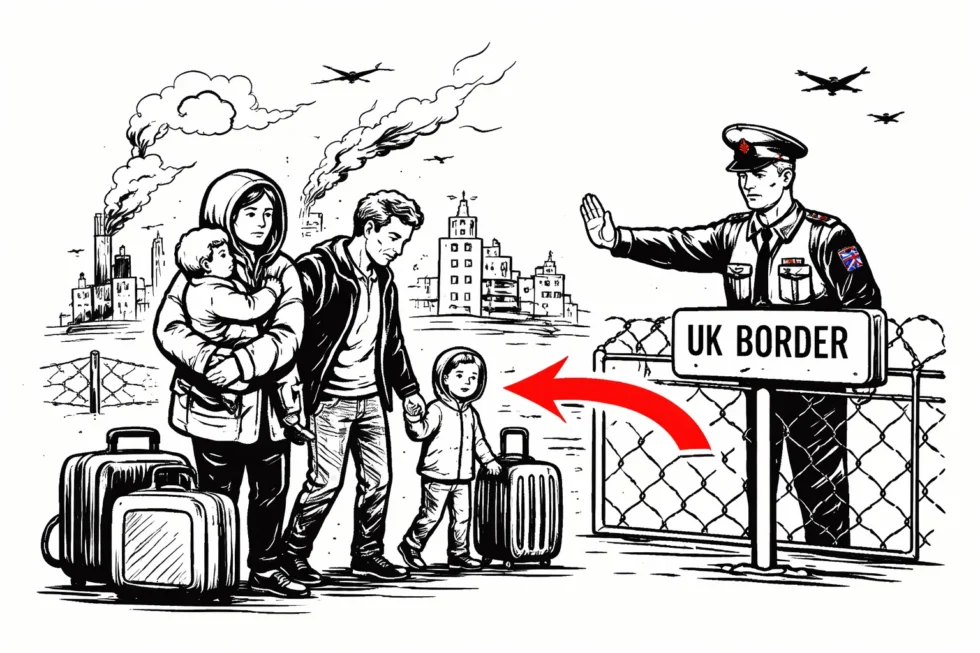
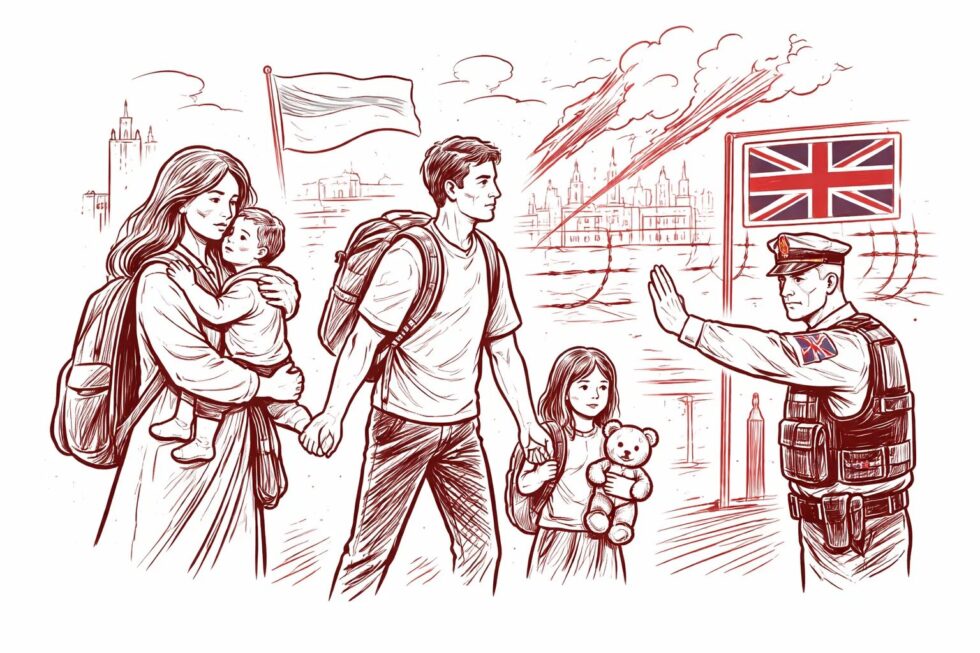
Britain has sharply reduced the number of Ukrainian asylum applications it approves, even for families with children experiencing trauma, advising some to return to Ukraine or relocate to regions it labels “safe.” Home Office guidance updated in early 2025 treats certain areas of Kyiv and western Ukraine as generally safe, even though attacks continue across the country. Refusal letters have told families they could move to western cities such as Chernivtsi or Ternopil and resume life there, despite documented strikes in those areas. These policy shifts have drawn human rights criticism and raised questions about safety, legal obligations, and how family-wide trauma is assessed. This is reported by The WP Times.
Background: UK Asylum Policy for Ukrainians
Since the full-scale invasion of Ukraine in February 2022, the UK introduced several visa schemes — most notably Homes for Ukraine — allowing British sponsors to host Ukrainian nationals. Approximately 310,000 Ukrainians have been welcomed under these programs.
However, asylum decisions — a separate legal process from the visa schemes — are now being decided under different criteria. The UK Home Office has used guidance from January 2025 that designates parts of Ukraine as “generally safe,” influencing asylum refusals.
How the UK Defines “Safe” Zones
The Home Office guidance indicates certain regions — including western Ukraine and the capital Kyiv — where applicants can theoretically resettle within Ukraine instead of being granted asylum in Britain. This categorization is based on assessments from early 2025 but has been challenged by ongoing attacks.

Recent Cases Highlighting the Policy
Several Ukrainian families have publicly shared letters from the Home Office rejecting their asylum applications. These letters often say the family does not meet the threshold for asylum because they could be relocated to what the UK considers less dangerous parts of Ukraine.
In one high-profile example, a family with a teen daughter who developed panic attacks due to their war experiences was informed that relocating to western Ukraine could mitigate risk — and was advised on noise-cancelling headphones as a coping strategy for panic symptoms.
Another family whose son has autism received a refusal saying the child’s condition did not qualify for “exceptional humanitarian reasons,” with officials stating they would not face “real risk” if they moved to Kyiv or the west of Ukraine.
Human Rights and Safety Concerns
United Nations refugee experts and human rights lawyers have raised concerns about the UK policy. A 2025 UNHCR statement on Ukrainian safety emphasized that a deadly strike on Ternopil in western Ukraine shows no part of the country can be considered completely safe.
Human rights advocates argue that rejecting asylum while citing internal relocation options within a combat zone undermines international refugee protection standards and fails to seriously consider ongoing threats from missile and drone attacks in “safe” regions.
Legal Framework and Thresholds
Under the 1951 Refugee Convention, countries must grant asylum when individuals face a “well-founded fear of persecution” and are at risk of serious harm. The UK’s current refusals hinge on the idea that relocation within Ukraine mitigates risk sufficiently to deny asylum. Critics contend that continuous conflict makes this standard difficult to justify.
Impact on Families and Children
Families in the UK report psychological trauma and renewed anxiety after being told to return to Ukraine. In the case mentioned above, the daughter’s panic attacks resumed after her asylum claim was denied, illustrating the emotional and mental health toll these decisions can have.
Child mental health experts note that trauma from war, displacement, and uncertainty can have long-term effects, especially for children who have already experienced life-threatening events. The UK’s asylum system has been criticised for insufficiently accounting for these factors.
UK Government Position
The UK Home Office maintains that its Ukraine visa schemes remain open and that decisions are made in line with current safety assessments. It disputes claims that asylum refusals reflect discriminatory policy and emphasizes that Ukrainians under the visa schemes can remain in the UK until at least 2028.
Expert Legal Advice for Asylum Seekers
Legal professionals working with Ukrainian clients advise:
- Documenting individual risk factors, including health and mental health conditions.
- Consulting immigration lawyers experienced with UK asylum law.
- Preparing appeals where there is credible evidence that relocation within Ukraine remains unsafe.
- Understanding differences between temporary visa schemes and asylum protections. (Temporary visas do not provide indefinite leave to remain or the full rights associated with asylum.)
Comparative Policy Perspectives
Compared to the European Union’s temporary protection directive — which automatically grants rights like residence, work, and social benefits to displaced Ukrainians — the UK’s asylum pathway remains narrower and slower, with more stringent thresholds for granting protection.
Data on Approval Rates
UK internal data reviewed by media in September 2025 showed that fewer than 5% of Ukrainian asylum claims were granted, a sharp decline from earlier in the conflict period when most were approved.
UK Ukrainian Asylum Approvals Over Time
| Time Period | Approx. Approval Rate | Notes |
|---|---|---|
| Early 2022 – Early 2025 | Majority approved | Most applications resulted in asylum grants. |
| April – September 2025 | < 5% approved | Decline linked to updated safety assessments. |
| 2026 reported cases | Many rejected with relocation advice | Includes families with children advised to return. |
(Approximation based on media reports and Home Office references.)
Recommendations for Stakeholders
For asylum seekers and families:
- Seek independent legal advice before and after filing an asylum claim.
- Document all medical and psychological impacts of war exposure.
- Preserve evidence of continued conflict in claimed origin areas.
For policymakers:
- Align safety assessments with up-to-date conflict data.
- Establish clear pathways to permanent settlement for those integrated into UK communities.
For supporters and NGOs:
- Provide mental health support resources tailored to war trauma.
- Educate families on appeal procedures and legal entitlements.
The UK’s shift toward more frequent refusals of asylum for Ukrainian families, including recommendations to return to Ukraine or relocate within the country, has generated controversy and legal debate. With war ongoing, safety conditions remain volatile, and critics argue UK policy must adapt to ensure compliance with international protection standards while addressing real human impacts on children and families.
Read about the life of Westminster and Pimlico district, London and the world. 24/7 news with fresh and useful updates on culture, business, technology and city life: War 4 Years: 1,418 Days of Russia’s Invasion of Ukraine — Losses, Energy Crisis, GDP and Migration in 2026