
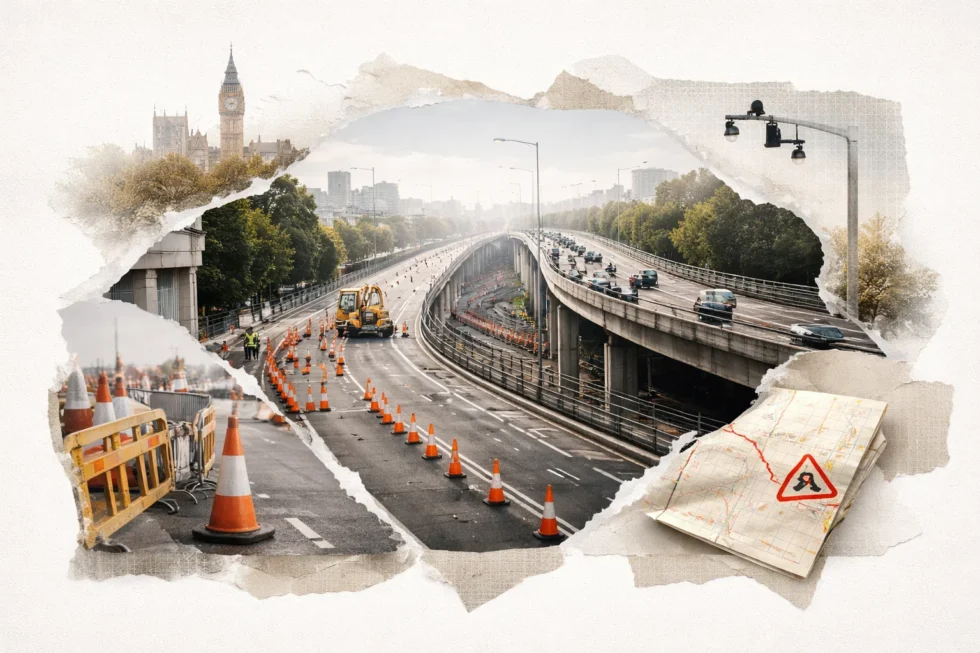
Thousands of drivers in London are being urged to plan ahead as the A40 Westway, one of the capital’s busiest roads, is set to close for a full month for safety-critical engineering works. The shutdown affects a strategic transport corridor linking west London with the city centre, used by around 100,000 vehicles every day, placing it among the most heavily trafficked routes on the network. Transport for London has warned that the closure will cause significant delays, with congestion expected to spread well beyond the immediate area, affecting west and central Londonthroughout the works. This is reported by The WP Times, , citing TfL.
What is closing and when
TfL has confirmed that the A40 Westway will be fully closed between the Westway roundabout and the Marylebone Flyover from Friday, 20 March until late April 2026. During this period, no through traffic will be permitted on the affected section, effectively severing a key commuter route into central London.
According to TfL, the timing has been chosen to limit disruption, as traffic volumes are typically lower in late March and around the Easter period. The authority also says the works have been coordinated to avoid overlapping with other major road closures, reducing the risk of compounded congestion across the capital.
Why the A40 Westway is shutting
The closure is linked to essential structural repairs on the Marylebone Flyover, specifically the replacement of two critical expansion joints. These components are vital for allowing the structure to expand and contract safely in response to temperature changes and constant heavy traffic loads.
TfL describes the operation as complex and safety-critical, requiring specialist engineering teams and heavy equipment. While partial lane closures were initially assessed, engineers concluded that a full closure is the safest and fastest option, minimising risk to workers and road users while ensuring the repairs are carried out to modern safety standards.
How severe the disruption could be
The A40 Westway carries approximately 96,000 vehicles per day, placing it among the busiest routes on TfL’s road network. During the closure, motorists should expect:
- Longer journey times, particularly during peak hours
- Increased congestion on surrounding roads
- Knock-on delays affecting connecting routes in west and central London
TfL is advising drivers to avoid the area entirely where possible and to allow extra time for any journeys that cannot be rescheduled.
Diversions and alternative routes
For drivers travelling between the M25 and central London, TfL recommends avoiding the A40 and using alternative corridors, including:
- M4 and A4 as the primary east–west route
- A312 Parkway to link major road corridors
- A406 North Circular Road for orbital journeys
While signed diversions will be in place, TfL stresses that real-time traffic conditions may change rapidly, urging motorists to check live updates before travelling.
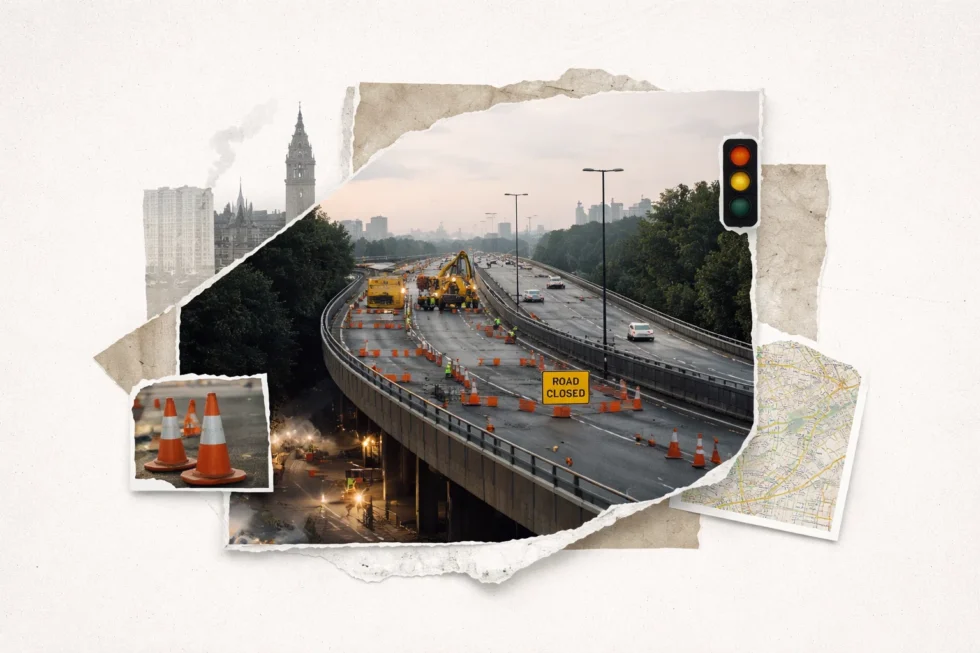
Impact on buses and public transport
The month-long closure of the A40 Westway will have a significant knock-on effect on London’s bus network, with dozens of routes operating through or around the Westway corridor expected to face diversions, extended journey times and service disruption.
Transport for London has confirmed that the routes most likely to be affected include:
6, 13, 16, 18, 23, 27, 28, 31, 49, 52, 70, 72, 74, 94, 95, 98, 113, 139, 148, 189, 205, 207/N207, 220, 260, 272, 274, 295, 316, 452, E3, C1 and SL8.
Passengers are advised to check route-specific service updates closer to their travel date, as diversions may change during the works, and to allow extra time for journeys, particularly during peak periods.
More closures after the main works
TfL has also confirmed that disruption will extend beyond April 2026, even after the main repair phase is completed. Every weekend until 6 July 2026, the A40 will be closed to westbound traffic at the Westway roundabout, excluding Bank Holiday weekends.
These additional restrictions are required for follow-up engineering works, post-repair monitoring and detailed structural inspections, ensuring that the flyover remains safe and fully operational under sustained traffic loads.
Stuart Harvey, chief capital officer at Transport for London, described the A40 as a “key artery in west London”, emphasising its role in supporting daily commuter traffic and wider network resilience. He said the works are essential to secure the long-term safety of the Marylebone Flyover, allowing it to remain in use for decades to come. Harvey urged drivers to plan journeys well in advance, monitor travel conditions and consider alternative routes or modes of transport wherever possible.
Read about the life of Westminster and Pimlico district, London and the world. 24/7 news with fresh and useful updates on culture, business, technology and city life: Will HMRC’s 2026 penalty points system make UK taxpayers pay £200 for late returns