
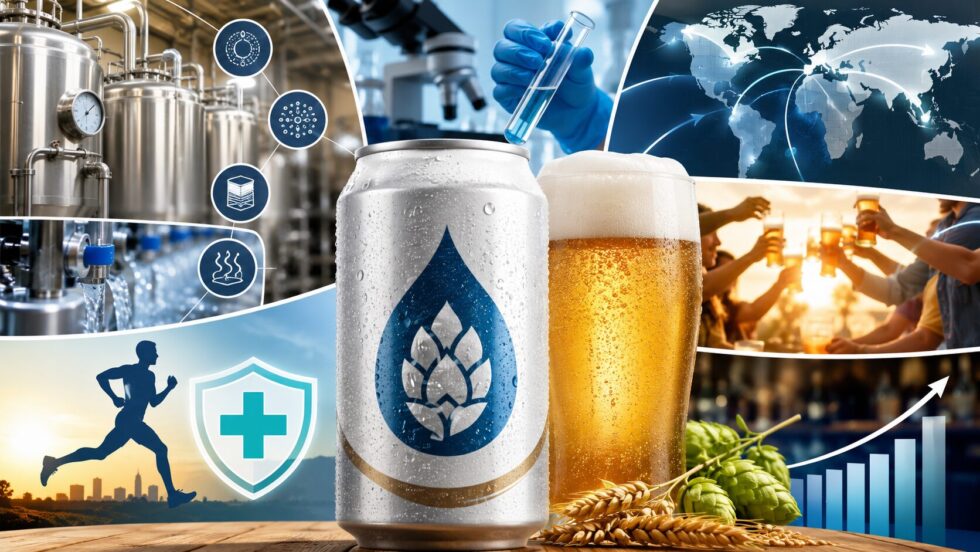
Alcohol free beer has become one of the fastest-growing parts of Britain's drinks industry, with pubs expected to serve more than 64 million pints of no- and low-alcohol beer during the summer of 2026, according to forecasts from the British Beer & Pub Association (BBPA). The surge comes as consumers increasingly moderate their drinking, younger adults continue to consume less alcohol than previous generations and prolonged periods of hot weather encourage demand for lighter alternatives. Industry leaders now argue that the rapid expansion of the category risks slowing because the UK's official definition of "alcohol free" remains among the strictest internationally. The debate has moved beyond marketing and into public policy, investment and brewing innovation, with the Government confirming it is reviewing the guidance. The WP Times understands that the discussion could influence how brewers develop products, how pubs expand their ranges and how consumers understand alcohol-free labelling across the UK.
Last year's figures already showed the strongest performance ever recorded for the category, with around 200 million no- and low-alcohol beers consumed during 2025. This summer's projected increase of more than eight million additional pints reinforces what industry organisations describe as a structural shift rather than a temporary trend. Brewers say investment in alcohol-free production has accelerated, while hospitality operators increasingly view premium alcohol-free beers as a permanent part of their business rather than a seasonal novelty. At the centre of the discussion is whether Britain should align its definition of alcohol-free beer with the 0.5% ABV threshold used across many international markets, instead of the current 0.05% ABV guideline.
Why alcohol free beer is growing faster than any other beer category in Britain
The latest forecasts published by the British Beer & Pub Association indicate that alcohol-free and low-alcohol beers are now the strongest-performing growth segment within the UK brewing industry. Several long-term trends are driving demand simultaneously.
Consumers increasingly seek moderation rather than complete abstinence. Health awareness campaigns, workplace culture, fitness goals and changing social habits have all contributed to reduced alcohol consumption among many adults. Younger generations, in particular, have consistently reported drinking less alcohol than previous age groups. Brewers have also dramatically improved product quality over the past decade. Early alcohol-free beers were often criticised for lacking body, aroma and complexity. Modern brewing technology now allows producers to preserve more of the flavour profile traditionally associated with full-strength beer. According to BBPA analysis:
| Indicator | Latest position |
|---|---|
| Summer 2026 forecast | More than 64 million pints |
| Increase from 2025 | Over 8 million pints |
| Beer consumed in 2025 | Around 200 million no- and low-alcohol beers |
| Growth since 2013 | Approximately 870% |
| Fastest-growing beer segment | No- and low-alcohol beer |
The figures suggest that moderation has become part of mainstream drinking behaviour rather than a niche consumer preference.
Why the UK's alcohol free beer definition is under review
The central issue concerns alcohol by volume (ABV).
Under current UK guidance, beer is generally defined as alcohol free only when it contains 0.05% ABV or less.
Many other countries instead recognise beverages containing up to 0.5% ABV as alcohol free.
Although brewers may market beers containing up to 0.5% ABV as alcohol free in practice, industry representatives argue that the official UK definition creates uncertainty for producers, consumers and investors.
The British Beer & Pub Association says this distinction discourages some breweries from entering the market because achieving 0.05% ABV while maintaining traditional beer characteristics is technically challenging and considerably more expensive.
Emma McClarkin, Chief Executive of the British Beer & Pub Association, said the sector needed Government support to maintain current momentum.
"We need government to keep the momentum going by changing the alcohol-free definition to 0.5%. This will open the door to greater investment, keep us on par with international markets, and deliver even more options for people who choose to moderate — everyone wins." (Emma McClarkin, British Beer & Pub Association, July 2026)
How alcohol free beer is produced without losing its flavour
Producing convincing alcohol free beer is not simply a matter of taking an ordinary lager and removing the alcohol. Brewers must control fermentation, temperature, pressure, aroma and residual sugars while preserving the bitterness, body and grain character that consumers expect from beer. The lower the final alcohol limit, the more difficult and expensive that process can become, particularly when a brewery is trying to meet the UK’s current 0.05% ABV guideline.
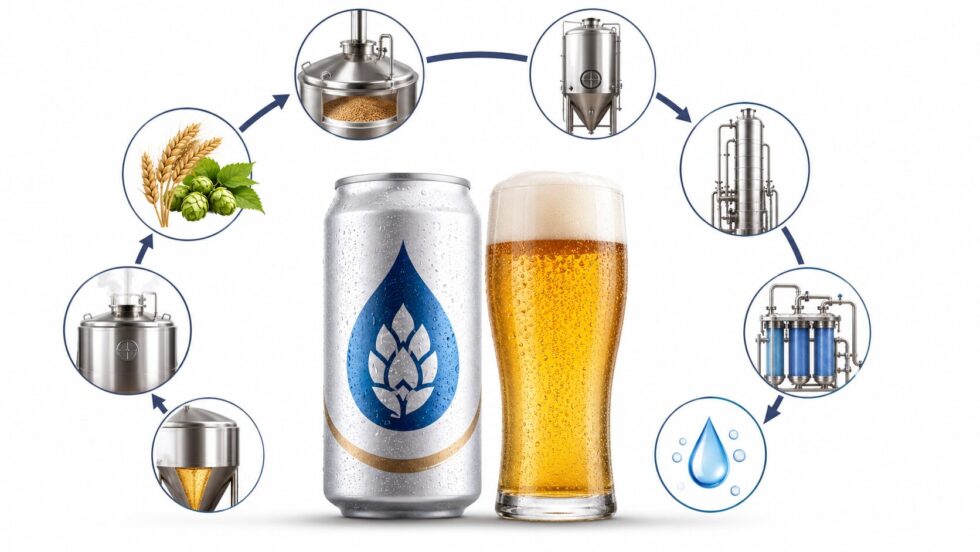
Most alcohol-free products are made through one of two broad approaches. A brewer can limit the creation of alcohol during fermentation, or produce a conventional beer and remove most of the alcohol afterwards. Both routes require specialist equipment and careful recipe development because alcohol contributes not only strength but also texture, aroma, sweetness and the way flavour is carried across the palate.
Controlled fermentation limits alcohol before it develops
Some breweries use specially selected yeast strains, lower fermentation temperatures or shorter fermentation periods to prevent alcohol levels from rising significantly. The brewer may stop fermentation before the yeast converts most of the malt sugars into alcohol, leaving a drink with a fuller sweetness but a much lower ABV.
This approach can reduce the need for expensive dealcoholisation equipment, but it presents its own technical problems. If too much sugar remains, the beer may taste overly sweet or develop an unstable flavour profile. Brewers must also ensure that fermentation does not restart in the bottle or can, which could increase alcohol levels after packaging. Controlled fermentation may involve:
- yeast strains that produce only limited quantities of alcohol;
- reduced malt content at the start of the brewing process;
- carefully managed fermentation temperatures;
- early interruption of yeast activity;
- adjustments to hops, acidity and carbonation to balance sweetness.
The challenge is to create sufficient flavour without allowing the yeast to produce more alcohol than the target category permits.
Vacuum distillation removes alcohol at a lower temperature
Vacuum distillation is one of the most widely discussed methods of producing alcohol-free beer. Under reduced pressure, alcohol evaporates at a lower temperature than it would under normal atmospheric conditions. This allows brewers to remove ethanol while exposing the beer to less heat. The lower temperature helps protect delicate hop aromas and malt flavours, but the process can still strip away some volatile compounds. Producers may therefore capture aromas before dealcoholisation and add them back later, or adjust the recipe to compensate for expected flavour losses. Vacuum systems also require substantial investment. Smaller independent breweries may struggle to justify the cost unless they have sufficient sales volumes or access to a specialist production partner.
Heat evaporation is effective but can alter aroma
Traditional thermal dealcoholisation uses heat to evaporate alcohol from finished beer. It is a relatively direct process, but alcohol and many desirable aromatic compounds are volatile. When heat is applied, the beer may lose some of the fresh hop, fruit and fermentation notes that distinguish one style from another. Excessive heat can also create cooked or caramelised flavours. Brewers using this technique must therefore manage exposure carefully and may need to rebuild the product’s aroma after alcohol removal. The principal disadvantages include:
- loss of fresh hop character;
- changes to malt flavour;
- reduced aroma intensity;
- higher energy consumption;
- a thinner or less rounded final taste.
For premium products, these changes can be commercially significant because consumers increasingly compare alcohol-free beers with established full-strength brands rather than treating them as a separate compromise category.
Reverse osmosis separates alcohol through filtration
Reverse osmosis passes beer through an extremely fine membrane under pressure. Water and alcohol move through the membrane, while larger flavour and colour compounds are retained. The alcohol can then be separated from the water, and the recovered water returned to the concentrated beer
This process can preserve flavour more effectively than high-temperature treatment, although the equipment is costly and technically demanding. Producers must also manage oxygen exposure carefully because oxidation can quickly damage beer aroma and freshness. Reverse osmosis is often attractive to larger brewers because it provides greater control over the final ABV and can be used across different beer styles. However, the cost of installation, maintenance and specialist operation may remain prohibitive for smaller producers.
Membrane filtration protects flavour but increases production costs
Other forms of membrane filtration use pressure and selective barriers to separate alcohol and water from larger flavour molecules. These systems may allow brewers to retain more of the original beer’s structure than conventional heating methods.
The process is precise but adds several stages to production. Each additional stage creates costs relating to energy, labour, cleaning, quality control and equipment. Brewers must also consider product losses during filtration and the risk of contamination if systems are not maintained correctly.
Why the 0.05% limit matters during production
The technical difference between producing beer at 0.5% ABV and reducing it to 0.05% ABV can be considerable. Removing the final traces of alcohol may require longer processing, more energy and more aggressive treatment, increasing the risk that flavour and aroma will also be removed. This is central to the argument advanced by the British Beer & Pub Association. The trade body says that aligning the UK guideline with the 0.5% ABV threshold used in many international markets could make production more commercially viable without materially changing the moderation benefits associated with the category. For brewers, the issue is therefore not merely how much alcohol remains. It concerns the cost of machinery, the quality of the finished beer, the ability of smaller producers to enter the market and the consistency of labelling across domestic and export markets.
British Beer & Pub Association says regulatory clarity could unlock investment
The British Beer & Pub Association argues that the definition of alcohol-free beer has become an industrial and economic question rather than a narrow dispute over product wording. The organisation says the current 0.05% ABV guideline creates uncertainty for breweries that must decide whether to invest in specialist equipment, reformulate products or produce different versions for Britain and overseas markets.
According to BBPA figures, no- and low-alcohol beer volumes have increased by approximately 870% since 2013, making the category the strongest growth area in the UK beer sector. The trade body expects more than 64 million pintsof no- and low-alcohol beer to be sold during June, July and August 2026, around eight million more than during the equivalent summer period in 2025.
What regulatory alignment could change for brewers
The BBPA says moving the alcohol-free guideline to 0.5% ABV could support investment in several areas:
- new brewing and dealcoholisation equipment;
- dedicated alcohol-free production lines;
- research into yeast, fermentation and flavour preservation;
- wider ranges of lagers, ales, stouts and fruit beers;
- production by smaller regional and independent breweries;
- more competitive export products;
- stronger availability in pubs and hospitality venues.
A single threshold closer to those used internationally could also reduce the need for breweries to create separate recipes, labels or marketing strategies for different markets.
Smaller breweries face higher barriers to entry
Large international brewers can spread the cost of alcohol-free technology across substantial production volumes. Independent breweries often cannot. A vacuum distillation or reverse-osmosis system represents a major capital expense, while contracting production to another brewer may reduce control over recipes and margins. The BBPA’s argument is that a 0.5% threshold would allow more breweries to enter the market using less intensive production methods. That could increase competition and give pubs a wider choice of locally produced alcohol-free beers rather than relying mainly on national brands.
Emma McClarkin calls for a 0.5% definition
Emma McClarkin, Chief Executive of the British Beer & Pub Association, said the growth of no- and low-alcohol beer showed that the category had become a permanent part of the market.
“We need government to keep the momentum going by changing the alcohol-free definition to 0.5%. This will open the door to greater investment, keep us on par with international markets, and deliver even more options for people who choose to moderate — everyone wins.” (Emma McClarkin, British Beer & Pub Association, July 2026) Her intervention connects the technical definition directly with investment, competitiveness and consumer choice. The BBPA’s position is that demand already exists, but regulation has not developed at the same speed as brewing technology or public drinking habits.
Government considers changing alcohol free beer guidance
The Department of Health and Social Care has confirmed that it is considering whether the threshold for describing a drink as alcohol free should be changed. The review follows engagement with drinks producers, public-health stakeholders and industry organisations including the British Beer & Pub Association. The Government has not announced a final decision or a timetable for reform. Any change would have to balance economic arguments from brewers with public-health concerns, consumer understanding and the need for accurate labelling.
Ministers recognise the role of no- and low-alcohol products
A Department of Health and Social Care spokesperson said the Government recognised that no- and low-alcohol drinks could help some consumers reduce their alcohol intake while supporting innovation in the British drinks industry.
“The Government recognises the role no- and low-alcohol products can play in helping people reduce their alcohol intake and in boosting public health.” (Department of Health and Social Care spokesperson, July 2026) The department also said it was considering changing the threshold at which a product may be described as alcohol free and would take wider public-health considerations into account before publishing an update.
What the Government must decide
The review must address several connected questions:
- whether 0.05% ABV remains a practical threshold for modern brewing;
- whether a 0.5% definition would be understood clearly by consumers;
- whether labels should distinguish between “alcohol free”, “low alcohol” and “zero alcohol”;
- how any change would affect pregnant consumers, drivers and people avoiding alcohol for medical or religious reasons;
- whether Britain should align more closely with international markets;
- how the rules would apply to beer, wine, cider and other drinks.
The central policy challenge is to encourage moderation without creating the impression that every alcohol-free product contains absolutely no alcohol.
No final timetable has been announced
Officials have said only that the guidance is under consideration and that stakeholders have been consulted. Until a formal change is published, brewers must continue operating within the existing framework and consumers must rely on individual product labels for precise ABV information. The absence of a timetable means the industry may continue investing cautiously. Major brewers are likely to expand regardless because the market is already growing, but smaller companies may delay costly production decisions until the Government clarifies the long-term definition.
Why UK pubs expect record alcohol free beer sales this summer
British pubs are preparing for another record summer for alcohol free beer, supported by warm weather, major sporting events and changing drinking habits. The BBPA expects more than 64 million pints of no- and low-alcohol beer to be sold between June and August 2026, compared with approximately 56 million during the same period last year. The increase suggests that consumers are not abandoning pubs or beer. Instead, many are changing what they drink and how they structure longer social occasions.
Hot weather encourages moderation
Periods of high temperature can lead consumers to reduce their alcohol intake, particularly during daytime drinking or extended sessions in beer gardens. Alcohol-free lager offers the cold, carbonated and bitter qualities associated with beer without the same level of alcohol consumption. Brewers report that demand rises when consumers spend longer outdoors, attend festivals or watch sport over several hours. The product allows people to continue participating in the social occasion while pacing their alcohol intake.
Football and major events drive pub demand
Sport remains an important sales driver for British pubs. During football tournaments and other high-profile events, customers may remain in a venue for several matches or several hours. Alcohol-free beer gives pubs an additional product to sell after a customer has decided not to order another alcoholic drink. For operators, this can protect revenue that might otherwise be lost to tap water, soft drinks or an early departure. Premium alcohol-free beer can also command a price closer to standard draught beer than traditional soft drinks, making the category commercially important to hospitality businesses.
Zebra-striping becomes more common
Brewers and pub operators increasingly use the term “zebra-striping” to describe alternating between alcoholic and alcohol-free drinks. A customer may order a conventional lager, followed by an alcohol-free version, before returning to an alcoholic drink later. The approach allows consumers to moderate total alcohol intake without leaving the beer category. It also explains why growth in alcohol-free sales does not necessarily mean a complete shift towards abstinence. James Rabagliati, Head Brewer at Nirvana Brewery in Leyton, east London, said the brewery had observed both exclusive alcohol-free drinking and alternating behaviour during hot weather.
“We’ve seen people either exclusively drinking alcohol-free beer such as our pils and fruit lagers, or ‘zebra-striping’ where they’re alternating between us and alcoholic beers.” (James Rabagliati, Nirvana Brewery, July 2026)
Pubs are expanding alcohol-free ranges
Many pubs that once stocked one bottled alcohol-free lager now offer several products, including draught lager, pale ale, stout, wheat beer and fruit-flavoured alternatives. Draught availability is particularly important because it allows the product to be served with the same glassware, presentation and ritual as conventional beer. This expansion reflects several commercial considerations:
- stronger consumer demand;
- improved product quality;
- longer social drinking occasions;
- demand from drivers and health-conscious customers;
- higher margins than some conventional soft drinks;
- pressure to offer inclusive choices for mixed groups.
Alcohol-free beer is therefore becoming part of the standard pub range rather than a specialist request kept behind the bar.
Lucky Saint says alcohol free beer now belongs in mainstream pub culture
Lucky Saint founder Luke Boase has argued that alcohol-free beer is no longer confined to designated drivers, January abstinence campaigns or people who have stopped drinking entirely. The category is increasingly used by consumers who still drink alcohol but choose alcohol-free products during particular occasions. This behavioural change is important because it expands the addressable market. The principal customer is no longer necessarily a lifelong non-drinker. It may be someone training the following morning, driving home, taking a break between alcoholic drinks or extending an afternoon in a pub garden.
Summer creates longer social occasions
Boase said summer demand rises when people spend more time socialising outdoors, watching sport or attending events. Longer occasions create more points at which a consumer may wish to switch away from alcohol without moving to water or a sweet soft drink.
“When the sun is out and the football is on, people want to make the most of it, and alcohol-free beer matches the occasion.” (Luke Boase, founder of Lucky Saint, July 2026) The statement reflects a wider shift in product positioning. Alcohol-free beer is increasingly marketed around participation and flexibility rather than sacrifice.
Premium branding has changed consumer expectations
Brands such as Lucky Saint have helped position alcohol-free beer as a premium product with dedicated branding, glassware and draught distribution. This differs from earlier products that were often presented as secondary versions of established alcoholic beers. Modern alcohol-free brands compete on:
- taste and brewing quality;
- pub visibility;
- premium packaging;
- draught availability;
- lower calorie claims where applicable;
- suitability for sport, work and daytime occasions;
- association with moderation rather than abstinence alone.
Boase has supported raising the official alcohol-free threshold to 0.5% ABV, arguing that the change would encourage more production and help make the category available to a broader group of consumers.
How UK alcohol free beer rules compare with international markets
The UK’s current alcohol-free guideline is substantially lower than the threshold commonly used in many overseas markets. In Britain, the official guidance generally associates “alcohol free” with products containing no more than 0.05% ABV. In a number of European and international markets, the accepted threshold is 0.5% ABV. The difference may appear small numerically, but it is significant for brewers because removing the final fraction of alcohol can require more processing and create greater flavour loss.
Comparison of alcohol-free thresholds
| Country or market | Common alcohol-free threshold | Practical implication |
|---|---|---|
| United Kingdom under current guidance | 0.05% ABV | Requires extremely low residual alcohol |
| Many European markets | Up to 0.5% ABV | Allows less intensive dealcoholisation |
| Several global brewing markets | Up to 0.5% ABV | Supports common recipes and export production |
| Products labelled 0.0% | Usually produced to an even lower target | Aimed at consumers seeking minimal or no detectable alcohol |
Exact terminology can vary between jurisdictions and product categories, so consumers should check the label rather than relying solely on the words “alcohol free”.
Why different thresholds complicate exports
A British brewer selling domestically and internationally may need to produce different versions of the same beer or change how it is labelled in each market. That adds complexity to manufacturing, packaging, logistics and regulatory compliance. A brewery may face:
- separate recipes for the UK and export markets;
- additional laboratory testing;
- different labels and packaging;
- smaller production runs;
- higher warehousing costs;
- confusion among consumers seeing different ABV descriptions.
The BBPA argues that harmonisation with a 0.5% threshold could reduce these barriers and make British alcohol-free products more competitive overseas.
Public-health interpretation remains important
Supporters of the lower threshold may argue that the term “alcohol free” should mean as close to zero as technically possible. They may also raise concerns about consumers who must avoid alcohol completely. The policy debate is therefore not simply Britain versus other countries. It concerns how language, risk and consumer expectations should be managed. A possible solution could involve clearer distinctions between 0.0%, alcohol-free and low-alcohol products, supported by prominent ABV information on packaging.
What consumers should know before buying alcohol free beer
Consumers should not assume that every product described as alcohol free contains absolutely no alcohol. Depending on the brewing method, product and market, very small residual quantities may remain. The most reliable information is the ABV printed on the bottle, can, pump clip or menu. The difference is particularly relevant for people who avoid alcohol entirely rather than merely seeking to reduce their intake.
Alcohol free and zero alcohol are not always identical
A product labelled 0.0% is generally intended to indicate that the producer has reduced alcohol to an extremely low or non-detectable level under the applicable testing rules. A product described as alcohol free may contain a small residual amount within the permitted or advised threshold. Consumers should check:
- the stated ABV;
- the exact product description;
- serving size;
- manufacturer information;
- medical guidance relevant to their circumstances.
Who should exercise additional caution
People who are pregnant, taking medication, recovering from alcohol dependency or avoiding alcohol for religious or medical reasons may require a stricter standard than a consumer simply moderating their intake. They should not rely on broad marketing language alone. Medical advice may be necessary where even trace amounts are a concern. Alcohol-free beer may also contain ingredients that matter independently of alcohol, including gluten, sugar, sweeteners or allergens. Nutritional content varies considerably between brands.
Alcohol-free beer does not automatically mean low calorie
Alcohol contributes calories, so removing it can reduce the energy content of a beer. However, some alcohol-free products retain more residual malt sugar to preserve body and flavour. As a result, calorie and carbohydrate levels differ widely. Consumers comparing products should review the nutritional label rather than assuming that every alcohol-free beer is a low-calorie drink.
Why many consumers use it for moderation
For most adults seeking to reduce alcohol intake, alcohol-free beer offers several practical advantages. It provides familiar taste, carbonation and pub presentation while allowing the consumer to remain part of a social occasion. It can be used:
- as a complete substitute for alcoholic beer;
- between alcoholic drinks;
- during weekday or lunchtime occasions;
- when driving;
- before exercise or work;
- during longer sporting or social events.
Its growth indicates that many consumers want more control over when they drink alcohol without withdrawing from pub or beer culture.
What happens next for alcohol free beer in Britain
The immediate issue is whether the Government will change the official alcohol-free threshold from 0.05% ABV to 0.5% ABV. Ministers have confirmed that the matter is under consideration, but no final decision or implementation date has been announced. The outcome will affect brewers, pubs, retailers and consumers, although demand is likely to continue growing under either regulatory scenario.
If the threshold rises to 0.5% ABV
A higher threshold could make it easier for breweries to produce alcohol-free beer while retaining aroma, body and flavour. The BBPA believes the change would encourage investment and bring Britain closer to international markets. Possible consequences include:
- more breweries entering the category;
- wider pub and supermarket ranges;
- greater availability on draught;
- lower production barriers;
- increased export competitiveness;
- more experimentation with beer styles;
- stronger investment in alcohol-free technology.
The Government would still need to establish clear labelling rules so consumers understood that alcohol-free products could contain up to 0.5% ABV.
If the current guideline remains
If the 0.05% guideline is retained, larger producers are still likely to expand because demand has already reached record levels. However, industry representatives warn that some smaller breweries may decide the cost and technical difficulty are too high.
The market could therefore remain concentrated among companies with the capital to invest in specialist production or access contract dealcoholisation services.
The growth of alcohol-free beer is supported by several overlapping changes rather than one temporary fashion. These include moderation among younger consumers, improved brewing quality, better pub distribution, premium branding, health awareness and demand for drinks suited to longer social occasions Approximately 200 million no- and low-alcohol beers were consumed in the UK during 2025, according to BBPA figures. The forecast of more than 64 million pints during summer 2026 suggests that the category is continuing to expand from a substantial base. The remaining policy question is whether regulation will be adjusted to support that growth or whether British brewers will continue working with a threshold substantially below that used in many comparable markets.
Read about the life of Westminster and Pimlico district, London and the world. 24/7 news with fresh and useful updates on culture, business, technology and city life: Why was Heritage Live cancelled and what is known about the Sandringham concerts, line-ups and refunds
Sources used: British Beer & Pub Association, Department of Health and Social Care, Lucky Saint, Nirvana Brewery, PA Media, The Guardian.