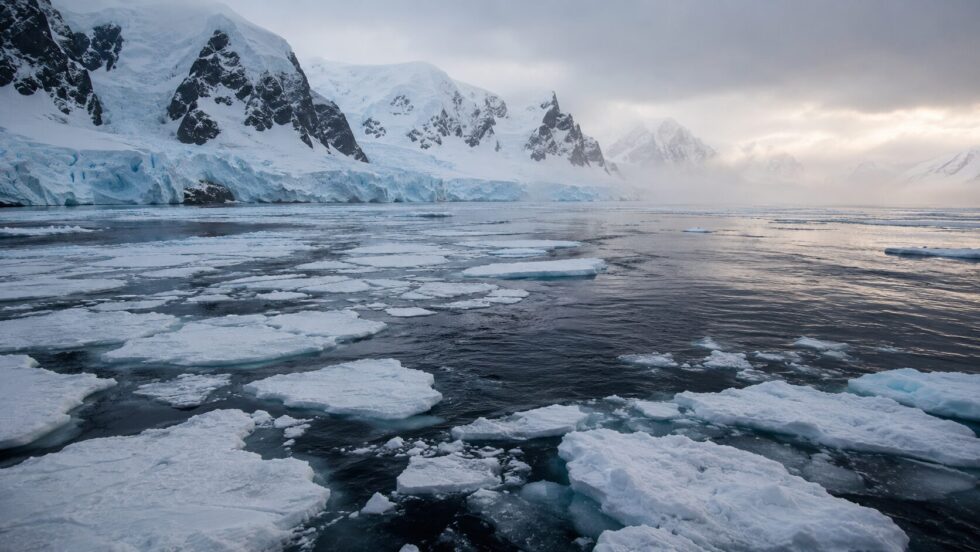
Antarctica is facing an extraordinary winter sea ice failure on its western coast, where satellite observations show the Bellingshausen Sea is missing about 650,000 square kilometres of ice that would normally be forming by mid-June — an area roughly the size of France. The alarm comes after a sharp Antarctic Peninsula heatwave pushed temperatures more than 20C above seasonal averages, The WP Times reports, citing Futurism.
The concern is not only that a large part of West Antarctica looks unusually open at a time when winter ice should be expanding rapidly. The deeper question is whether the region is now shifting into a new pattern in which warmer ocean conditions, repeated low-ice years and extreme winter air temperatures combine to weaken one of the planet’s most sensitive climate systems.
Antarctica sea ice loss in Bellingshausen Sea: what has happened in June 2026
The Bellingshausen Sea sits on the west side of the Antarctic Peninsula, a region that by June would usually be moving into winter ice cover. Instead, scientists monitoring satellite images say the sea has remained largely ice-free, leaving a deficit of about 650,000 square kilometres compared with the 1991–2020 average. This is not a summer melt story; it is a winter formation failure, which makes the timing especially serious. Antarctic sea ice normally grows through the southern hemisphere winter and reaches its annual maximum around September. That winter expansion matters because sea ice helps regulate local temperatures, shields floating ice shelves from waves and storms, and provides habitat for species that depend on stable seasonal ice. When it fails to form, the loss changes the physical and ecological conditions at the start of the coldest part of the year.
The latest figures also sit within a broader recent pattern. Antarctic sea ice has shown unusually low conditions in several recent years, with 2023 standing out as a particularly extreme year for winter sea ice researchers. Copernicus data for May 2026 already showed Antarctic sea ice extent at 9.7 million square kilometres, around 0.9 million square kilometres below the 1991–2020 average, with the Bellingshausen Sea remaining one of the most negative anomaly zones.
| Key point | Detail |
|---|---|
| Region | Bellingshausen Sea, West Antarctica |
| Missing winter sea ice | About 650,000 sq km |
| Comparison | Roughly the size of France |
| Timing | June 2026, during Antarctic winter |
| Temperature spike | Esperanza base reached 15.4C |
| Main concern | Penguins, krill, ice shelves and future sea-level risk |
Why a France-sized sea ice gap matters for penguins, krill and the Antarctic food web
Sea ice is not simply frozen water on the surface of the ocean. Around Antarctica, it is a moving platform for life, a winter shelter for krill and a breeding environment for species that have evolved around the timing of ice formation and break-up. Krill feed on algae associated with sea ice and are a key food source for penguins, seals, whales and fish.
If winter sea ice forms later, breaks up earlier or disappears across large coastal zones, animals that depend on stable ice must travel further, breed under worse conditions or shift feeding patterns. Emperor penguins are particularly exposed because their breeding cycle depends on sea ice remaining stable long enough for chicks to survive. A premature break-up can leave chicks in the water before they have developed waterproof feathers.
The Bellingshausen Sea coastline has already been linked to severe emperor penguin breeding failures. Scientists have warned that repeated low-ice years reduce breeding success and can force longer journeys to moulting or feeding grounds. Adélie penguins and crabeater seals can also be affected because their habitat and prey availability depend on the structure of the winter ice zone.
The ecological chain scientists are watching
- Less winter sea ice means less protected habitat for krill.
- Less krill pressure can affect penguins, seals, whales and fish.
- Later ice formation can shorten the safe breeding window for emperor penguins.
- Earlier break-up can expose chicks before they are ready for open water.
- Repeated low-ice years can turn one bad season into a population-level risk.
Antarctica heatwave: why 15.4C in winter shocked researchers
The sea ice failure has coincided with a severe temperature anomaly on the Antarctic Peninsula. Argentina’s Esperanza base recorded a June maximum of 15.4C during an extreme event on 5 and 6 June, when average daily maximums are normally far below freezing. In simple terms, temperatures reached levels more typical of a cool spring day in parts of Europe than the start of Antarctic winter.
Researchers have linked the heat event to powerful warm air flows from the north. The absence of sea ice may have made the regional temperature spike worse because sea ice normally cools air moving across the ocean surface before it reaches land. Without that cooling barrier, warm air can keep more of its heat as it moves towards the coast and peninsula. This does not mean one heatwave alone explains the missing sea ice. The more careful scientific reading is that several forces may be interacting: warmer ocean layers, atmospheric circulation, wind patterns and longer-term climate change. But the combination of an ice-free winter sea and a 20C-plus temperature anomaly is exactly the kind of compound event that climate researchers now examine closely.
What scientists say about West Antarctica and ocean warming
Scientists are cautious about direct attribution because Antarctic sea ice is influenced by wind, ocean circulation, freshwater input, storms and seasonal variability. But several researchers say the recent West Antarctic pattern is consistent with what a warming world is expected to produce: less stable sea ice, warmer subsurface ocean water and greater pressure on floating ice shelves.The Bellingshausen Sea is considered oceanographically unusual because warmer water can reach areas close to the continent. That matters because sea ice forms from the ocean surface, while nearby ice shelves can be weakened from below by relatively warm ocean water. When both sea ice and ice shelves are under pressure, the region becomes more vulnerable to rapid change.
One key distinction is important for readers. Sea ice itself does not directly raise global sea levels when it melts because it is already floating. The sea-level risk comes when the loss of sea ice reduces protection for ice shelves, allowing them to fracture more easily, and when those weakened shelves no longer slow the flow of land ice into the ocean.
Why Pine Island and Thwaites matter
The Bellingshausen Sea lies near some of the most closely watched ice systems in West Antarctica. To the west are Pine Island and Thwaites glaciers, both major contributors to Antarctic ice loss. Thwaites is often discussed in global climate reporting because its future stability has consequences for long-term sea-level projections.
Floating ice shelves act like buttresses. They do not stop glaciers entirely, but they help restrain the movement of land ice behind them. When ocean warming and exposed coastal conditions weaken those shelves, more land ice can move into the ocean. That is why scientists are watching not only the missing sea ice itself, but the knock-on effects it may have on the structures behind it.
The numbers behind the Antarctica sea ice warning
The scale of the anomaly is what makes this event stand out. A sea ice deficit of about 650,000 square kilometres is difficult to visualise, but comparing it with France gives readers a practical sense of the area involved. It is not a narrow coastal crack or a localised patch of open water. It is a broad winter absence across a region that would typically be covered by seasonal ice. On 10 June, total Antarctic sea ice was reported at about 11.4 million square kilometres, compared with a long-term average for that date of about 12.6 million square kilometres. That wider continental shortfall is significant, but the Bellingshausen Sea gap is especially striking because of where it is located and because the region has seen repeated low-ice conditions in recent years.
| Indicator | Reported figure |
|---|---|
| Missing Bellingshausen Sea ice | About 650,000 sq km |
| Antarctic sea ice on 10 June | About 11.4 million sq km |
| Long-term average for 10 June | About 12.6 million sq km |
| Esperanza peak temperature | 15.4C |
| Normal daily maximum cited for the period | Around -6.2C |
| Previous June record at Esperanza | 13.3C in 1998 |
Is Antarctica now changing faster than expected
The honest answer is that scientists are still working through the mechanisms, but the recent sequence is worrying. Antarctica has always had large year-to-year variability in sea ice, and researchers avoid drawing sweeping conclusions from a single season. What makes the present situation different is the clustering of events: repeated low sea ice, winter heat anomalies, exposed coastal waters and growing concern over West Antarctic ice shelves.
The climate signal is also not uniform across the continent. East Antarctica and West Antarctica can behave differently, and sea ice anomalies vary sharply by region. Some sectors may be closer to average while the Bellingshausen Sea is far below average. That regional contrast is one reason scientists rely on satellite data, ocean measurements and long-term comparisons rather than simple continent-wide impressions. Still, the direction of concern is clear. If the Bellingshausen Sea increasingly fails to form normal winter ice, the consequences would extend beyond a single map anomaly. It would affect the Antarctic food web, the stability of coastal ice shelves and the way heat moves between ocean and atmosphere in a region already central to global climate risk.
What happens next in the Bellingshausen Sea this winter
Researchers will watch whether some ice forms later in July, August or September. Some recovery is possible because Antarctic sea ice is mobile and can be moved by wind and ocean conditions. But late-forming or imported ice does not necessarily provide the same ecological or protective function as stable winter ice that forms on time.
The key question is whether the Bellingshausen Sea is experiencing a temporary extreme year or a more durable shift. If the ocean conditions now make regular winter sea ice formation difficult, the region could become one of the clearest indicators of a changing Antarctic system. Scientists will also study whether warmer subsurface waters are playing the leading role, or whether atmospheric circulation and wind patterns are amplifying the loss.
For policymakers, the event reinforces a broader climate message: Antarctica is not remote from the rest of the world in practical terms. Changes in West Antarctica can influence sea-level projections, marine ecosystems and global climate feedbacks. What happens in the Bellingshausen Sea this winter will therefore be watched far beyond polar research stations.
FAQ: Antarctica sea ice loss in June 2026
Why is Antarctica missing sea ice the size of France?
The missing area is in the Bellingshausen Sea, where winter sea ice has failed to form normally in June 2026. Scientists are investigating the role of warmer ocean conditions, wind patterns and broader climate change.
Does missing sea ice directly raise sea levels?
No. Sea ice is already floating, so its melt does not directly add to sea level. The concern is that sea ice protects floating ice shelves, and those shelves help restrain land ice that can raise sea levels when it enters the ocean.
Why are penguins at risk?
Emperor penguins rely on stable sea ice for breeding. If the ice forms too late or breaks up too early, chicks can be exposed before they are ready to survive in open water.
Was Antarctica really 20C warmer than normal?
Yes, the Antarctic Peninsula recorded an extreme June temperature event. Argentina’s Esperanza base reached 15.4C, more than 20C above typical daily maximums cited for that period.
What will scientists watch next?
They will monitor whether ice forms later in winter, whether the Bellingshausen Sea continues to show low-ice conditions, and how ocean warming may be affecting nearby ice shelves and marine life.
Read about the life of Westminster and Pimlico district, London and the world. 24/7 news with fresh and useful updates on culture, business, technology and city life: England Driveway EV Charger Rules: What Homeowners, EV Drivers and Councils Need to Know in 2026