More than 25,000 homes across south-east Queensland and Victoria were left without electricity on Monday morning after violent thunderstorms brought hailstones the size of golf balls, torrential rain and destructive winds reaching 109 km/h, reports The WP Times.
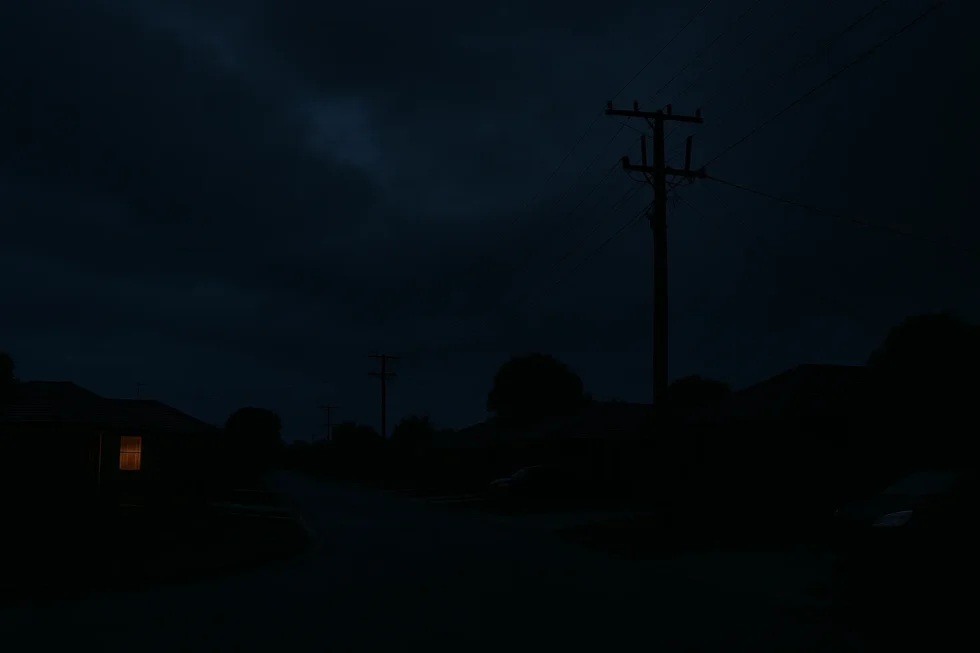
According to The Guardian, about 26,000 households in Queensland were affected as the storms swept through overnight, toppling power lines and trees across Greater Brisbane. Residents reported giant hailstones up to 7 centimetres in suburbs such as St Lucia, Pullenvale, Moorooka and Ipswich.
Energex, which supplies power to 1.5 million customers in south-east Queensland, described “significant damage” to the network. Nearly 70 repair crews were deployed to restore supply, with authorities urging residents to stay clear of fallen wires and call 000 for emergencies.
“This afternoon’s storm has absolutely smashed our network,” the state-owned utility wrote on social media. “If you can see wires down, please stay well clear.”
The Bureau of Meteorology (BoM) confirmed multiple reports of large hail across the region:
- 4 cm – Ipswich
- 5 cm – Moorooka and Goonda
- 5–6 cm – Pullenvale
- 7 cm – St Lucia
Lightning forced play to halt during the Pacific Cup rugby league Test between Samoa and Tonga at Suncorp Stadium in Brisbane as spectators were told to take shelter.
Elsewhere in south-east Queensland, severe gusts of about 95 km/h were recorded in Amberley and Archerfield, while Gayndah faced peaks of 109 km/h. The BoM said wet conditions would linger along the eastern coast for several days, with Tuesday expected to be the wettest.
Victoria’s ‘terrifying’ winds and record rainfall
In Victoria, more than 1,300 energy customers lost power after Melbourne recorded its wettest day in 18 months — 35.4 mm of rain fell within 24 hours, according to BoM data. At one point on Sunday, outages peaked at 28,000 customers statewide.
The State Emergency Service (SES) received 598 requests for assistance, largely for structural damage, downed trees and flooding, particularly in Werribee, Hoppers Crossing and Wyndham.
Local residents described the storm as “the sort of stuff out of a movie”.
“The wind nearly blew me backwards when I opened the door,” said Werribee resident Brigette Boyd to ABC Radio Melbourne.
Another resident, Tara, said: “It ripped off my pergola like a tin of sardines. My partner got lifted and dropped while the kids watched. It was terrifying.”
Meteorologists said a short-lived tornado may have touched down in Melbourne’s western suburbs, though this remains unconfirmed pending further analysis.
Victoria’s Chief Health Officer Dr Caroline McElnay warned of a heightened risk of thunderstorm asthma across the state’s northern country regions — recalling the 2016 event that killed ten people, the largest outbreak ever recorded worldwide.
Broader weather context
Heavy rainfall is expected to persist across eastern Queensland into mid-week as a low-pressure trough continues drawing tropical moisture inland.
Meanwhile, the U.S. National Hurricane Center (NHC) confirmed that Hurricane Melissa has intensified into a Category 4 system, moving toward Jamaica and Cuba with warnings of catastrophic flooding, landslides and storm surges.
Earlier this year, Hurricane Helen became one of the most powerful storms in U.S. history after making landfall in Florida in September 2025.
Read about the life of Westminster and Pimlico district, London and the world. 24/7 news with fresh and useful updates on culture, business, technology and city life: Donald Trump: US sanctions on Russia only if NATO acts together