

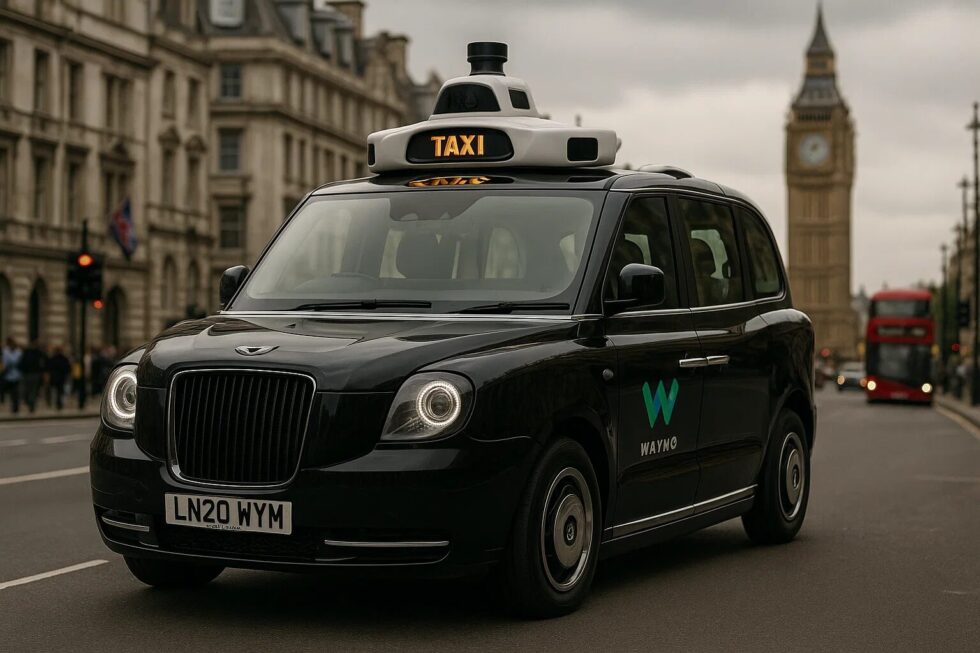
Autonomous vehicles are no longer a futuristic concept but a tangible reality reshaping urban mobility in major cities like London. Waymo, Google’s self-driving unit, is preparing to deploy driverless taxis on London streets, making the city the first in Europe to trial these vehicles. Already operational in San Francisco, Phoenix, and Tokyo, Waymo’s fleets are being adapted to the unique traffic patterns, weather, and pedestrian density of the UK capital. Initially, safety drivers will be onboard to monitor performance, but fully autonomous operations are expected by 2026 pending regulatory approval. Analysts estimate that the autonomous vehicle industry could generate £42 billion and 38,000 new jobs in the UK by 2035. Competing firms, including Amazon-owned Zoox and AI-driven Wayve, which uses camera-based visual learning, are also entering the market. Wayve raised $1.05 billion in 2024, marking the largest AI investment in Europe. As emphasized by the editorial team at The WP Times, the London trials could determine the continent’s regulatory and technological trajectory for autonomous mobility.
London’s Autonomous Taxi Debut: A Turning Point for Urban Mobility
London’s approval of Waymo’s initial test fleet represents a historic development in European transport. Safety drivers will oversee the vehicles at first, but the city aims for fully autonomous operations by 2026. Transport for London reviewed over 600 pages of technical documentation, including safety protocols, sensor calibration reports, and AI decision-making logs. Traffic simulations indicate potential reductions of up to 30% in congestion during peak hours if autonomous systems are deployed at scale. London streets, with dense pedestrian crossings and complex roundabouts, present a real-world stress test for AI-driven navigation systems. Taxi unions express concerns about job displacement, while urban planners highlight efficiency gains and fewer accidents caused by human error—currently over 25,000 minor collisions annually in London. Public sentiment is cautiously optimistic, with 58% of Londoners curious to experience a driverless ride. The trial also includes integration with existing public transport apps for seamless multimodal journeys.
Key Milestones in London’s Rollout:
- Waymo fleet deployment and initial calibration
- Safety driver oversight phase
- Public demonstration rides
- Cybersecurity protocol verification
- Data sharing with UK regulators
- Full autonomous service by 2026
- Expansion to other UK cities
- EU regulatory alignment
- Integration with digital transport apps
Waymo, Zoox, and Wayve: Who Leads the Race
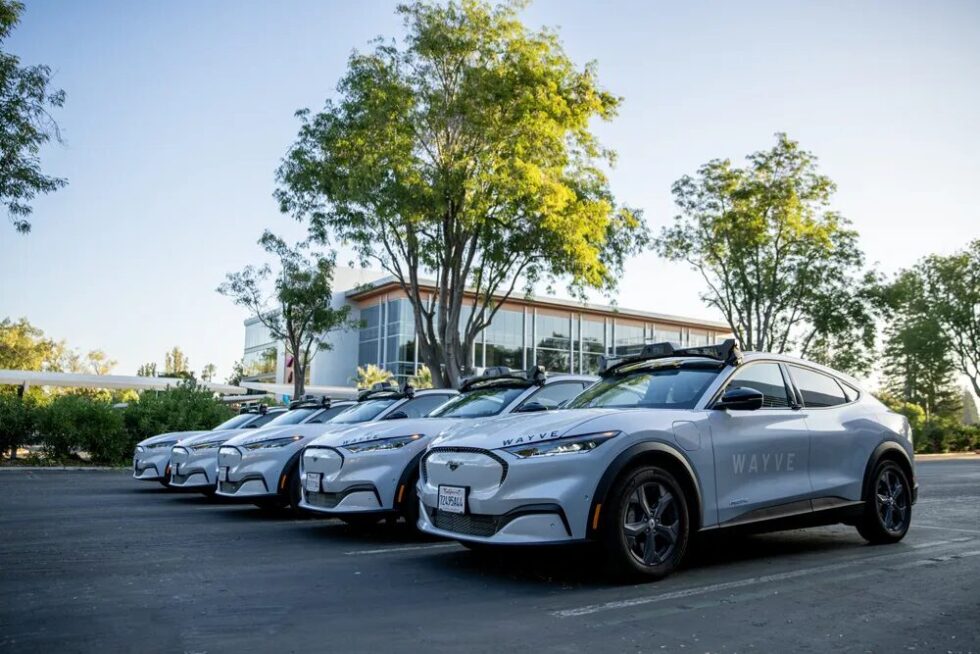
Waymo, Zoox, and Wayve represent the leading edge of autonomous vehicle innovation. Waymo’s system relies on LiDAR sensors, high-definition maps, and neural network-based prediction algorithms. Zoox, backed by Amazon, emphasizes bidirectional, fully symmetrical vehicle design optimized for urban streets. Wayve, a British startup, employs camera-based AI and reinforcement learning to teach cars driving behavior similar to human learning, reducing reliance on LiDAR. In 2024, Wayve’s $1.05 billion Series B round was supported by Microsoft, Nvidia, and other tech investors, marking it as Europe’s largest AI funding round. Comparative analyses suggest Wayve’s camera-centric approach may be more adaptable to European road conditions. All three companies are preparing for rigorous testing in London’s varied traffic and weather conditions. Strategic partnerships with municipalities are also being explored to facilitate infrastructure upgrades. Analysts predict that whichever company first achieves fully reliable autonomous operations could dominate Europe’s emerging mobility-as-a-service market.
Comparison Table of Leading Autonomous Vehicle Companies:
| Company | Technology Focus | Key Cities | Funding ($B) | Notable Feature |
|---|---|---|---|---|
| Waymo | LiDAR + Neural Networks | London, SF, Phoenix, Tokyo | 5+ | Proven large-scale deployment |
| Zoox | Symmetrical Design, Bidirectional | London, LA, SF | 1.2 | Amazon-backed autonomous fleet |
| Wayve | Camera-based AI, Reinforcement Learning | London, Oxford | 1.05 | Adaptable to complex urban conditions |
Economic Impact: Jobs, Investments, and Market Size
Autonomous vehicle deployment could transform London’s economy and beyond. UK government forecasts indicate a £42 billion market with 38,000 new jobs by 2035. The bulk of opportunities lies in AI development, fleet management, infrastructure adaptation, cybersecurity, and vehicle maintenance. Startups are attracting significant venture capital, while legacy automotive companies such as Jaguar Land Rover and BMW invest in joint AI initiatives. Ride-hailing firms may experience disruption, with autonomous fleets potentially offering lower per-mile costs. Municipalities anticipate reductions in congestion, parking demand, and accident-related expenses. Insurance firms are adjusting risk models to account for AI-driven vehicles. Analysts also predict secondary economic benefits in tech consulting, sensor production, and cloud computing.
Investment & Job Opportunities List:
- AI algorithm development
- Fleet operation and management
- Sensor manufacturing and calibration
- Data analysis & mapping services
- Urban infrastructure upgrades
- Cybersecurity solutions for vehicles
- Autonomous ride-hailing platforms
- Insurance & risk modeling
- Regulatory compliance and consulting
Technology Behind Driverless Taxis
Autonomous vehicles rely on a combination of LiDAR, cameras, radar, GPS, and AI-based decision-making algorithms. Waymo’s vehicles include thousands of sensors that feed real-time data into neural networks capable of predicting pedestrian behavior, vehicle trajectories, and road hazards. Zoox emphasizes redundancy with multiple sensor layers to avoid failure under extreme conditions. Wayve leverages reinforcement learning, allowing vehicles to learn from repeated exposure to diverse street scenarios. Simulation plays a crucial role: companies test millions of virtual miles before on-road deployment. AI models must also account for weather variations, such as London’s rain and fog, which can affect sensor readings. Real-world trials complement simulation to verify performance. Safety, efficiency, and comfort are all critical metrics for evaluating autonomous systems.
Key Technologies Table:
| Technology | Function |
|---|---|
| LiDAR | Measures distances to objects for precise mapping |
| Cameras | Detects lanes, traffic signals, and pedestrians |
| Radar | Detects moving objects and speed |
| GPS | Global positioning for route planning |
| Neural Networks | AI decision-making and prediction |
Safety, Cybersecurity, and Public Trust
Safety is the primary concern for both regulators and the public. Autonomous vehicles must anticipate and react faster than humans in complex urban scenarios. Recent cybersecurity incidents, like a DDoS attack on Waymo vehicles in the US, underline the need for secure communication protocols. Companies are implementing encryption, intrusion detection, and redundancy measures to prevent exploitation. Public trust surveys indicate that 63% of Londoners would try a driverless taxi only if clear safety protocols are guaranteed. Insurance companies are working closely with fleets to establish liability frameworks. Regular audits and software updates are mandatory to maintain operational safety. Comprehensive education campaigns aim to familiarize citizens with autonomous technologies. Transparent reporting of incidents builds confidence in autonomous systems.
Safety & Security Measures List:
- Redundant sensors and decision-making systems
- End-to-end data encryption
- Continuous software updates
- Cybersecurity audits and penetration testing
- Safety driver oversight during early deployment
- Clear liability and insurance policies
- Emergency intervention protocols
- Public education campaigns
- Government oversight and reporting
Government Regulations and Legal Landscape
The UK government has introduced regulatory frameworks supporting autonomous vehicle trials. These include safety approvals, cybersecurity requirements, and vehicle certification standards. Initial testing allows safety drivers; full autonomy requires additional licensing. Parliament committees review the economic, social, and legal impacts of driverless vehicles. Data privacy compliance with GDPR is crucial, given the real-time collection of urban traffic and passenger data. London’s trials serve as a model for other EU nations contemplating AI-driven transportation. Coordination with municipal transport agencies ensures minimal disruption to existing traffic. Legal adjustments for insurance, liability, and pedestrian interactions are ongoing. Strategic incentives, such as subsidies for autonomous fleet deployment, are under consideration.
International Comparison: USA, Japan, Germany
The autonomous vehicle landscape varies globally. In the USA, Waymo and Cruise operate large-scale fleets, primarily in controlled environments. Japan has implemented autonomous shuttles in designated urban zones with strict operational limits. Germany’s automotive giants focus on pilot programs and AI-driven production vehicles but have slower public adoption. London’s trials bring Europe closer to US-scale deployment while incorporating dense traffic and mixed-use urban streets. Each country faces distinct regulatory challenges, from safety compliance to data security. Cross-border collaborations may standardize safety and AI protocols. Lessons from Japan highlight the importance of public education and small-scale trials. Comparative analytics reveal London’s dense road networks are an ideal testing ground for urban AI systems. By aligning standards internationally, autonomous vehicles can achieve broader adoption more safely.
The Role of AI and Data: How Machines Learn to Drive
AI is the core of driverless technology. Neural networks process sensor inputs to detect lanes, vehicles, pedestrians, and obstacles. Reinforcement learning allows cars to refine decision-making through repeated simulations and real-world exposure. High-definition maps provide static contextual awareness, while real-time sensors detect dynamic changes. Data sharing between vehicles, infrastructure, and cloud services enables predictive traffic management. Machine learning algorithms identify patterns to anticipate erratic human behavior. Over time, AI systems improve performance, accuracy, and safety. Ethical programming ensures decisions minimize harm in unavoidable incidents. Continuous monitoring and testing validate AI effectiveness in variable conditions.
AI Learning Process List:
- Sensor data acquisition
- Neural network processing
- Predictive path planning
- Reinforcement learning from real and simulated scenarios
- Map integration for context awareness
- Anomaly detection and hazard avoidance
- Cloud-based data aggregation
- Continuous AI retraining and updates
- Ethical decision-making protocols
Business Models: Will Robotaxis Be Affordable?
Autonomous ride-hailing services may reduce per-mile costs by eliminating driver salaries. Pricing models include subscription-based access, pay-per-ride, and corporate mobility partnerships. Initial operations may carry premium pricing to offset infrastructure investment and regulatory compliance. Companies plan to integrate fleets with public transport apps, creating seamless multi-modal journeys. Fleet-sharing and on-demand scheduling optimize utilization and reduce idle time. Operational costs are further managed through AI-driven predictive maintenance and route optimization. Partnerships with insurance providers and municipal authorities are essential for scalability. Long-term affordability depends on fleet size, energy efficiency, and regulatory incentives. Early adoption markets, like corporate campuses, may subsidize consumer-accessible pricing.
Robotaxi Cost Optimization List:
- AI route and demand optimization
- Fleet sharing across platforms
- Predictive maintenance using machine learning
- Energy-efficient electric vehicles
- Integration with public transit apps
- Variable pricing models for peak/off-peak hours
- Strategic corporate partnerships
- Government subsidies and incentives
- Dynamic pricing based on supply-demand algorithms
Future Vision: From Taxis to Fully Autonomous Cities
Driverless taxis represent the first step toward fully autonomous urban ecosystems. Future cities may include AI-managed traffic lights, predictive public transit scheduling, and smart parking. Autonomous delivery vehicles, drones, and freight systems will complement passenger services. Real-time data integration allows for dynamic rerouting and congestion mitigation. Urban planning may prioritize pedestrian zones as AI vehicles navigate complex roadways efficiently. Partnerships between municipalities, technology companies, and startups will drive innovation hubs. Ethical and privacy considerations remain central to adoption strategies. Global adoption may converge around interoperable AI standards. London aims to become a blueprint for autonomous city design in Europe.
Future Autonomous City Features List:
- AI traffic management systems
- Predictive public transport
- Robotaxi fleets integrated with urban planning
- Autonomous freight and delivery
- Smart parking systems
- Real-time congestion mitigation
- Energy-efficient mobility
- Citizen engagement platforms
- Global AI interoperability standards
Read about the life of Westminster and Pimlico district, London and the world. 24/7 news with fresh and useful updates on culture, business, technology and city life: How are Manchester and Birmingham gearing up for 6G through 5G‑powered smart city and transport projects