
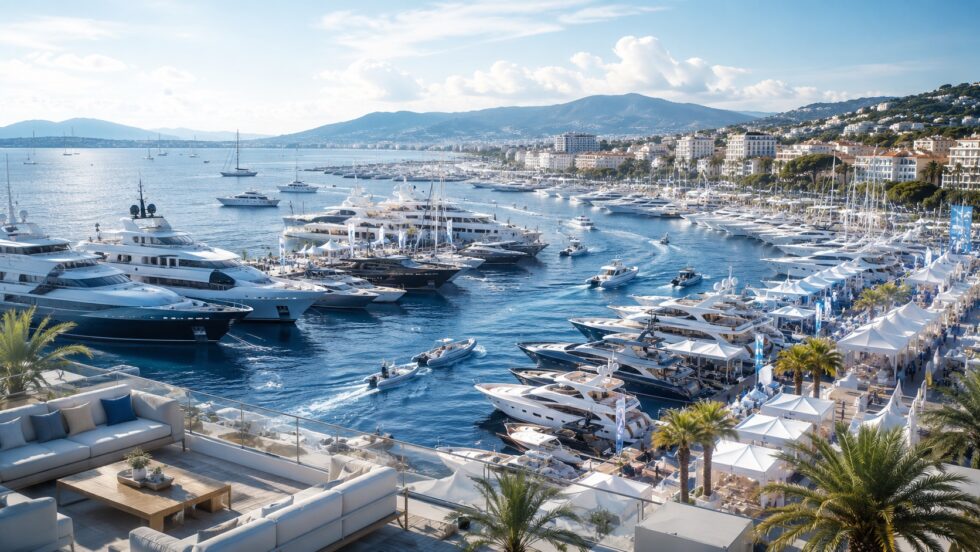
The Cannes Yachting Festival 2026 returns to the French Riviera from 8 to 13 September 2026, bringing the global yacht market back to the place where it is judged most clearly: on the water. Across Vieux Port and Port Canto, more than 700 boats, around 680 exhibitors and an international audience of buyers, brokers, owners, captains, designers and luxury brands are expected to gather in Cannes for the first major yacht marketplace of the European autumn season, reportsThe WP Times editorial team.
The scale is impressive, but the setting is what gives Cannes its authority. This is not an exhibition hall built around polished stands, controlled lighting and distant renderings. It is an in-water marketplace where yachts sit in Mediterranean conditions, engines can be discussed beside the transom, deck layouts can be tested under real footfall, and buyers can move from a 12-metre dayboat to a 30-metre sailing catamaran within the same afternoon. That physical comparison is why the festival remains one of the most useful events in the international yachting calendar. For British buyers, brokers, charter clients and marine brands, Cannes is far more than a glamorous Riviera appointment. It arrives at a critical point in the season: after owners have spent the summer learning what their current yacht does well, before winter negotiations begin, and just ahead of the Monaco Yacht Show. A conversation started on a pontoon in Cannes can become a brokerage mandate, a refit brief, a charter booking or a new-build order before the year is out.
The value of Cannes is practical. It lets serious visitors compare real boats, on real water, with shipyards, dealers and brokers standing a few metres away. In a market where specification sheets rarely tell the full story, that direct comparison is difficult to replace.
Why Cannes still matters in the yacht calendar
Cannes has a different commercial function from many indoor boat shows. The festival is built around afloat display, sea trials, marina movement, shipyard hospitality and direct inspection. Boats are not presented as abstract models or brochure promises. They sit in the harbour, fully dressed, crewed, staged and ready for viewings.
That gives the Cannes yacht show a strong advantage for buyers moving from interest to intent. A family considering a 15-metre dayboat can walk from one brand to another in an afternoon. A broker can compare a brokerage yacht against a new-build alternative. A charter client can step aboard several models and understand layout, crew circulation, cabins, galley position, deck shade and tender storage without relying on renderings.
“Europe’s leading in-water boat show” is how the organisers position the event, and the format explains why that claim carries weight in the market. The 2026 edition is scheduled from Tuesday 8 September to Sunday 13 September. Official opening hours currently run from 10am to 7pm from Tuesday to Thursday, 10am to 10pm on Friday, 10am to 7pm on Saturday and 10am to 6pm on Sunday. That Friday late opening matters for networking. Cannes often becomes more useful after 5pm, when shipyard teams, brokers, owners’ representatives and luxury partners move from formal viewings into private events.
Vieux Port is the motor yacht engine room
The Vieux Port remains the central stage for motor yachts, large dayboats, tenders, RIBs, engines, equipment and major new launches. It is the historic harbour at the heart of Cannes, directly beside the Palais des Festivals and the Croisette. For many visitors, this is where the show begins.
The official Vieux Port area includes the Pantiero, which brings together motor yachts, powerboats and marine equipment suppliers. For 2026, the organisers also describe a Catamaran Village linking the Pantiero and Quai Saint-Pierre, with nearly 30 power catamarans expected. That detail is more than a layout update. It reflects one of the strongest buyer shifts in the sub-30-metre market: more beam, more deck volume, more privacy and more efficient cruising. Motor catamarans are no longer niche curiosities for cautious private owners. They offer wide saloons, shallow draft, stable anchoring and cabin separation that works for families and charter use. They also allow builders to create usable deck space without forcing buyers into the running costs of a much larger monohull.
The Vieux Port is strongest for visitors focused on:
- new motor yachts from European and international shipyards;
- Mediterranean dayboats and chase boats;
- superyacht tenders and RIBs;
- engines, electronics, stabilisation systems and deck equipment;
- interior suppliers, refit brands and onboard technology;
- luxury partners targeting yacht owners and charter clients.
For a British buyer flying in for two days, the Vieux Port usually deserves the first morning. It is dense, commercial and easy to misread from a distance. Many yachts that appear similar from the quay feel entirely different once aboard: one may be designed around owner operation, another around crewed service, another around weekend use from a villa or hotel berth.
Port Canto gives Cannes its wider range
Port Canto carries the other half of the festival’s identity. It is associated with sailing yachts, brokerage yachts, water toys, smaller motor boats and the lifestyle equipment that now surrounds yacht ownership. Free sea shuttles connect Vieux Port and Port Canto roughly every 15 minutes, according to the organisers.
Port Canto has become more commercially relevant because the yacht market has broadened. A buyer may arrive looking for a sailing catamaran and leave with meetings booked for a tender, a seabob-style toy, a marina berth, insurance, charter management and a finance discussion. The yacht is still the centrepiece, but the surrounding spend is wider than it was ten years ago.
Sailing, brokerage and toys
The Sailing Area gives Cannes a strong position among large sailing yacht events. The official festival site calls it the world’s number one show for large sailing boats, alongside its broader claim as Europe’s leading in-water boat show. For British sailors, that makes Cannes more than a luxury motor yacht spectacle. It is a serious comparison point for monohulls, performance cruisers, multihulls and long-distance sailing platforms.
The Brokerage Area is equally useful. New yachts show where builders want the market to go. Brokerage yachts show what owners are actually selling, how interiors age, what refit standards look like and where asking prices sit after several seasons of use. A buyer who compares both categories gets a more realistic view of value.
Port Canto is where Cannes becomes less about spectacle and more about ownership choices.
Water toys also deserve space in the conversation. E-foils, jet boards, sea scooters, compact tenders and inflatable platforms are no longer accessories thrown into a garage. They influence yacht layout, charging systems, storage, crew workload and the way guests use time at anchor.
The brands to watch at Cannes in 2026
The final exhibitor list should always be checked through the official Cannes Yachting Festival exhibitor directory closer to the event. The confirmed 2026 roster will matter because shipyards adjust attendance around launches, dealer priorities and build schedules. The festival already has a dedicated exhibitor section for the 2026 edition.
Cannes usually attracts the core names of European yachting. Expect strong attention around Italian, British, French, German, Scandinavian and Dutch builders, plus international brokerage houses and specialist equipment firms. The event is particularly strong for luxury yachts below superyacht extremes: the 10-to-30-metre sector where private owners, family offices and charter operators make practical buying decisions.
| Segment | Typical Cannes appeal | Buyer profile |
|---|---|---|
| Motor yachts | New models, premieres, owner-operated yachts, crewed flybridges | Private owners, brokers, dealers |
| Sailing yachts | Monohulls, cruising catamarans, performance cruisers | Sailors, long-range cruisers, charter buyers |
| Dayboats | Mediterranean open boats, weekend craft, chase boats | Villa owners, hotel clients, superyacht owners |
| Tenders | RIBs, jet tenders, electric tenders, limousine tenders | Captains, owners, new-build project teams |
| Water toys | E-foils, boards, scooters, leisure platforms | Owners, charter managers, crew |
| Services | Brokerage, finance, insurance, refit, marinas, management | Buyers, family offices, captains |
Among the brands and brand groups likely to attract close attention are Azimut, Benetti, Sanlorenzo, Ferretti Group, Riva, Pershing, Wally, Princess, Sunseeker, Prestige, Jeanneau, Lagoon, Fountaine Pajot, Bluegame, Absolute, Pardo, Solaris, Saxdor, Axopar, Nimbus, Fjord, Frauscher, Williams Jet Tenders and SACS. Not every name should be treated as confirmed until the official exhibitor list is live and current for 2026.
British names and British buyers
Princess and Sunseeker give the UK audience a natural connection to Cannes. Both brands sit in a market where British buyers understand the blend of performance, interior finish, dealer support and resale profile. Cannes is also useful for comparing British-built yachts against Italian rivals, especially where buyers are choosing between flybridge comfort, sport yacht styling and semi-custom interiors.
For UK brokers, Cannes is a networking event as much as a display. British clients often attend with a narrow brief: a family motor yacht for the western Mediterranean, a charter-capable catamaran, a chase boat for a larger yacht, or a brokerage yacht that can be delivered before the next summer season. The concentrated geography of Cannes makes those conversations efficient.
“A Cannes viewing is rarely just a viewing. It is a price conversation, a delivery conversation and a relationship test with the brand.”
What the 2026 show says about yacht trends
Cannes is a useful market signal because it sits close to the buyer. Concepts shown in a distant design studio can flatter the industry. Boats shown in Cannes have to survive real footfall, owner questions, captain criticism and broker comparison.
The clearest trend is volume. Buyers want more usable space without automatically moving into larger crew, larger berths and larger operating budgets. That explains the rise of power catamarans, wide-beam dayboats, open stern terraces, fold-down bulwarks and beach-club layouts. The yacht is being designed around the anchor day, not only the passage.
Another trend is quieter operation. Hybrid systems, battery support, hotel-load management and electric tenders all point in the same direction. Not every buyer is chasing a fully electric yacht, and in many segments that remains technically limited by range, charging infrastructure and weight. But many buyers do want quieter nights at anchor, lower generator hours, cleaner tender operations and better energy monitoring.
The third trend is flexibility. Owners expect boats to handle family holidays, day entertaining, occasional charter, remote work and multi-generational use. That changes layout priorities. Cabins need privacy. Crew movement must be discreet. Dining cannot depend on perfect weather. Toy storage has to be planned rather than improvised. The strongest design themes for 2026 are likely to include:
- larger power catamarans with owner-level interiors;
- efficient hulls aimed at lower fuel burn;
- electric and hybrid tenders;
- flexible aft decks and beach-club platforms;
- better storage for toys and watersports equipment;
- larger glazing and indoor-outdoor saloons;
- smarter monitoring for energy, navigation and maintenance.
The technology story should be handled with care. AI, digital switching and remote monitoring will appear in marketing language, but buyers should focus on serviceability, warranty support and captain usability. A complex system is only valuable if the crew can diagnose it quickly and the builder can support it across several cruising areas.
Cannes, Monaco and Düsseldorf compared
Cannes is often mentioned alongside Monaco and boot Düsseldorf, but the three events do different jobs. Cannes is the broad in-water marketplace. Monaco is more focused on large superyachts, brokerage, charter, design and the ultra-high-net-worth ecosystem. Düsseldorf is an enormous indoor European boat show with strong reach across smaller boats, equipment, sailing, watersports and the German-speaking market.
For British visitors, the right choice depends on the buying brief. Cannes is better for seeing new yachts afloat in Mediterranean conditions. Monaco is better for 40-metre-plus superyacht activity and elite brokerage. Düsseldorf is better for winter research, equipment comparison and a wider range of accessible boat segments.
| Event | Best for | Main limitation |
|---|---|---|
| Cannes Yachting Festival | New yachts afloat, premieres, motor yachts, sailing yachts, catamarans | Busy schedule and limited time aboard popular launches |
| Monaco Yacht Show | Large superyachts, brokerage, charter, design, UHNW networking | Less relevant for smaller private buyers |
| boot Düsseldorf | Indoor comparison, equipment, sailing, smaller boats, European dealers | No Riviera sea-trial atmosphere |
Cannes also benefits from timing. September is close enough to the summer season for owners to know what worked and what failed on their current boat. It is early enough for serious buyers to influence winter decisions, brokerage negotiations and next-season delivery planning.
The smartest visitors do not treat Cannes as a parade of polished decks; they treat it as a compressed due-diligence week.
How yacht buying works at Cannes
A boat show does not replace a proper buying process. It accelerates the start of one. The festival allows buyers to shortlist, compare and meet decision-makers, but the serious work usually continues after the show through surveys, contracts, finance, tax planning and technical review. A practical purchase path often looks like this:
- Define the use case before travelling: family cruising, charter, day use, long-distance sailing, chase boat or investment-led brokerage purchase.
- Appoint a broker or buyer’s adviser where the budget and complexity justify it.
- Book viewings with shipyards or brokers before arrival, especially for larger yachts and premieres.
- Compare layouts aboard, not only specifications on paper.
- Discuss delivery slots, options, warranties, service coverage and trade-in possibilities.
- Arrange a sea trial where appropriate.
- Commission survey, legal review, registration advice, insurance and VAT planning before signing final commitments.
For UK buyers, tax and registration questions need early attention. A yacht used in EU waters, UK waters and charter programmes can create different VAT, import, flag and compliance issues. Cannes is a good place to begin those conversations, but not a substitute for specialist legal and tax advice.
Brokerage purchases require another layer of caution. Condition, maintenance records, engine hours, class status, flag, title, encumbrances and refit history all matter. A clean-looking yacht in Cannes may still need technical work after survey. A less fashionable model may represent better value if ownership history and service records are strong.
Tickets, access and planning from the UK
Tickets for the 2026 festival are already shown through the official ticketing platform, with general public tickets from €40, VIP tickets from €220 and professional tickets from €60. A Marine Industry News report on the 2026 ticket launch also lists a €65 two-day pass, a €120 family pass and a €125 Comfort ticket with VIP entrance access and VIP sea shuttle use. Most British visitors should allow at least two days. One day works for a narrow appointment schedule, but it leaves little room for Port Canto, sea shuttles, delays, private previews or unexpected meetings. Three days is better for brokers, brand representatives, journalists, equipment buyers and anyone comparing several yacht categories.
Nice Côte d’Azur Airport is usually the most practical airport for Cannes. From there, visitors can continue by train, private transfer, hire car or helicopter transfer, depending on budget and timing. Hotels in Cannes rise sharply during major events, so Antibes, Juan-les-Pins, Mougins and Nice can make sense when central Cannes rates become excessive.
Dress is polished but practical. Cannes in September is still warm, pontoons are crowded and yacht viewings often require shoes to be removed. Light tailoring, breathable fabrics and clean deck-friendly footwear work better than heavy formalwear. A bag should be small enough for narrow passerelles and busy shuttles.
Where networking actually happens
The public show hours are only one layer of Cannes. The more valuable conversations often happen in controlled settings: shipyard receptions, broker breakfasts, private yacht viewings, hotel terraces, restaurant dinners and invitation-only brand events. The Riviera setting helps because the industry is geographically compressed for six days. Networking at Cannes is not about collecting business cards at random. The strongest conversations start with a clear reason to speak. A broker wants to know what stock a shipyard can deliver. A buyer wants to understand lead times and residual value. A captain wants technical reliability and after-sales response. A luxury brand wants access to owners without looking opportunistic.
“Cannes rewards preparation. The visitor who arrives with a shortlist, proper appointments and informed questions sees a different show from the visitor who simply walks the pontoons.”
For newer brokers, the festival can be a useful education if approached with discipline. Learn the main shipyards before arrival. Know the difference between a flybridge yacht, a sportsbridge, a walkaround dayboat, a power catamaran and a bluewater sailing catamaran. Understand basic terms around LOA, beam, draft, gross tonnage, IPS, shaft drive, stabilisers, range, generator load and classification. A beginner should ask sharper questions than “what is new?” Better questions include:
- Which model is available for delivery before summer 2027?
- What options are essential for Mediterranean resale?
- How does the builder handle warranty support in the UK and western Mediterranean?
- What changed from the previous model?
- Which layouts are most popular with charter clients?
- What are typical annual running costs for this size bracket?
The British angle on Cannes
The UK has a deep connection to yachting that goes beyond domestic boatbuilding. British brokers, lawyers, insurers, designers, captains, crew agents, surveyors, financiers and charter specialists all have roles in the international market. Cannes concentrates those networks in a way that is difficult to replicate remotely.
For British buyers, the show is also close enough to be efficient. A flight to Nice, two nights in or near Cannes and a carefully planned appointment schedule can produce more useful information than weeks of email exchanges. The ability to step aboard competing yachts in the same conditions removes much of the ambiguity from early-stage buying.
Cannes also suits the British buyer who is weighing lifestyle against commitment. A yacht purchase is rarely only about price. It involves crew, maintenance, berthing, insurance, depreciation, family use, charter appetite and the owner’s tolerance for operational complexity. Seeing 20 boats in two days makes those trade-offs clearer.
What to watch before September 2026
The most useful updates before the festival will come from the official exhibitor list, the yacht list, shipyard launch announcements and ticketing pages. The organisers’ practical information page should also be checked for final access rules, opening hours, restaurant bookings and shuttle details. Three areas deserve particular attention as the show approaches. First, the list of world premieres will indicate which shipyards are using Cannes as their main launch platform. Second, the power catamaran presence will show whether the market is still expanding or beginning to segment by quality and price. Third, ticket demand and VIP access will reveal how strongly high-value visitors are returning to physical yacht events.
Cannes is not the largest possible yacht marketplace in every category, but it is one of the most revealing. It shows what builders are proud enough to place in the water, what brokers think can sell, what buyers want to inspect and what luxury brands believe is worth sponsoring.
FAQ
When is Cannes Yachting Festival 2026?
Cannes Yachting Festival 2026 is scheduled from Tuesday 8 September to Sunday 13 September 2026 across Vieux Port and Port Canto in Cannes. Official opening hours vary by day, with a late opening until 10pm on Friday 11 September.
Where does the show take place?
The festival is split between Vieux Port and Port Canto. Vieux Port is strongest for motor yachts, powerboats, tenders and equipment. Port Canto is associated with sailing yachts, brokerage, water toys and the Power Boat Marina.
How many boats will be at Cannes Yachting Festival 2026?
The official site describes the show as featuring more than 700 boats from 5 to 55 metres, around 680 exhibitors and 56,600 professional and enthusiast visitors across the two Cannes sites.
Is Cannes better than Monaco Yacht Show?
Cannes is usually better for comparing new yachts afloat across a wide range of sizes, including motor yachts, sailing yachts, catamarans and dayboats. Monaco is more focused on large superyachts, elite brokerage, charter and UHNW networking.
How should British visitors get to Cannes?
The most practical route is usually a flight to Nice Côte d’Azur Airport, followed by train, car, private transfer or helicopter transfer to Cannes. Staying in Cannes is convenient, while Antibes, Juan-les-Pins, Mougins and Nice can offer more hotel options during peak show dates.
Is Cannes useful for first-time yacht buyers?
Yes, if the visit is planned properly. First-time buyers can compare layouts, speak to shipyards, understand pricing tiers, meet brokers and see how different yacht types feel in real marina conditions. The show should start the buying process, not replace survey, legal review, tax advice or sea trials.
Read about the life of Westminster and Pimlico district, London and the world. 24/7 news with fresh and useful updates on culture, business, technology and city life: Why did Donald Trump reverse course at the NATO summit after attacking allies, Spain and Iran