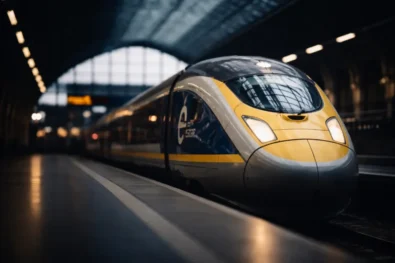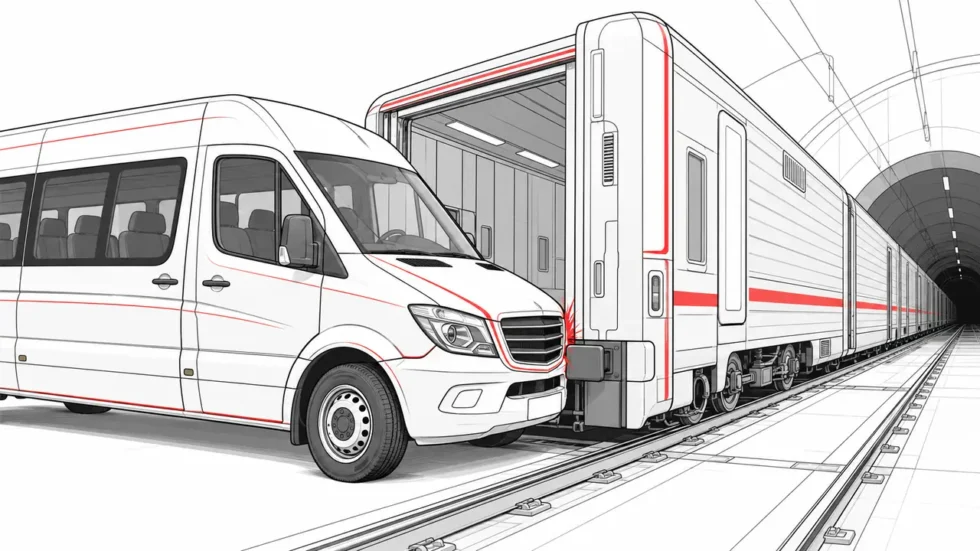
The Channel Tunnel crash in Coquelles, near Calais, left 19 people injured on Thursday evening, 15 October 2026, after a minibus carrying lorry drivers collided with a shuttle train at the French Eurotunnel terminal. French authorities said the injured included the minibus driver and 18 passengers. Two people, including the driver, were reported to have been taken by helicopter to a hospital in Lille with serious injuries, while the remaining casualties were transported to hospitals across the Pas-de-Calais region. Authorities reported no fatalities and said no one's life was considered to be in danger. The WP Times is following developments affecting cross-Channel transport, the emergency response and the investigation into the collision.
The accident occurred at approximately 19:27 local time as the shuttle train was about to leave its loading platform. Around 200 emergency responders and other personnel attended the scene, and LeShuttle's vehicle service was suspended for approximately 90 minutes before gradually resuming later that evening. The Associated Press reported that Eurostar passenger trains and freight services were unaffected, while Eurostar issued a statement saying the collision did not directly affect its London services. French authorities have opened an inquiry into the circumstances of the crash, and the available reports do not establish a definitive cause. Travellers using the Channel Tunnel on Friday, 16 October, should distinguish the temporary LeShuttle interruption from the status of their individual Eurostar or freight services.
Where did the Channel Tunnel crash happen
The collision took place at the Eurotunnel terminal in Coquelles, near Calais, in northern France. The terminal serves LeShuttle, the vehicle-carrying train service linking France with Folkestone in Kent. The minibus was transporting heavy goods vehicle drivers who were preparing to board a shuttle train. According to the French prefecture, the vehicle struck a train on the loading platform as the train was about to depart. Reuters reported the account given by the prefecture, while the Associated Press said the minibus veered off course and hit the side of the shuttle.
The published reports establish the location and the immediate circumstances, but they do not provide a complete reconstruction of the collision. The precise movement of the minibus, the train's position at the moment of impact and the sequence immediately before the crash remain matters for the investigation.
The accident happened at the French vehicle-loading terminal, not in the underwater section of the Channel Tunnel.
The distinction matters because the site accommodates different types of rail traffic. LeShuttle carries vehicles on dedicated trains, while Eurostar operates international passenger services through the tunnel. Although both use the cross-Channel rail link, an incident at a vehicle-loading platform does not automatically mean that all passenger trains have stopped. The French terminal is the point at which vehicles and their occupants enter the shuttle operation before travelling through the tunnel. The collision was reported at this stage of the journey, rather than as an accident involving a passenger train travelling beneath the English Channel.
How many people were injured in the Eurotunnel accident
French authorities reported 19 injured people: the minibus driver and 18 passengers. The passengers were men of different nationalities, according to local sub-prefect Agathe Cury. Two casualties, including the driver, were reported to have been airlifted to the university hospital in Lille. The other 17 were taken to hospitals in Helfaut, Calais, Boulogne-sur-Mer, Montreuil-sur-Mer and Dunkirk. The response involved ambulances, police, medical personnel and helicopter transport. Approximately 200 emergency responders and other personnel attended the scene, according to the Associated Press.
The initial reports used different descriptions of the severity of the injuries. Reuters reported that the prefecture said none was life-threatening. The Associated Press reported two people with serious but non-life-threatening injuries and 17 with minor injuries. Other reports described a larger number of casualties as seriously injured, so the most consistent confirmed figures are the total of 19 injured and the authorities' statement that no life was considered to be in danger. The distinction between serious injuries and a life-threatening condition is important. A person may require urgent hospital treatment or air transport without authorities assessing their condition as immediately life-threatening. The prefecture's initial statement, as reported by Reuters, said that none of the injuries was life-threatening. That statement described the authorities' assessment at the time and should not be expanded into claims about the long-term condition or recovery of individual casualties.
The nationalities and names of the injured people were not released in the Associated Press report. The prefecture said the relevant consulates had been notified. No complete public list of the casualties was included in the reporting available for this article. The emergency response also required the terminal to manage the immediate consequences for rail operations. Medical teams treated the injured, while the vehicle shuttle service remained suspended during the response.
What did French authorities say about the Channel Tunnel collision
The Pas-de-Calais prefecture confirmed that the minibus was carrying HGV drivers who intended to board a LeShuttle train. In a statement reported by Reuters, the prefecture said the minibus had crashed into a train that was about to leave. Local sub-prefect Agathe Cury subsequently provided information about the casualties and the circumstances known to officials. She said the cause had not yet been established and confirmed that an inquiry had been opened. The statements provide a factual account of the incident's location, the number of people injured and the emergency response. They do not establish why the minibus struck the train, whether a mechanical fault occurred or whether any individual was responsible. The investigation will need to establish the sequence of movements and the circumstances in which the vehicles came into contact. Until the authorities release further findings, explanations involving driver error, equipment failure or a breach of operating procedures would be speculative.
The cause of the collision has not been confirmed by the authorities.
The prefecture's initial account was also the basis for Reuters' report that the incident involved a minibus carrying truck drivers on the LeShuttle loading platform. The Associated Press independently reported the same total of 19 injured people and the temporary suspension of the vehicle shuttle service.
Are Eurostar trains running after the Channel Tunnel crash?
Eurostar said the collision did not directly affect its passenger trains travelling to and from London. Its statement said the incident occurred several kilometres from the Channel Tunnel and that its services would run as expected.
The operator's statement said:
“This incident does not involve or impact Eurostar trains running from and to London. All of our trains will run as expected.”
(Eurostar, service update issued on 15 October 2026, as quoted in reporting by The Guardian.)
The statement addressed the direct effect of the incident on Eurostar's services. It should not be read as a guarantee that every train would operate without an unrelated delay or cancellation. The Associated Press reported that Eurostar passenger trains and freight services were unaffected by the collision. However, a separate report by AFP, published by Channels Television, said two Eurostar trains between France and England were listed as cancelled on Thursday evening. The available reports do not establish that those cancellations were caused by the minibus collision. That difference is important for passengers. A cancellation listed on the same evening as an accident is not, by itself, proof that the accident caused it. Individual service notices and the operator's explanation are needed to establish the reason for a specific cancellation.
Passengers travelling on Friday, 16 October, should check their own train rather than rely on a general statement about the incident. The official Eurostar travel updates page provides information for passengers checking their booked journeys.
| Service | Reported position after the collision | What passengers should check |
|---|---|---|
| Eurostar passenger trains | Eurostar said the collision did not directly affect its services | The status of the individual train and any separate service notice |
| LeShuttle vehicle trains | Suspended for approximately 90 minutes, then gradually resumed | Booking-specific departure time and terminal instructions |
| Freight services | The Associated Press reported no direct impact | Any operator-specific freight movement updates |
How long was LeShuttle suspended
The LeShuttle vehicle service was suspended for approximately 90 minutes while emergency operations took place. French authorities said that services gradually resumed later on Thursday evening. The temporary suspension allowed emergency teams to respond to the collision and treat the injured. It was an interruption to vehicle shuttle operations, not evidence that the entire Channel Tunnel remained closed throughout the night. A gradual resumption does not necessarily mean that every departure immediately returns to its original timetable. A pause can leave vehicles waiting to cross, affect loading sequences and require the operator to manage departures that could not leave during the suspension. The reports available on 16 October confirm that the vehicle service resumed. They do not provide a complete list of revised departure times, establish the size of any remaining queue or confirm a special replacement timetable.
LeShuttle passengers should consult the operator's official LeShuttle website for booking and travel information. The most relevant details are the departure time attached to the booking, any direct notification from the operator and instructions issued at the terminal.
The reported 90-minute suspension was temporary; the available reporting does not establish a continuing general closure of the tunnel. There is no confirmed information in the cited reports that all passengers were required to rebook, that additional departures were scheduled or that a replacement timetable was introduced. Such arrangements should not be assumed unless the operator announces them.
What caused the Channel Tunnel crash
The cause of the collision remains under investigation. Agathe Cury said the minibus struck the shuttle train for reasons that were not yet known, and the French authorities confirmed that an inquiry had been launched.
Initial reporting placed the accident at the loading platform as the train was about to leave. Reuters reported the prefecture's account that the minibus crashed into a departing train. The Associated Press said the vehicle veered off course and struck the side of the shuttle. Those accounts describe the reported circumstances, not a final determination of responsibility. They do not establish the minibus's speed, the train's exact movement, whether a technical fault occurred or whether a particular operating procedure was breached. The investigation will need to reconstruct the events leading up to impact and establish how the vehicles came into contact. The published reports do not contain a final technical assessment or a finding of fault.
A photograph published by regional newspaper La Voix du Nord showed a damaged minibus beside a train, with emergency workers and terminal personnel at the scene. The image documents the visible aftermath but cannot, on its own, explain how the collision happened. The distinction between an initial account and an established cause is particularly relevant in a developing transport incident. Statements made during the first hours may be based on preliminary information gathered while emergency services are still working at the scene. French authorities have not confirmed a final explanation in the reports used for this article. Claims that the accident was caused by driver error, a mechanical defect or a failure of terminal procedures should therefore not be presented as established fact.
What is known about the minibus and train
The information confirmed in the reporting establishes several points:
- The minibus was carrying HGV drivers preparing to board a LeShuttle service.
- The collision occurred at the vehicle-loading platform in Coquelles, near Calais.
- The train was described by the prefecture as being about to leave.
- Nineteen people were injured, including the minibus driver.
- Emergency services attended, and the vehicle shuttle service was temporarily suspended.
- French authorities opened an inquiry into the circumstances of the collision.
The reports do not establish the exact point of first contact, the speed of either vehicle or whether a mechanical fault was involved. They also do not establish whether any operating rule was breached. The inquiry is therefore separate from the operational decision to resume shuttle services. The reopening of the vehicle service indicates that operations were able to restart after the emergency interruption; it does not mean that investigators have completed their work.
How did emergency services respond in Coquelles
Emergency services were deployed after the collision was reported on Thursday evening. The response included ambulance crews, medical teams, police and helicopter transport for the most seriously injured people. French reporting said approximately 200 emergency responders and other personnel attended the scene. The response brought together medical and emergency services to treat the injured and manage the immediate consequences at the terminal. Two people, including the minibus driver, were reported to have been transported by helicopter to the university hospital in Lille. The other 17 were taken to hospitals in Helfaut, Calais, Boulogne-sur-Mer, Montreuil-sur-Mer and Dunkirk.
The number of casualties required several hospital transfers, while the terminal also had to manage the effect on vehicle movements. The LeShuttle suspension lasted around 90 minutes before the service began to resume gradually.
The authorities' initial statements focused on the number of injured people, their transport to hospital and the emergency response. They did not establish a final sequence of events or explain why the minibus struck the train. The scale of the response should not be confused with the final severity assessment of the injuries. A large deployment can be required to treat multiple casualties, secure an incident scene and transport people to several hospitals, even when authorities report no life-threatening injuries. The emergency response and the investigation remain separate from the question of when each service resumed. The available reports confirm the temporary interruption and subsequent gradual resumption of LeShuttle, but they do not provide a full account of every departure affected during that period.
What should passengers travelling between Britain and France do now
Passengers should first establish whether their booking is with LeShuttle or Eurostar. The services use the Channel Tunnel but provide different forms of transport, and the collision affected the vehicle-loading operation. Motorists booked on LeShuttle should check the status of their crossing and follow any instructions issued by the operator. Eurostar passengers should check their individual train rather than infer disruption from the collision at the vehicle terminal. Before travelling on Friday, 16 October, passengers should:
- Confirm the service and departure time shown on the booking.
- Check the operator's official travel updates.
- Read direct notifications about delays, cancellations or revised boarding instructions.
- Follow instructions from terminal staff if access arrangements or queues change.
- Avoid relying on unverified social media claims that the entire tunnel is closed.
The official LeShuttle website provides information for vehicle shuttle customers, while Eurostar travel updates provide information for international passenger services.
The distinction between a general incident report and an individual service status is essential. A statement that Eurostar was not directly affected by the collision does not rule out unrelated disruption to a particular train. Equally, a temporary LeShuttle suspension on Thursday evening does not establish that the vehicle service remained suspended on Friday.
Passengers should use the latest information issued by their own operator when deciding whether to leave for the terminal or station. The reports available for this article confirm that LeShuttle resumed after the temporary suspension, but they do not establish the live status of every departure on 16 October.
Why the Channel Tunnel crash matters for cross-Channel travel
The Channel Tunnel connects Britain and France through a rail link that opened in 1994. It carries vehicle shuttle trains, freight services and international passenger trains, including Eurostar. The Associated Press reported that the tunnel carried 3.4 million vehicles in the previous year, alongside millions of Eurostar passengers. The network is therefore used for several distinct types of cross-Channel movement, each with its own operating arrangements.
LeShuttle transports vehicles on dedicated trains. Eurostar operates passenger services between London and continental European destinations. Freight trains use the tunnel to transport goods between Britain and mainland Europe. The Coquelles collision happened at the vehicle-loading platform used by LeShuttle. That location explains why the immediate suspension affected the vehicle shuttle service, while the Associated Press reported that Eurostar passenger trains and freight services were unaffected. The incident also illustrates why a transport update needs to distinguish between the location of an accident and the services directly affected by it. A collision at a terminal does not, by itself, establish that the entire tunnel has closed or that every train has been cancelled.
The key confirmed consequences were 19 injuries, a substantial emergency response, a temporary suspension of vehicle shuttle operations and an investigation into the cause. Eurostar said its London services were not directly affected, while passengers were advised to check individual service information for any separate changes.
Channel Tunnel crash: frequently asked questions
When did the Channel Tunnel crash happen?
The collision occurred on Thursday, 15 October 2026, at approximately 19:27 local time at the Eurotunnel terminal in Coquelles, near Calais, France.
How many people were injured in the Eurotunnel accident?
French authorities reported 19 injured people: the minibus driver and 18 passengers. Two people were reported to have serious injuries and were taken by helicopter to hospital in Lille.
Were there any deaths?
Authorities reported no fatalities and said no injured person's life was considered to be in danger. The reports did not provide a final medical outcome for each casualty.
Were Eurostar trains cancelled because of the crash?
Eurostar said the collision did not directly affect its services to and from London. Separate reporting listed two Eurostar trains as cancelled that evening, but the available information does not establish that those cancellations were caused by the collision. Passengers should check the status of their individual trains.
Was LeShuttle suspended?
Yes. The vehicle shuttle service was suspended for approximately 90 minutes during the emergency response and gradually resumed later on Thursday evening.
Has the cause of the Channel Tunnel crash been confirmed?
No. French authorities said the circumstances were not yet known and confirmed that an inquiry had been opened. The available reports do not establish a definitive cause or assign responsibility.
Where can passengers check official travel information?
LeShuttle customers can use the official LeShuttle website. Eurostar passengers can consult the operator's travel updates page for individual train information.
Materials used
Pas-de-Calais prefecture statements as reported by Reuters, Reuters report dated 15 October 2026, Associated Press report dated 15 October 2026, AFP report published by Channels Television on 15 October 2026, The Guardian report dated 15 October 2026, La Voix du Nord photographic coverage, official LeShuttle website, official Eurostar travel updates, Google Trends UK Trending Now.
Read about the life of Westminster and Pimlico district, London and the world. 24/7 news with fresh and useful updates on culture, business, technology and city life: The Music of Tim Burton at indigo at The O2: which film scores feature, when are doors and how do fans get there