
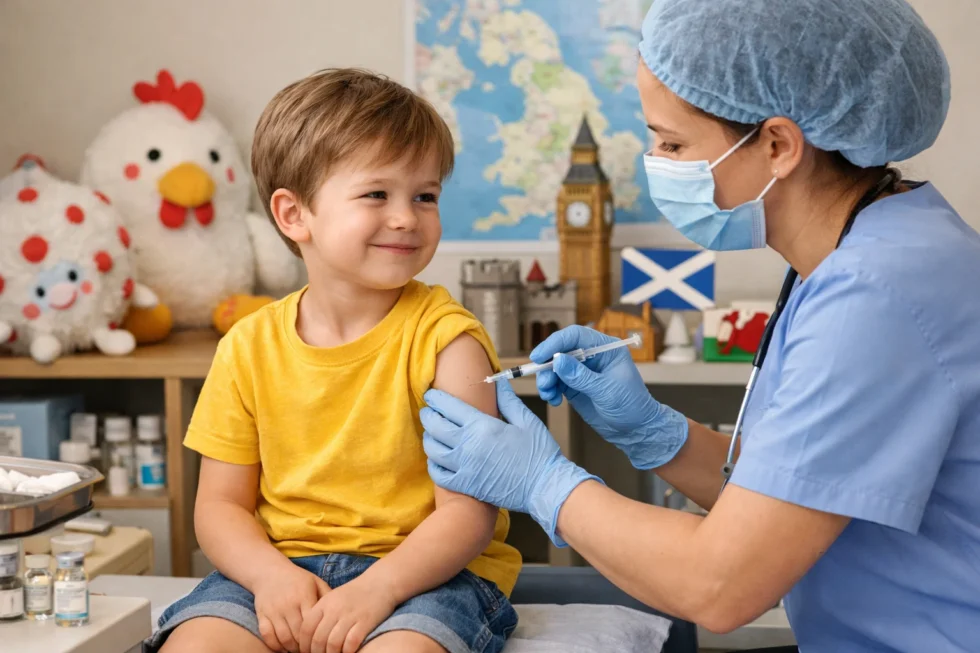
2 January 2026 — From today, the NHS has launched the nationwide rollout of the chickenpox vaccine, formally adding it to the UK’s routine childhood immunisation programme. The protection is delivered through the new MMRV jab, which covers measles, mumps, rubella and chickenpox, and is now being provided free of charge to eligible children across England, Scotland, Wales and Northern Ireland as part of standard NHS care.
The policy follows formal recommendations from the Joint Committee on Vaccination and Immunisation (JCVI) and the publication of the UK Government’s national implementation plan for routine varicella vaccination. Under the new programme, GP practices and community child-health services are contacting families automatically to arrange appointments in line with the national schedule.
According to NHS England, chickenpox leads to thousands of GP visits and hospital admissions every year and costs the UK economy an estimated £24 million annually through parental work absence and treatment. The routine MMRV programme is expected to save around £15 million a year in direct NHS costs, while preventing severe complications such as pneumonia, skin infections and inflammation of the brain. The WP Times reports, citing official NHS England and UK government vaccination data.
Why chickenpox is being tackled now
Chickenpox remains one of the most widespread infectious diseases of childhood in Britain, with around 90 per cent of children infected before their teenage years. While most recover without lasting harm, the sheer scale of infection means that thousands of cases every year progress to medical complications that require GP treatment or hospital care.
These complications include bacterial skin infections, pneumonia and inflammation of the brain (encephalitis), and in rare but documented cases the virus can trigger stroke or be fatal. The risk is not evenly distributed: babies, pregnant women and adults are significantly more likely to become seriously ill, and pregnancy-related infection can endanger both mother and unborn child.
Public-health specialists argue that allowing the virus to circulate freely creates constant exposure for vulnerable groups. By vaccinating children at population level, transmission is reduced across households, schools and communities, cutting the number of severe cases and preventing avoidable hospitalisations.
How the new MMRV programme works
Under the new NHS schedule, children born on or after 1 January 2026 will be routinely offered the combined MMRV vaccine in two stages:
- the first dose at 12 months of age
- the second dose at 18 months of age
For children already born, a national catch-up programme will run through 2026 and beyond, with the number of doses and timing determined by each child’s date of birth. Families do not need to apply — GP surgeries will issue automatic invitations when a child becomes eligible.
Clinical data show that two doses provide around 97 per cent protection against chickenpox and dramatically reduce the risk of hospitalisation, long-term complications and severe illness.
Where to get the chickenpox vaccine in London
With the NHS now offering chickenpox vaccination as part of the routine childhood schedule, many parents and caregivers are asking how and where they can access the jab. For eligible children, the process is straightforward and free through the NHS. For adults, older children outside the catch-up programme, or families seeking vaccination more quickly, a number of private clinics and pharmacies across London also provide the varicella vaccine. Below is a practical guide to locations, contact details, typical costs and opening arrangements.
NHS vaccination (free for eligible children)
For children covered by the new programme, the vaccine is delivered through local GP surgeries and NHS child-health clinics. Parents should ensure their child is registered with a GP. The NHS will then issue an appointment invitation for the MMRV jab at the appropriate age. Vaccination takes place at the family’s usual GP practice or community clinic.
Private vaccination in London
Adults, older children outside the NHS schedule, or anyone wanting immediate access can use private clinics. Two doses are required.
Typical London prices: £70–£100 per dose.
London Vaccination Clinic – Liverpool Street
35 New Broad Street, London EC2M 1NH
Open daily, including weekends
Approx. £85 per dose
London Vaccination Clinic – London Bridge
8 St Thomas Street, London SE1 9RS
Weekdays and Saturdays
Approx. £85 per dose
London Vaccination Clinic – Notting Hill Gate
239 Kensington High Street, London W8 6SA
Weekdays and weekends
Approx. £85 per dose
Hampstead Heath Pharmacy and Travel Clinic
35 South End Road, London NW3 2PY
Monday–Saturday
From £75 per dose
Kamsons Pharmacy Vaccination Service
Multiple London branches
Appointments online
From £76 per dose
Superdrug Health Clinics
Various London locations
Appointments online or in-store
Prices typically from £75 per dose
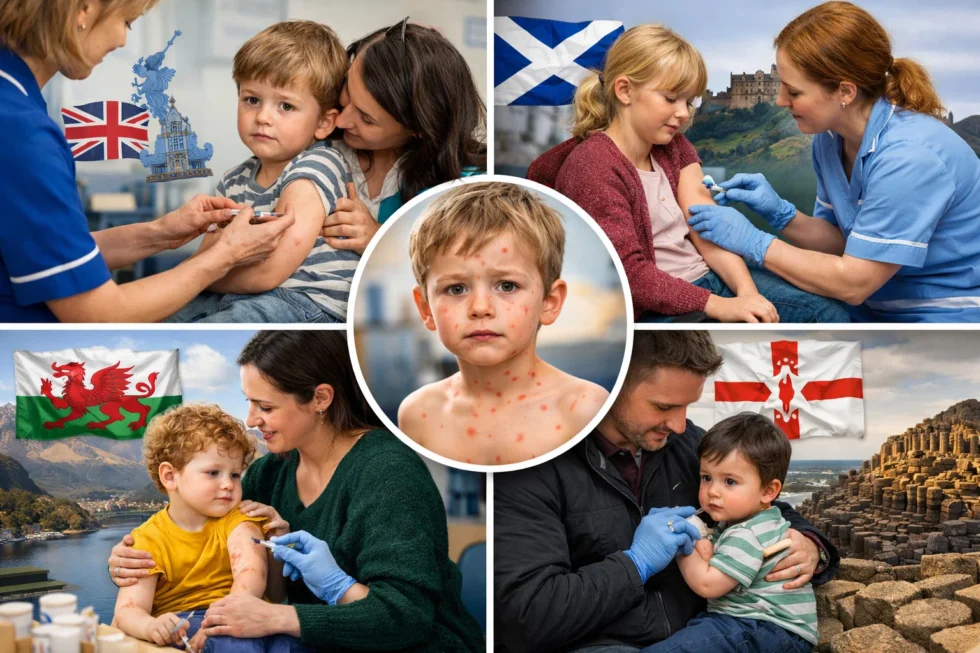
Scotland, Wales and Northern Ireland: how the chickenpox vaccine rollout works across the UK
The rollout of the chickenpox vaccine is being coordinated across all four UK nations, but delivery is managed locally by each health service.
In Scotland, the MMRV vaccine has been added to the national childhood immunisation programme from early January 2026. Children are being invited through the existing Child Health Surveillance Programme, with appointments issued automatically by local NHS boards. Vaccinations are delivered at GP practices, community health centres and dedicated child-health clinics.
In Wales, the vaccine is being introduced through the NHS Wales routine immunisation schedule, with GP surgeries and community vaccination teams contacting families directly when a child becomes eligible. Health boards are using the same age-based timetable as England to ensure consistent coverage.
In Northern Ireland, the Public Health Agency has confirmed that MMRV is now part of the standard childhood programme from 2026, with delivery organised through GP-led immunisation clinics and health-trust community services.
Across all four nations, the vaccine is provided free of charge to eligible children through the NHS. Private clinics and pharmacies in major cities including Edinburgh, Glasgow, Cardiff and Belfast also continue to offer paid vaccination for adults and children outside the NHS catch-up schedule.
Who should not receive the vaccine
The MMRV jab is a live vaccine and is not suitable for:
- people with severe immune system disorders
- pregnant women
- anyone with a known allergy to vaccine ingredients such as neomycin or gelatine
- children who have received another live vaccine within the previous four weeks
A GP or nurse will check this before vaccination.
Chickenpox is one of the most common childhood infections in Britain, yet it is also one of the most misunderstood. Many parents still view it as an unavoidable and mild illness, but in reality the virus can cause serious complications, particularly in babies, pregnant women and adults. With the chickenpox vaccine now part of the NHS childhood programme, understanding how the illness presents — and how quickly it can worsen — has never been more important.
Chickenpox symptoms
Chickenpox rarely begins with the rash itself. In most children, the illness starts with a short flu-like phase, which may include:
- fever or raised temperature
- headache
- tiredness and low energy
- loss of appetite
- muscle aches or general discomfort
These early symptoms are often mild, which is why the virus can spread easily in nurseries and schools before anyone realises what is happening.
Within one to two days, the characteristic rash appears. It develops in several waves and moves through three clear stages:
- red spots, usually starting on the face, scalp and chest
- fluid-filled blisters that itch intensely and are highly infectious
- crusts and scabs as the blisters dry and heal
The rash can spread across the entire body, including the mouth and eyes, and new blisters may continue to appear for several days.
In a significant minority of cases, chickenpox leads to serious medical complications, including:
- infected and painful skin lesions
- dehydration
- pneumonia
- inflammation of the brain (encephalitis)
- problems with balance, speech or vision
Babies, pregnant women and adults are far more vulnerable to these complications and are more likely to require hospital treatment.
Vaccination prevents most chickenpox infections and almost all severe or life-threatening cases, making it one of the most effective ways to protect children, families and the wider community.
Read about the life of Westminster and Pimlico district, London and the world. 24/7 news with fresh and useful updates on culture, business, technology and city life: Stratford station safety: Will London Underground (LU) and TfL deliver new Piccadilly Line trains, 5G and Superloop in 2026