

Deep Tech—the investment in fundamental scientific and engineering innovation—is rapidly transforming the United Kingdom's strategic capabilities, particularly in the twin, interconnected sectors of Space and Defense Technology. This strategic pivot, heavily supported by substantial government funding and a clear national security mandate, is accelerating the growth of startups focused on everything from advanced materials to quantum computing and sophisticated geospatial data analytics. The current geopolitical landscape, marked by renewed great-power competition, has fundamentally altered the investment calculus, making "dual-use" technologies—those with both commercial and military applications—highly attractive to venture capital (VC). The once-cautious UK space industry is now openly integrating with defense strategy, recognizing space as the crucial high ground for surveillance, secure communication, and global strategic advantage. Simultaneously, the UK is solidifying its position as a launch nation, rapidly developing multiple spaceports that promise commercial access to orbit for the burgeoning domestic satellite industry, a topic of intense interest and scrutiny from the general public and investors alike. This powerful convergence of public strategy and private capital, focused on high-risk, high-reward technologies that promise sovereign capability, as emphasized by the editorial team at The WP Times.
The Deep Tech Revolution: Venture Capital in Dual-Use Defense
The surge in venture capital funding for UK Deep Tech is directly driven by the increasing integration of commercial innovation into national defense technology strategies, a trend formalized by the Ministry of Defence (MOD). Traditional VC firms, historically wary of long gestation periods and high regulatory barriers in the defense sector, are now recognizing the immense potential of dual-use startups, particularly those providing rapid, iterative solutions. These startups focus on bleeding-edge technologies like advanced robotics, AI-driven command systems, and sophisticated cyber capabilities, often referred to as Defense Startups. The UK government has actively catalyzed this trend, notably through the Defence and Security Accelerator (DASA), which finds and funds exploitable innovations, and a major £250 million fund aimed at fostering innovation across regional defense ecosystems. This state support serves as a crucial de-risking mechanism, attracting the private investment necessary to scale these complex, capital-intensive Deep Tech firms from experimental concept to deployable sovereign capability. The financial flows underscore a fundamental shift where military hardware development is increasingly leveraging the speed and agility of the commercial tech market.
- Key Deep Tech Investment Areas and Government Support Mechanisms:
- Defense Accelerator (DASA): A dedicated Ministry of Defence unit funding exploitable innovation from SMEs and startups, bridging the gap between academia and military needs.
- Sovereign Capability Focus: Government investment prioritizes areas like autonomous systems (drones), Directed Energy Weapons (DEW) like the DragonFire laser, and advanced propulsion.
- Regional Ecosystems: Over £250 million is allocated to establishing five hybrid regional defense ecosystems in areas like Plymouth and Scotland, leveraging local industrial and university strengths.
- Autonomous Systems: A major funding package, including over £4 billion, is directed toward autonomous systems to improve military accuracy and lethality.
- Venture Capital Shift: Non-traditional investors (family offices, sovereign wealth funds) are increasingly participating in Deep Tech deals, offsetting some of the slowdown in general VC.
- Dual-Use Mandate: The UK Defence Space Strategy explicitly calls for aligning civil and commercial space sectors under a unified vision tied to defense capabilities.
The Geospatial Gold Rush: Satellites and Data as Infrastructure
The proliferation of small, low-cost satellites in Low Earth Orbit (LEO), a key innovation of the Space Tech boom, has unleashed a geospatial data gold rush with profound implications far beyond defense. Companies are utilizing these miniaturized satellites—often equipped with advanced sensors, including synthetic aperture radar (SAR) and thermal imaging—to provide unprecedented temporal and spatial resolution data on Earth. This data is critical for non-military applications, such as real-time climate monitoring (tracking glacier retreat, deforestation, and carbon content), and precise infrastructure management (monitoring ground movement near railways, dams, and bridges). The high-frequency imagery allows governments and civil agencies to make informed decisions about climate adaptation, disaster management, and resource allocation, effectively closing long-standing data gaps. UK companies like SatVu and Spire are key players, developing capabilities that offer valuable insights into urban heat islands, energy compliance (ESG), and supply chain resilience, proving that the space economy’s biggest value proposition is often the data it returns to Earth. This sector demonstrates the purest form of dual-use technology, where surveillance capabilities initially developed for defense provide essential tools for environmental and commercial stability.
- Applications of Geospatial and Satellite Data:
- Climate Monitoring: Tracking dynamic environmental parameters like sea-level rise, glacier retreat, and changes in atmospheric carbon/nitrogen content.
- Infrastructure Resilience: Using satellite remote sensing (especially SAR) to detect millimeter-level ground deformation indicative of structural stress in critical infrastructure.
- Agriculture: Precision crop management, allowing farmers to optimize irrigation and fertilizer use based on high-resolution land monitoring.
- Disaster Response: Rapid damage assessment and mapping of emergency response routes following floods, earthquakes, or forest fires.
- ESG Compliance: Monitoring corporate environmental performance, carbon footprint mapping, and biodiversity assessments for regulatory compliance.
- Data Integration: The value lies in combining satellite imagery with ground-based sensors and machine learning models to provide deep analytical insights for policy.
LaunchUK Ambition: The Race to Establish Commercial Spaceports
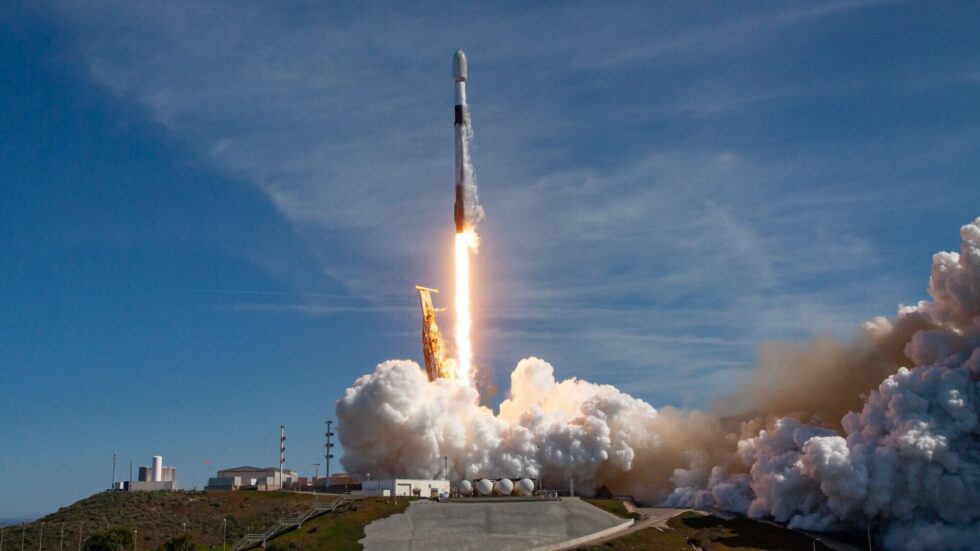
The development of operational Spaceports is a central pillar of the UK's strategy to become a leading sovereign space power, transforming the nation from a consumer of launch services into a provider. This "LaunchUK" campaign has focused on establishing several sites capable of different launch modes to cater to the growing demand for putting small satellites into orbit. Space Hub Sutherland in Scotland was originally intended to be the UK's first vertical launch site, perfectly situated for highly desirable polar and Sun-synchronous orbits due to its clear northern flight path. Although the primary operator, Orbex, placed the project on hold, the infrastructure and regulatory work established the feasibility of vertical launch from the Scottish Highlands. Meanwhile, Spaceport Cornwall in Newquay has pioneered the horizontal launch model, having successfully hosted the UK's first satellite launch campaign using a carrier aircraft, demonstrating a viable commercial pathway and achieving CAA operational licence approval. This decentralized approach, leveraging both horizontal (Cornwall) and vertical (Sutherland, SaxaVord in Shetland) launch capabilities, aims to capture a significant share of the global small-satellite launch market, projected to be worth billions to the UK economy over the next decade.
- UK Spaceport Development Snapshot:
| Spaceport Name | Location | Launch Mode | Key Operator/Status | Strategic Advantage |
| Space Hub Sutherland | A' Mhòine peninsula, Scotland | Vertical Launch | Orbex (Initial plans on hold, potential for future vertical launches) | Ideal northerly trajectory for Polar/Sun-Synchronous Orbits. |
| Spaceport Cornwall | Newquay Airport, Cornwall | Horizontal Launch (Air-launch) | Virgin Orbit (First launch campaign conducted; site is operational) | Existing 2,744m runway; rapid access to launch windows. |
| SaxaVord Spaceport | Shetland, Scotland | Vertical Launch | Scheduled to host Orbex Prime launches (2024 target) | Strategic northerly location; vying to be the UK’s first operational vertical site. |
| Glasgow Prestwick | Prestwick, Scotland | Horizontal Launch | Under development | Strong aerospace logistics and infrastructure presence. |
| Overall Goal | UK-Wide | Mixed | Sovereign launch capability for small satellites. | Tapping into the estimated £3.8 billion launch market over the next decade. |
The Regulatory and Political Headwinds Facing Space Tech
Despite the undeniable technological progress and investment enthusiasm, the UK's nascent Space and Defense Technology sector faces significant regulatory and political headwinds that determine its long-term viability. The first challenge is the need for a sustained, consistent regulatory environment—the UK Civil Aviation Authority (CAA) has been tasked with creating the world's first dedicated spaceflight regulator, balancing safety and commercial viability. Furthermore, the reliance on US-based launch technologies (as seen with Virgin Orbit at Spaceport Cornwall) exposes the UK supply chain to external geopolitical and commercial risks, reinforcing the necessity for homegrown vertical launch solutions like those from Orbex and Skyrora. Critically, public funding, while substantial, must act as a catalyst, not a crutch; the long-term growth of Deep Tech depends on consistent private VC funding that can overcome the "valley of death" between prototype and mass production. Geopolitical pressure also forces a tighter alignment between commercial geospatial data companies and the MOD, which may risk alienating purely commercial clients concerned about data access and security. These political and commercial variables define the true risk profile of the UK’s ambitious space strategy.

- Challenges and Risks in the UK Space and Defense Sector:
- Supply Chain Dependence: Reliance on non-UK hardware and propulsion systems creates vulnerability, requiring significant investment in sovereign manufacturing capability.
- Regulatory Burden: Establishing a clear, efficient framework for licensing launches, spaceports, and on-orbit operations is a complex, time-consuming challenge for the CAA.
- Venture Capital Expertise: The UK ecosystem needs more domestic VC expertise specific to Deep Tech to reduce dependence on foreign investment for scaling.
- Environmental Concerns: Local opposition and regulatory hurdles regarding the environmental impact of launches, especially at sensitive sites like Sutherland, pose delays.
- Orbital Debris: The massive growth of LEO satellites creates urgent environmental and security concerns regarding orbital traffic and space debris management.
- "Valley of Death": Many Deep Tech prototypes fail to secure the large-scale funding needed to transition to commercial or military production without continued state intervention.
The UK’s strategic investment in Deep Tech—from the development of sovereign Defense Technology to the construction of dedicated Spaceports like Cornwall and Sutherland—signals a clear intent to dominate the next generation of strategic technologies. This effort, fueled by dual-use geospatial data and government-catalyzed venture capital, positions the UK at the forefront of the new space age, where the line between commercial innovation and national security has completely blurred.
Read about the life of Westminster and Pimlico district, London and the world. 24/7 news with fresh and useful updates on culture, business, technology and city life: US authorities harness ChatGPT data to unmask Darknet administrator — a legal first