
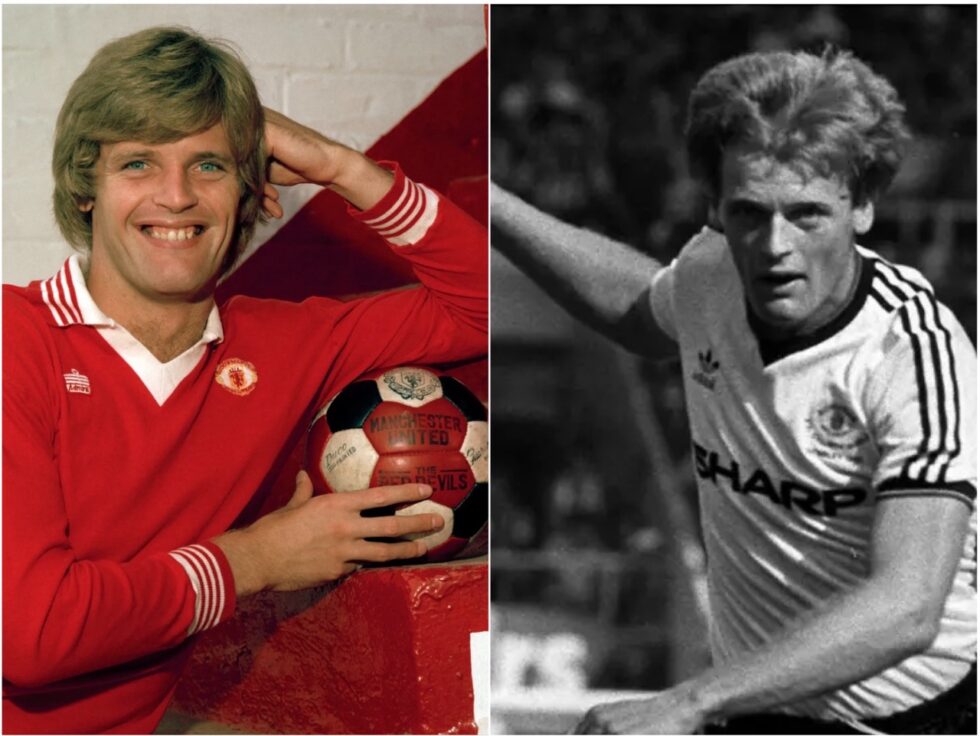
An inquest into the death of former Scotland, Manchester United and Leeds United defender Gordon McQueen has heard that decades of heading the ball may have contributed to the dementia that led to his death, after medical evidence revealed signs of brain disease linked to repeated head impacts. The hearing at Northallerton Coroner’s Court in North Yorkshire also heard that McQueen himself believed his playing style had damaged his brain — The WP Times reports this, citing official testimony given to the coroner.
McQueen, who won 30 caps for Scotland and made more than 350 top-flight appearances between 1970 and 1985, died in June 2023 aged 70 after being diagnosed with vascular dementia. His family later donated his brain for scientific examination as part of ongoing research into the long-term neurological impact of professional football.
At the inquest, McQueen’s daughter Hayley McQueen, a Sky Sports presenter, told the court that her father had repeatedly linked his illness to his playing career.
“He would say, ‘heading a football all those years probably hasn’t helped,’” she said.
She recalled how, as a child, she would often return home from school to find her father lying in a darkened room suffering from headaches after training sessions. At the time, such symptoms were seen as routine for professional players in an era when concussion protocols barely existed.
“He was relatively injury-free, but he did have concussions — and they would just head back out and play,” she said.
A slow and devastating decline
The inquest heard how McQueen’s condition began to worsen shortly after his 60th birthday, when his family noticed marked changes in both his personality and his physical coordination. Once known as a sociable and charismatic figure who enjoyed public speaking and social events, he became withdrawn and unsettled.
“He kept saying, ‘There’s something not right in my head,’” Hayley told the court.
He developed problems with swallowing, balance and concentration, eventually struggling with simple daily tasks such as writing and making tea. Yet his long-term memory — particularly for football — remained strikingly intact. He could still recall players, line-ups and scorelines from matches played decades earlier.
In 2021, doctors diagnosed him with vascular dementia, a form of the disease caused by reduced blood supply to the brain.
What the post-mortem revealed
After McQueen’s death from pneumonia, his brain was examined by Professor Willie Stewart, a leading neuropathologist at the Queen Elizabeth University Hospital in Glasgow. Prof Stewart told the inquest that McQueen’s brain showed clear evidence of chronic traumatic encephalopathy (CTE)— a degenerative brain condition linked to repeated head impacts — alongside vascular dementia. He found no signs of Alzheimer’s or Parkinson’s disease.
CTE, he explained, causes progressive cognitive decline, behavioural change and emotional disturbance. Asked whether there was a causal link between CTE and repetitive head injury, Prof Stewart was unequivocal.
“The answer to that is yes,” he said. Although McQueen’s CTE was technically at a lower stage, Prof Stewart told the court it was on the threshold of more severe disease, meaning it had already begun to damage key areas of the brain.
Why defenders are at higher risk
Prof Stewart also referred to a major 2021 study into dementia risk among former professional footballers. The results showed a sharp difference depending on playing position.
Goalkeepers, who rarely head the ball, were found to have a dementia risk similar to the general population. Outfield players, particularly defenders, faced a significantly higher risk.
“The more exposure to heading, the higher the risk,” Prof Stewart said.
McQueen’s career placed him firmly in the highest-risk category. As a powerful central defender in an era dominated by long balls and aerial duels, he would have headed the ball thousands of times across 15 seasons at elite level.
Who Gordon McQueen was — and how his career was built
Gordon McQueen is one of the defining defensive figures of British football’s modern era — a centre-back whose career was shaped by power, leadership and, above all, dominance in the air. From St Mirren to Leeds United, Manchester United and the Scotland national team, his rise followed the classic path of a top-level defender in the game’s most physically demanding period.
He launched his professional career at St Mirren, before moving south in 1972 to join Leeds United at the peak of Don Revie’s reign. There, McQueen became a central figure in one of Europe’s most feared teams, helping Leeds win the 1973–74 First Division title and reach the European Cup final in 1975. His aerial power, defensive authority and threat from set-pieces made him a cornerstone of their domestic and continental success.
In 1978, McQueen joined Manchester United, where he went on to make 184 first-team appearances and lift the FA Cup in 1983, anchoring a side that re-established the club at the top of English football.
At international level, he earned 30 Scotland caps and was selected for the 1978 World Cup squad, confirming his place among the elite defenders of his generation.
After his playing career, McQueen remained deeply embedded in the game — managing Airdrie, coaching at St Mirrenand Middlesbrough, and later becoming a familiar and respected voice on Scottish television and Sky Sports.
Throughout every phase of that career, one attribute defined him: his mastery of heading the ball. McQueen’s goals, clearances and reputation were built on winning aerial battles — the very skill now under scrutiny in the inquest into his death.
What the inquest means for football
The coroner has been told that McQueen’s CTE contributed more than minimally to his death and that heading the ball was the only significant source of brain trauma identified in his medical history.
Although modern football now operates with concussion protocols, heading limits for young players and stricter medical oversight, McQueen’s case highlights what earlier generations were exposed to — thousands of unregulated head impacts over long professional careers.
For his family, the inquest has brought long-sought clarity.
“He always felt something wasn’t right,” Hayley McQueen told the court. “And he believed football was part of it.” The hearing continues, but its significance already extends far beyond one man’s story — it is reshaping how British football confronts the neurological cost of the game’s past.
Read about the life of Westminster and Pimlico district, London and the world. 24/7 news with fresh and useful updates on culture, business, technology and city life: Emma Heming-Willis reveals plan to donate Bruce Willis’s brain to boost dementia research