

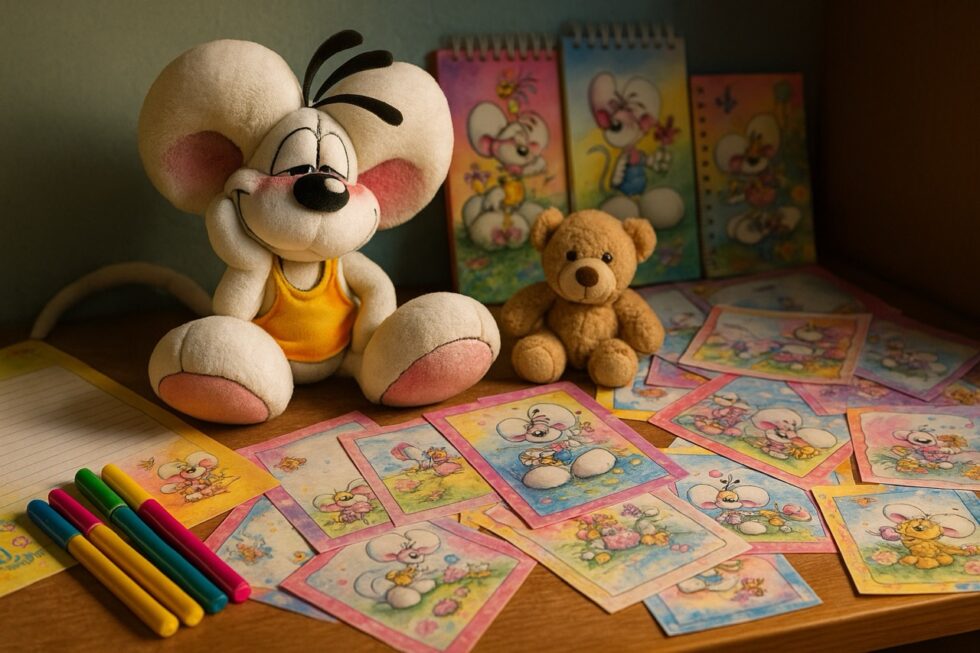
Diddl Comeback 2025: The Diddl mouse, Europe’s cult stationery icon of the 1990s, is making a return. Known for its oversized feet and the scented collectible sheets that fuelled a trading craze across European schoolyards, the character became a symbol of childhood for millions of pupils in the 1990s and early 2000s. Two decades later, the brand is staging a revival – first in France, with a new “Diddl is back” collection already announced – and now attention is turning to London, where nostalgic millennials and collectors are asking when the UK market will follow, reports The WP Times.
A comeback nobody expected
In September 2025, French distributor Kontiki surprised many by announcing a relaunch of the brand. The collection, named “Diddl is back”, will hit French stores and online retailers in October 2025.
Speaking to Les Échos, Kontiki CEO Pierre-Marin Calemard explained the strategy:
“We are targeting two audiences: the nostalgics of the 2000s, many of whom are now parents, and today’s children.”
The first wave of products will include notebooks, stationery pads, plush toys made from recycled materials, backpacks and lifestyle accessories. Some French media outlets reported that initial online drops had already sold out within hours, suggesting demand remains strong.
History of a cult brand
The Diddl phenomenon began modestly in 1990, when German illustrator Thomas Goletz sketched a quirky mouse character with big ears and comically oversized feet. Originally intended for a comic strip, Diddl quickly shifted into the world of merchandise.
- 1991: The first 48 postcards featuring Diddl were released by German publisher Depesche. They proved unexpectedly popular among children.
- Mid-1990s: The range expanded to Diddl-Blätter – scented letter sheets decorated with colourful illustrations. Children began trading them in schoolyards, carefully storing them in binders and swapping duplicates with friends.
- 2000–2004: The era of Diddlmania.
- Sales spread across 30 countries, including Germany, France, Austria, Switzerland and parts of Scandinavia.
- Annual turnover reached €150 million, placing Diddl alongside global icons like Hello Kitty, Barbie and Pokémon.
- Merchandise expanded into plush toys, backpacks, piggy banks, jewellery boxes, video games and even a fan magazine called “Diddl’s Käseblatt”.
- 2010s: Oversaturation and the digital shift led to a decline. In 2014, Depesche stopped producing new Diddl items. Rights reverted to Goletz, and the brand faded from mainstream shops.
Yet Diddl never disappeared entirely. Collectors kept trading on eBay and in fan forums, with rare sheets selling for hundreds of pounds. Nostalgia kept the mouse alive – paving the way for today’s revival.
Why London and the UK matter
While Diddl was never as mainstream in Britain as in Germany or France, London has always had niche communities fascinated by European pop culture.
- In the early 2000s, shops in Camden, Soho and Covent Garden occasionally stocked imported Diddl products.
- Online communities in the UK connected collectors, many of whom had family ties to Germany or France.
- Today, vintage Diddl items regularly appear on eBay UK, with plush toys listed for £50–200 and full binders of Diddl sheets fetching even more.
With retro culture booming, London could be a natural next step for expansion. Retailers such as Waterstones, WHSmith, or cult shops like Forbidden Planet in Soho already cater to nostalgia-driven consumers.
Practical outlook – where UK fans could find Diddl
- France first: UK fans who don’t want to wait can order directly from Kontiki’s online shop or French retailers like FNAC and Cultura, many of which ship internationally.
- London retail: Should the brand expand, Waterstones (Piccadilly), WHSmith (major stations and airports) and Forbidden Planet (Shaftesbury Avenue) are likely candidates. Independent shops in Camden Market and Shoreditch may also carry imports.
- Online platforms:
- Amazon UK – expected to stock new Diddl products after the official expansion.
- eBay UK – already home to a thriving second-hand market.
- Specialist importers – several EU-based shops already ship to Britain.
Nostalgia as an economic driver
The Diddl comeback is part of a broader trend: the commercialisation of nostalgia. In the past five years, Pokémon cards, Tamagotchi and Barbie have all enjoyed resurgences in sales. For millennials, now aged 30 to 40, these brands are a direct link to their childhood. Many are parents themselves – which makes them twice as valuable a target audience.
Diddl’s revival strategy aligns perfectly with this demographic:
- Sustainable products appeal to eco-conscious buyers.
- Social media campaigns on Instagram and TikTok target both nostalgic adults and children.
- Affordable price points (£5–10 for notebooks, £20–40 for plush toys) make Diddl accessible as both a casual purchase and a collector’s item.
For now, the revival is a French story. But if sales prove strong, expansion into Germany and the UK seems inevitable.
In London, the first signs of a market are already visible: collector groups on Facebook and Reddit are buzzing, while resellers on eBay UK are seeing a spike in activity. The question is not whether Diddl will return to Britain – but when.
Read about the life of Westminster and Pimlico district, London and the world. 24/7 news with fresh and useful updates on culture, business, technology and city life: McDonald’s TinyTAN Happy Meal UK 2025: London joins BTS collectible craze