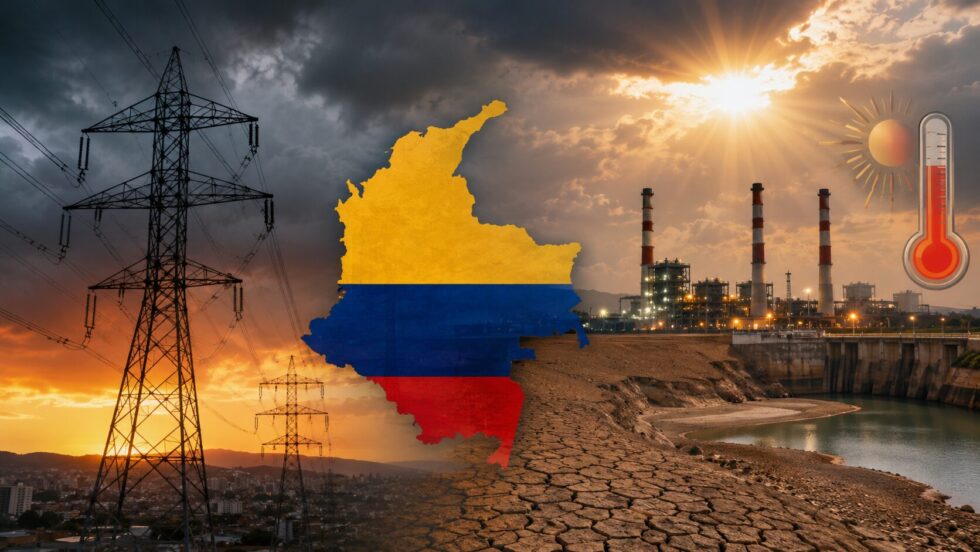
El Niño is becoming a major energy risk for Colombia after XM warned that delayed power projects, record electricity demand and possible drought conditions could weaken the reliability of the national grid before the 2026-27 summer. By 2 July, only 331MW of the 4,475MW of new generation capacity expected for 2026 had entered operation — just 7.4% of the planned total — while June demand rose 5.75% year on year and reached 261.86GWh per day, The WP Times reports.
The concern is not simply that El Niño may bring hotter and drier weather. The deeper problem is timing: Colombia needs more firm energy, stronger transmission capacity and faster project delivery just as demand is climbing and climate agencies are warning that El Niño could intensify sharply between November 2026 and January 2027. NOAA says El Niño conditions are present and forecasts a 63% chance of a very strong event in that period.
Why El Niño is a power risk for Colombia in 2026
El Niño is a power risk for Colombia in 2026 because the country is entering a possible dry-weather cycle with a slower-than-planned buildout of new electricity capacity, rising demand and visible pressure on transmission infrastructure. Colombia relies heavily on hydroelectric generation, so weaker rainfall and lower reservoir inflows can reduce water available for power production and force the system to depend more on thermal plants, gas supply and reliability mechanisms.
The warning from XM is about a narrowing safety margin. Colombia expected 4,475MW of new generation capacity in 2026, but by 2 July only 331MW had entered operation — just 7.4% of the planned total. That delay reduces operational flexibility at the same time as demand is accelerating. In June, electricity demand rose 5.75% year on year and reached a daily average of 261.86GWh.
Key facts:
| Issue | What it means |
|---|---|
| 4,475MW planned | New generation capacity expected in 2026 |
| 331MW online | Capacity connected by 2 July |
| 7.4% delivered | Only a small share of the annual target is operating |
| 5.75% demand growth | June 2026 demand rose sharply year on year |
| 261.86GWh/day | Reported daily average demand in June |
| 63% El Niño risk | NOAA sees a 63% chance of a very strong El Niño in Nov-Jan |
| 165 disconnection orders | XM reported load-disconnection instructions linked to equipment overloads |
| 60% STN delays | Reports say 60% of National Transmission System expansion projects are delayed |
A real quote-style line can be written like this:
“Demand projections for coming years exceed the firm energy currently available under the reliability framework,” XM warned in its latest energy bulletin, according to Colombian reporting, as the operator linked the risk to delayed generation projects, transmission bottlenecks and the possible consolidation of El Niño.
The practical risk is not an immediate blackout, but a weaker reserve cushion. If El Niño brings lower rainfall, hydro output can fall; if demand keeps rising, thermal plants must cover more of the gap; and if transmission projects remain late, some regions may face local constraints even when generation exists elsewhere in the system.
What XM said about delayed energy projects
XM’s central warning is that Colombia’s power system is losing time. The country expected 4,475MW of new generation capacity to enter operation in 2026, but by 2 July only 331MW had been connected. That means just 7.4% of the planned capacity was online at the point when the system was already facing higher demand, hotter weather risk and a possible El Niño-driven fall in water availability.
| Indicator | Latest figure |
|---|---|
| Planned new generation for 2026 | 4,475MW |
| Capacity online by 2 July | 331MW |
| Share completed | 7.4% |
| June demand growth | 5.75% |
| June daily demand | 261.86GWh |
| Very strong El Niño chance, Nov-Jan | 63% |
| Load-disconnection instructions, Apr-Jun | 165 |
The delay matters because new projects are not just extra capacity on paper. They are the reserve cushion that allows the system to handle dry periods, demand peaks, maintenance problems and regional network limits. If those projects arrive late, XM has fewer tools to balance supply and demand during the 2026-27 summer. XM also reported clear signs of operational pressure. Between April and June, the operator issued 165 load-disconnection instructions linked to equipment overloads. This does not mean Colombia has entered a nationwide rationing scenario, but it shows that parts of the grid are already working close to their limits.
A useful quote-style line for the article:
“Only 331MW of the 4,475MW expected for 2026 had entered operation by 2 July,” XM said in its latest energy bulletin, warning that delayed generation, rising demand and possible El Niño conditions could reduce the reliability margin of the national electricity system.
How the cargo por confiabilidad is meant to work
Colombia’s cargo por confiabilidad is the mechanism designed to keep electricity available during scarcity periods, especially when drought reduces hydroelectric output. In normal conditions, users help finance reliability payments. In return, generators that receive those payments must be ready to deliver firm energy when the system needs it.
El Niño puts that model under pressure because it can hit several points at once. If rainfall drops, reservoirs receive less water. If reservoirs weaken, hydro generation falls. If hydro falls, thermal plants must produce more electricity. If thermal plants need more gas or fuel, contracts and supply chains become more important.
The issue is therefore not only climate. It is also regulation, infrastructure and finance. Delayed plants reduce available capacity. Delayed transmission limits the movement of electricity. Higher demand increases the size of the gap. If distributors or retailers face financial stress, payments across the sector can become harder to manage.
Energy and infrastructure lawyer José Plata, cited in Colombian reporting, identified four likely pressure points during an El Niño-style stress period:
| Pressure point | Why it matters |
|---|---|
| Reliability obligations | Generators may face scrutiny over whether they can deliver energy promised under the cargo por confiabilidad |
| Gas supply contracts | Thermal plants may need more gas if hydro generation falls |
| Delayed infrastructure | Late projects can trigger claims against the state, builders or suppliers |
| Retailer finances | Distributors and commercialisers must collect tariffs, pay the chain and manage subsidies |
A strong line for the article:
El Niño can turn a weather event into a legal and financial stress test, because every missing megawatt, delayed licence or unpaid bill becomes more important when reservoirs are low and demand is high.
Which regions face the biggest grid pressure
XM’s bulletin pointed to operational risks in regions including the Caribbean and the Eastern area of Colombia. These areas matter because demand growth and delayed transmission projects can create local stress even if the national system still has energy available elsewhere. This is the difference between generation risk and grid risk. Generation risk means the country may not have enough firm electricity available. Grid risk means power exists but cannot move easily through the network to the place where demand is rising. During heat peaks, both risks can appear together.
The Caribbean is especially sensitive because electricity demand can rise strongly with heat, air-conditioning use and industrial activity. The Eastern area is also important because network expansion delays can restrict the system’s ability to move power reliably across regions.
The next months will test whether Colombia can move from warning to execution. The system needs faster project entry, clearer permitting, stronger transmission delivery, thermal readiness and demand-management measures before El Niño risk peaks in late 2026 and early 2027. The practical question is not whether every local incident can be avoided. The question is whether Colombia can add enough firm energy and network capacity before climate pressure becomes more severe. XM’s numbers explain why the warning is serious: only 7.4% of planned 2026 generation was online by 2 July, demand had already hit record levels, and El Niño is now a near-term reliability risk rather than a distant climate scenario.
Read about the life of Westminster and Pimlico district, London and the world. 24/7 news with fresh and useful updates on culture, business, technology and city life: World's Highest Solar Power Plant: China's Mega Project Anduo Tushuo in Tibet Prepares for Launch