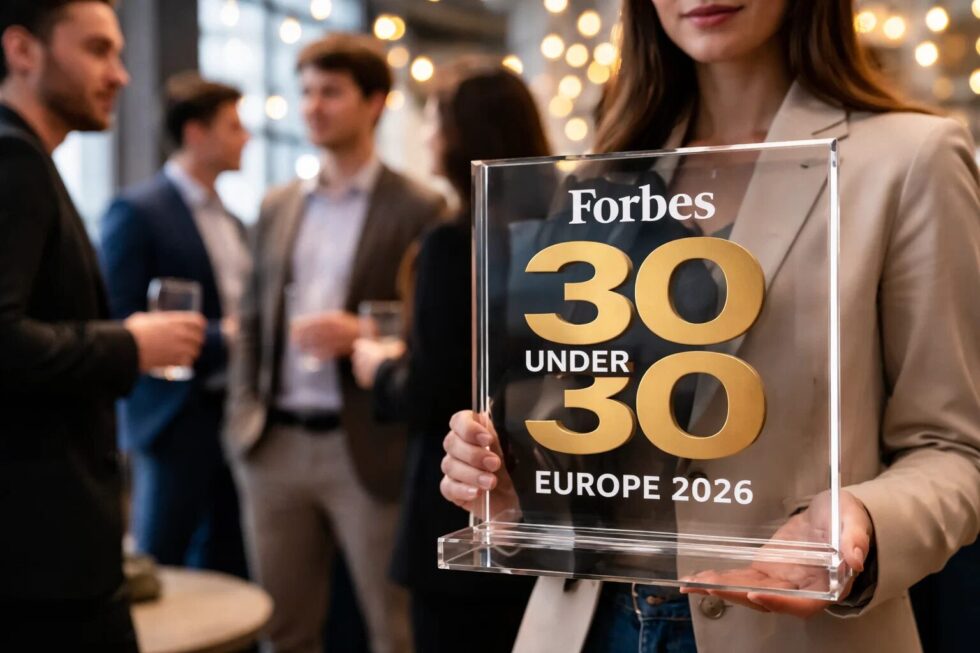
The European technology landscape has undergone a radical transformation as the Forbes 30 Under 30 Europe Class of 2026 debuts, revealing a record-breaking $900 million in cumulative funding and a surge in homegrown AI unicorns that are successfully challenging Silicon Valley's historical dominance. From London to Berlin, this new generation of founders is not merely scaling software but is fundamentally re-engineering global industries through generative video, voice AI, and advanced cell manufacturing, as reported by The WP Times via Forbes.
This year’s cohort marks a departure from the traditional "brain drain" to the United States; instead, the 2026 class demonstrates a commitment to building at home, bolstered by an influx of fresh capital that is $100 million higher than the previous year. The list highlights a maturing market where AI is no longer a niche sector but a foundational utility, powering everything from telemedicine platforms like SheMed—which secured a $1 billion valuation—to climate-tech ventures like Cellcraft.
Beyond financial metrics, the Class of 2026 wields immense cultural capital, boasting a staggering 291 million cumulative social media followers, proving that the modern entrepreneur must master both the boardroom and the digital zeitgeist.
AI Dominance and the $900 Million Funding Race: Europe's New Billion-Dollar Frontier
The primary driver of the 2026 class is the unprecedented expansion of Artificial Intelligence. Alumni such as Mati Staniszewski and Piotr Dabkowski of ElevenLabs (valued at $11 billion) have paved the way for current honorees like Marius Meiners and Daniel Drabo of Peec.ai, who raised $29 million to help brands monitor AI chatbot sentiment.
The funding landscape has become increasingly competitive, with capital flowing into deep-tech solutions that address semiconductor shortages and medical discovery, moving Europe’s reputation from a regulatory hub to a genuine innovation engine.
Top Capitalized Startups: Under 30 Europe Class of 2026
Company
Founders
Funding (Total)
Valuation
Core Innovation
SheMed
Chloe & Olivia Ferro
$75 Million
$1 Billion
Telemedicine for PCOS & Menopause
Peec.ai
M. Meiners & D. Drabo
$29 Million
Undisclosed
AI Chatbot Marketing Analytics
Novogaia
T. Bevers & D. Kubanek
Undisclosed
Undisclosed
AI-Driven Fungal Medicine Discovery
Cellcraft
Clarisse Beurrier
Undisclosed
Undisclosed
AI-Optimized Cultivated Meat
Hears
N. Nijhof & B. Verlaat
Self-Funded
$22M Revenue
High-Fidelity Protective Earplugs
Beyond the Screen: Physical Innovation and the Creator Economy
While AI dominates headlines, the 2026 class also celebrates entrepreneurs mastering the physical world and the entertainment sector. Dutch DJ and producer Mau P, 29, has parlayed global festival headlining slots into the launch of Baddest Behavior Records, while fashion designer Sinead Gorey has seen her corsetry adopted by global icons like Lady Gaga.
The intersection of influence and commerce is best personified by Noel Robinson, whose 75 million followers make him the most-watched individual on the list, turning viral street dance into a lucrative personal brand.
"People definitely don't take you as seriously as they should when you are young in fashion. But it makes you want to prove yourself more. You have to remember the power you have and not give it away." — (Sinead Gorey, 29, Founder of Sinead Gorey, London, April 2026).
Diversity of Impact: Statistics of the Class of 2026
To identify these 300 individuals, Forbes editors and expert judges—including actress Lashana Lynch and Synthesia’s Victor Riparbelli—evaluated over 10,000 candidates. The final selection reflects a broad demographic and industrial spread, emphasizing that the modern European startup is no longer confined to a single "hub" like London or Paris.
Total Funding Raised: Over $900 million (an increase of 12.5% year-over-year).
Cumulative Social Reach: 291 million followers across TikTok, Instagram, and YouTube.
Top Social Influencer: Noel Robinson (75 million followers).
Youngest Entry: Chloe Ferro (24), co-founder of the $1 billion unicorn SheMed.
Women in Sports Revenue: Projected to reach $3 billion globally, fueled by stars like Ellie Kildunne.
Gender and Diversity: Significant growth in female-founded telemedicine and biotech firms compared to 2025.
Why the 2026 Class Represents a Turning Point for European VC
The shift in 2026 is structural. For the first time, European venture capital is supporting the "vibe-coding" and "generative video" sectors at levels that rival American counterparts. The success of Lovable ($6.6 billion valuation) and Synthesia ($4 billion valuation) indicates that Europe has finally solved the "scaling gap" that previously forced founders abroad.
This maturity is creating a virtuous cycle where Under 30 alumni, like Harry Stebbings of 20VC, are reinvesting their wealth back into the next generation of European talent.
Retention: More than 70% of the 2026 honorees have kept their primary headquarters within Europe.
Sector Diversification: Move away from pure Fintech into Biotech, Agtech, and Sustainable Hardware.
The "Stebbings Effect": Increased participation of former honorees in the seed and Series A rounds of current members.
Cultural Influence: The inclusion of sports personalities like Ellie Kildunne shows that "entrepreneurship" now encompasses multi-platform media ownership.
Read about the life of Westminster and Pimlico district, London and the world. 24/7 news with fresh and useful updates on culture, business, technology and city life: Euphoria Season 3: Can the A-list cast survive Sam Levinson's provocative 2026 scripts