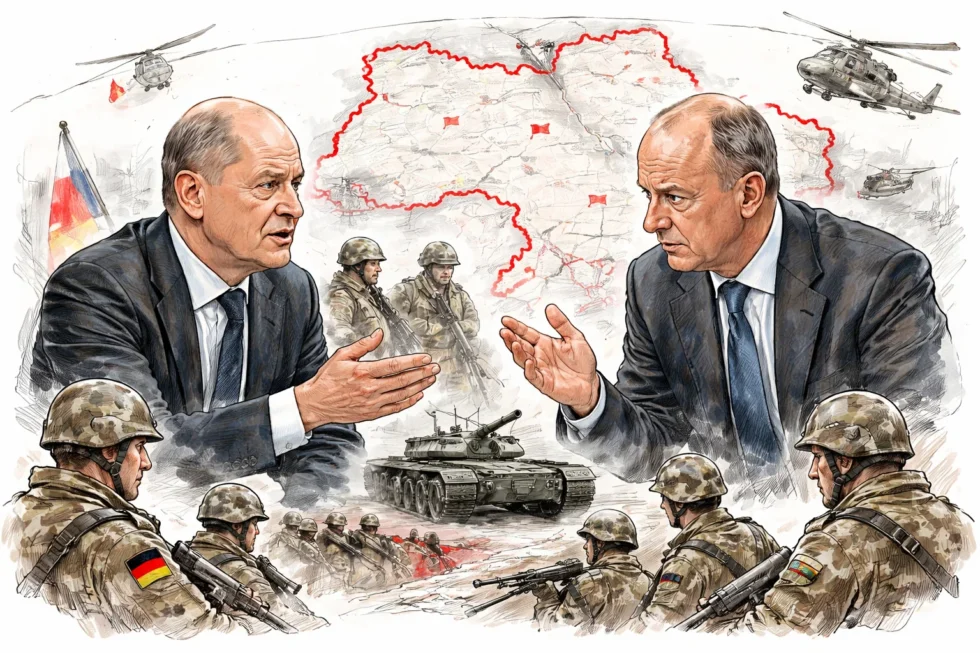
German politicians are openly debating whether Bundeswehr troops could be sent to Ukraine as part of a future international peacekeeping mission. In Berlin, pressure is growing to prepare for a post-ceasefire scenario, with senior figures across government, parliament and the European Union signalling that Germany may be expected to take a leading role. These developments are reported by The WP Times, citing Renewz.
Chancellor Friedrich Merz has declined to give a direct answer on whether German soldiers would be deployed, while the Social Democratic Party (SPD) has deliberately left the option open. In defence circles, the debate is no longer about whether Germany could be involved, but how such a deployment could be justified legally and politically.
Marie-Agnes Strack-Zimmermann, chair of the European Parliament’s defence committee, said Germany must clearly demonstrate its willingness to participate in any future peacekeeping operation. In her view, Europe would struggle to guarantee stability in Ukraine without a meaningful German military contribution.
A similar view is held by Roderich Kiesewetter, defence spokesman for the CDU/CSU in the Bundestag. He said ground troops would only be considered after a formal ceasefire, but warned against ruling anything out in advance. As one of Europe’s leading powers, Germany must be prepared to take responsibility if peace is to be enforced, he argued.
Kiesewetter has also called for the creation of a legally based “coalition of the willing” to support and enforce any peace agreement. This group would include EU and NATO partners and could be open to other countries aligned with the Western security framework. Germany, he said, should be a central pillar of that coalition.
Berlin remains cautious
Despite the growing political discussion, the German government has so far taken a cautious line. Berlin supports the idea of a European or international stabilisation force in Ukraine, but insists that any German involvement must meet strict legal and constitutional requirements.
Defence Minister Boris Pistorius has made clear that several key issues remain unresolved, including the legal mandate for the mission, the role of the Bundestag and the command structure under which German troops would operate. Without clarity on these points, no deployment could go ahead.
Within Chancellor Merz’s party, there is also concern about moving too fast. Party officials say it would be premature to discuss peacekeeping troops while Russia has yet to agree to a binding peace deal. Only once a credible ceasefire is in place could international forces be deployed.
Pressure from Brussels
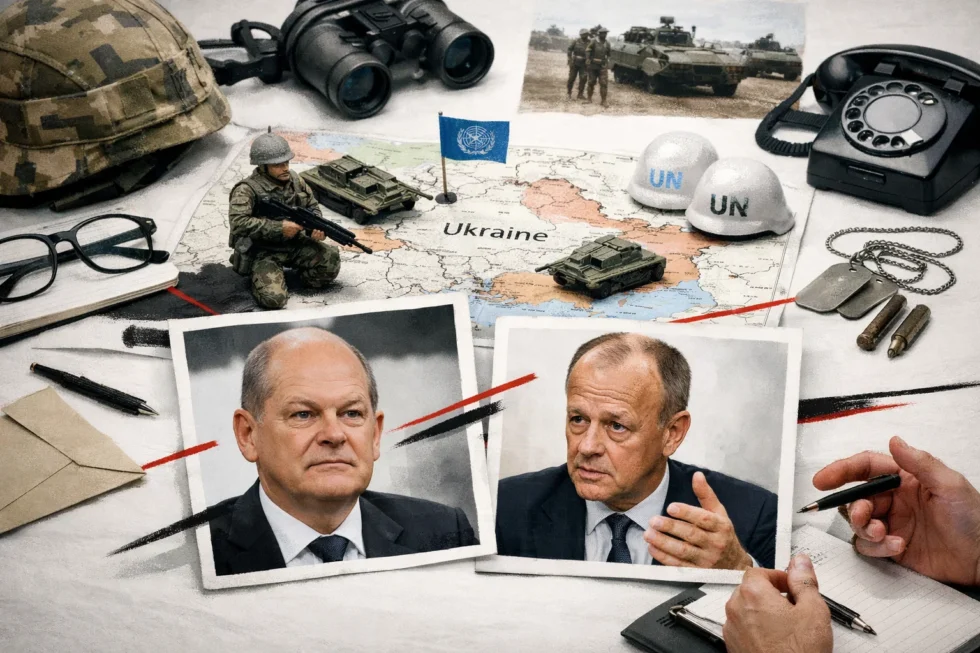
At EU level, however, expectations are rising. Manfred Weber, leader of the European People’s Party, the largest group in the European Parliament, has said German soldiers should be deployed under the EU flag once a peace agreement is reached.
He argues that an EU-led force would be needed to stabilise Ukraine and prevent a return to large-scale fighting. In Brussels, Germany is widely seen as indispensable to any such mission, both because of its military capabilities and its political weight within the EU.
The debate marks a significant shift in Germany’s approach to the war in Ukraine. While Berlin has so far focused on arms supplies and financial support, the possibility of deploying troops would represent a much deeper level of involvement.
Whether that happens will depend on three conditions: a formal ceasefire, a clear international legal mandate and approval by the German parliament. What is already clear is that sending German troops to Ukraine is no longer a taboo topic — it is now part of mainstream political planning in Berlin.
Read about the life of Westminster and Pimlico district, London and the world. 24/7 news with fresh and useful updates on culture, business, technology and city life: Ukraine and UK Launch Strategic Dialogue Session on Century Partnership, Focusing on Security