Council tax in Herefordshire is set to increase by 5% from April 2026, adding around £98 a year to the bill for an average Band D household, as the county council attempts to address a projected £30m funding shortfall in its 2026–27 budget. The proposed rise will be considered as part of the council’s draft budget, which is due to be discussed by cabinet on 20 January 2026. Council leaders have warned that all local services remain under review, underlining the scale of the financial pressure facing the authority.
The move comes amid wider strain on local authority finances across England, with councils facing rising demand for social care services, higher operating costs and funding settlements from central government that have failed to keep pace with inflation. The situation has been reported by BBC Hereford & Worcester, The WP Times reports.
Why council tax is rising in Herefordshire
The proposed increase represents the maximum rise allowed without triggering a local referendum, combining the standard annual council tax uplift with the adult social care precept. Herefordshire Council said the rise was necessary to stabilise its finances following confirmation of the government’s local authority funding settlement in December 2025. While the settlement provided clarity on short-term funding, council officials said it fell short of what was needed to meet rising service demands.
In September 2025, the council warned it was facing a £27m budget gap for the 2026–27 financial year. After the settlement was confirmed, that figure was revised upwards to £30m, equivalent to around 11% of the council’s net annual budget. Council leader Jonathan Lester said the authority had been “short-changed” by the funding deal, arguing that rural councils face higher costs in delivering services such as transport, adult care and waste collection — costs that are not fully reflected in national funding formulas.
“Rurality brings unavoidable additional expense,” Lester said after the settlement announcement in December 2025. “Those pressures are not adequately recognised in the current system.”
What the funding gap means for local services
The Conservative-led administration has confirmed that every area of council spending is being reviewed, as it seeks to close the budget gap without requesting emergency government loans or exceptional financial support. Adult social care remains the single largest driver of cost pressures, reflecting an ageing population and rising care provider fees. Council officers have warned that demand continues to grow faster than available funding.

Lester said the authority would not pursue double-digit council tax increases or seek government bailouts, but acknowledged that “tough but responsible decisions” would be required to balance the budget while protecting essential services. Opposition councillors from the Liberal Democrats, Greens and Independents said the council had little practical alternative but to raise council tax while continuing to cut or restructure services. In joint comments, opposition leaders warned that repeated above-inflation rises were not sustainable over the long term and risked placing an increasing burden on households already facing higher living costs.
Government response and future outlook
The Ministry of Housing, Communities and Local Government said it would make £78bn available nationally for council finances in 2026–27, including up to £237m for Herefordshire. A government spokesperson said the settlement was designed to ensure councils could continue delivering “high-quality public services”.
However, Herefordshire Council has warned that the government’s planned Fair Funding Review could reduce its core funding by £17m by 2028–29, significantly worsening its long-term position.
Council budget papers published in January 2026 suggest this could make annual 5% council tax rises increasingly likely over the next several years, unless funding arrangements change. Officials said the impact would be felt most acutely in rural communities, where service delivery costs are higher per household and opportunities to raise alternative income are limited.
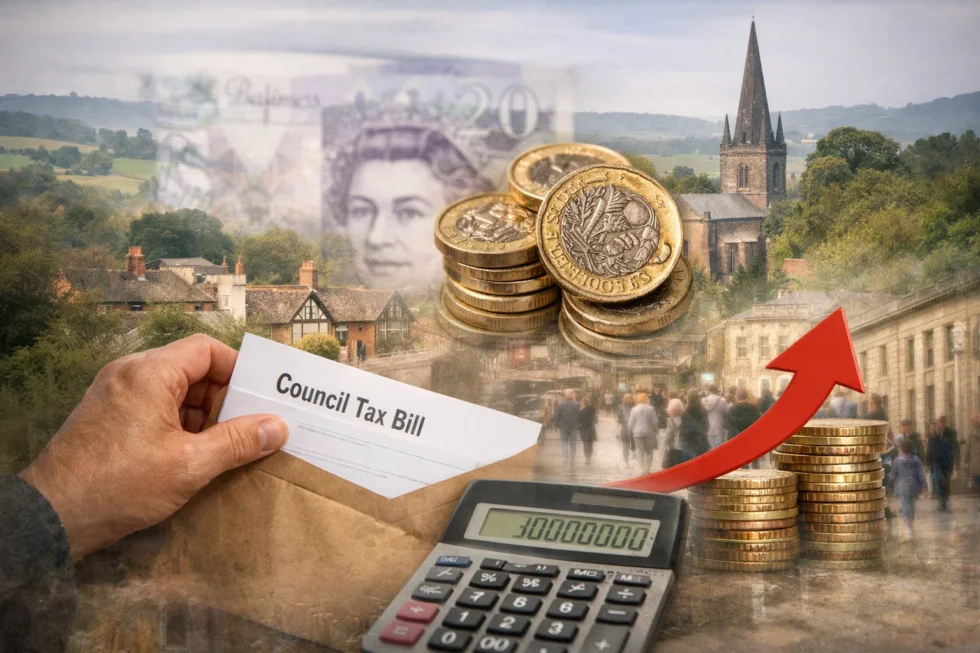
The council’s draft budget for 2026–27 will be debated by cabinet on 20 January 2026, before being considered for final approval ahead of the new financial year in April 2026. If approved, residents can expect:
- a 5% increase in council tax from April 2026
- ongoing reviews of council services throughout the year
- continued budget pressure as national funding reforms take effect
The decision places Herefordshire among a growing number of English councils signalling maximum council tax risesas they seek to balance budgets under sustained financial strain.
Read about the life of Westminster and Pimlico district, London and the world. 24/7 news with fresh and useful updates on culture, business, technology and city life: What Taxes Do Freelancers in London Pay in 2026: Practical Guide