
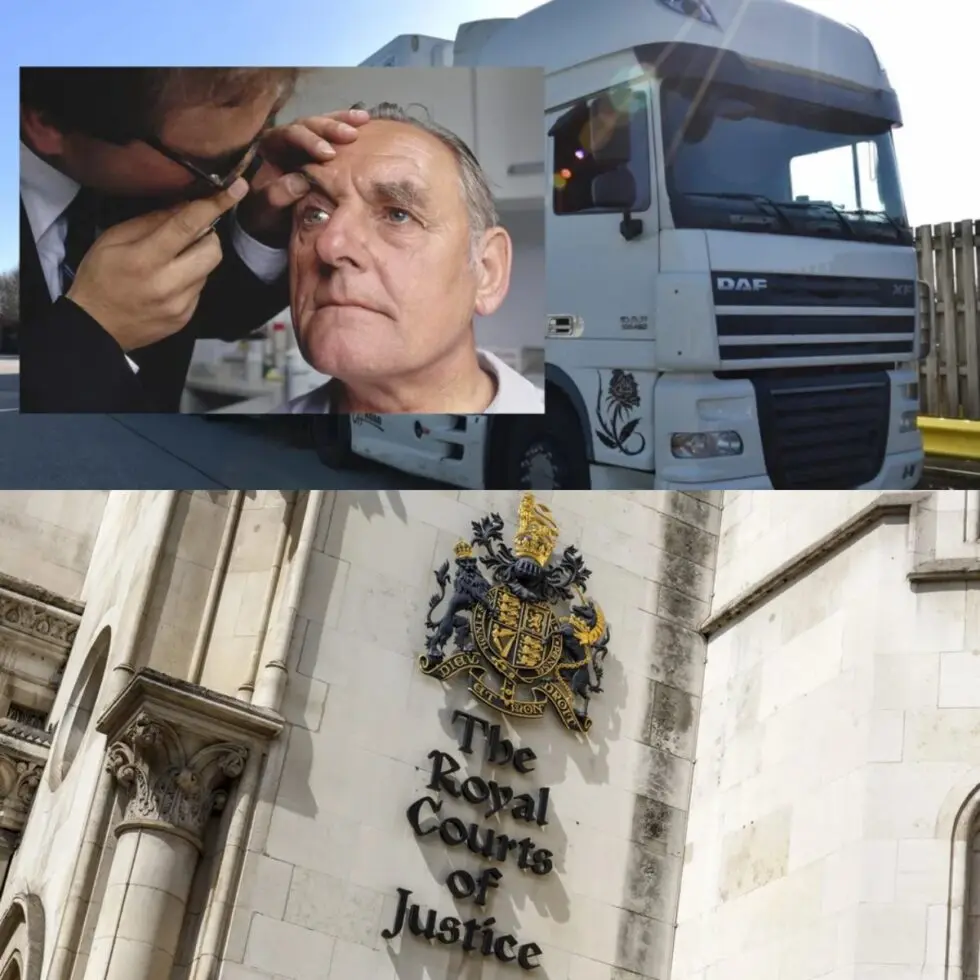
A 62-year-old heavy goods vehicle (HGV) driver, Francis Hodibert, has initiated legal proceedings against Specsavers at the High Court in London, seeking damages exceeding £200,000. Mr. Hodibert alleges that negligent visual field testing conducted at a Slough branch in 2022 resulted in inaccurate reports to the Driver and Vehicle Licensing Agency (DVLA), causing the revocation of his HGV licence for six months. The claimant asserts that the loss of his livelihood led to severe depression and anxiety, rendering him unable to return to work. Specsavers has formally stated it will fully defend the claim. The information was reported by The WP Times, citing the gbnews.
High Court Proceedings and Allegations of Clinical Negligence
The civil lawsuit, filed in early 2026, centers on two specific appointments at the Specsavers Slough branch on April 10 and May 21, 2022. Mr. Hodibert, a resident of Slough, attended these sessions for mandatory eyesight examinations required by the DVLA to maintain his professional driving credentials. Court documents submitted by his barrister, Michael O’Neill, contend that the optician's staff reported "superior field defects"—blind spots in the upper peripheral vision—which led directly to the DVLA's decision to revoke his licence in September 2022.
The claimant's legal team argues that these results were "false" and "inaccurate." To support this, they point to a subsequent assessment conducted on January 25, 2023, by an independent consultant ophthalmologist. This secondary test showed no such defects, enabling Mr. Hodibert to appeal the DVLA's decision. His licence was eventually reinstated on March 31, 2023. The lawsuit seeks to recover lost earnings, as well as damages for "personal injury" in the form of psychological trauma allegedly sustained during the period he was unable to work.
DVLA Medical Standards for HGV Drivers and Visual Field Testing
Under current UK law, HGV (Group 2) drivers are subject to much stricter medical standards than standard car drivers. The DVLA requires these drivers to undergo vision assessments at age 45 and every five years thereafter until age 65, after which the test becomes annual. The visual field test specifically assesses peripheral vision using an automated perimeter, such as the Humphrey Field Analyzer or the Esterman binocular visual field test.
The mechanism of a visual field test involves the patient pressing a button when they see flashes of light in their peripheral vision. High-street opticians like Specsavers are frequently contracted to perform these tests. However, the claimant alleges that the "servants or agents" of Specsavers failed in their duty of care by producing a report that did not reflect his actual visual capacity. The High Court will have to determine whether the testing environment, equipment calibration, or staff conduct fell below the professional standard expected of an optical service provider.
Visual Field Requirements for HGV (Group 2) Licences
| Requirement | Standard Specification |
| Visual Acuity | At least 6/7.5 in the better eye and at least 6/60 in the other eye. |
| Visual Field (Horizontal) | At least 160 degrees on the horizontal diameter. |
| Visual Field (Extension) | At least 70 degrees left and right, and 30 degrees up and down. |
| Defect Tolerance | No defects should be present within the central 30-degree radius. |
| Re-testing Policy | Drivers may seek independent specialist review if they fail initial high-street tests. |
Impact of Licence Revocation on Professional Livelihood
The revocation of an HGV licence often results in immediate termination of employment, as most logistics firms do not have alternative non-driving roles for their staff. For Mr. Hodibert, the six-month gap in his employment history coincided with what his legal team describes as a "substantial disruption" to his domestic life. The claim for £200,000 includes not only the lost wages from late 2022 to early 2023 but also future loss of earnings, based on the assertion that the claimant’s mental health has deteriorated to a point where a return to the logistics industry is "uncertain."

The psychological impact cited in the court papers—specifically depression and anxiety—is a significant component of the "personal injury" claim. In UK tort law, claimants can seek damages for psychiatric harm if it is a foreseeable consequence of negligence. The court will examine medical reports from independent doctors to establish a causal link between the allegedly botched eye test and Mr. Hodibert's current inability to work.
Legal Recourse and Steps for Drivers Facing Licence Revocation
Drivers who believe their HGV or standard driving licence has been revoked based on inaccurate medical data have specific routes for appeal. The DVLA provides a formal process for reconsidering medical decisions.
Procedure for Appealing a DVLA Medical Decision
- Request a Reconsideration: Drivers can write to the DVLA's Medical Group at Swansea, SA99 1TU, providing new medical evidence that contradicts the initial fail.
- Independent Assessment: Secure a private test with a consultant ophthalmologist or a DVLA-approved specialist to verify visual field results.
- Magistrates' Court Appeal: If the DVLA maintains its decision, an appeal can be lodged at a local Magistrates' Court (in England and Wales) within six months of the refusal.
- Legal Representation: For claims of negligence against a private tester (like Specsavers), drivers should consult a solicitor specializing in clinical negligence or professional liability.
- Information Verification: Drivers can check their current licence status and medical requirements on the official government website (gov.uk).
Specsavers’ Defense and Corporate Responsibility
Specsavers, a multinational optical retail chain, has signaled its intent to "fully defend" the lawsuit. The company’s defense is likely to focus on the technical accuracy of the tests at the time they were performed and the inherent variability of visual field testing. Visual field tests are subjective and can be influenced by "patient fatigue" or "learning effects," where a patient performs better on subsequent attempts.
The outcome of this case could have wider implications for the relationship between the DVLA and high-street opticians. If the High Court finds Specsavers liable, it may lead to stricter protocols for how optical chains report results to the DVLA, or a requirement for mandatory double-checking of "fail" results before they are transmitted to the licensing authorities. Currently, the DVLA relies on the data provided by these private contractors to make summary decisions on road safety and fitness to drive.
The litigation remains ongoing at the High Court in London. For HGV drivers, the case highlights the critical importance of accurate medical reporting and the potential for legal redress when administrative errors intersect with professional certification. While the DVLA's mandate is to ensure road safety by removing drivers with impaired vision, the Hodibert case questions the reliability of the frontline diagnostic tools used to enforce those safety standards.
Read about the life of Westminster and Pimlico district, London and the world. 24/7 news with fresh and useful updates on culture, business, technology and city life: Could the war end within a month? US and Ukraine discussed timeline for a possible deal with Russia – Reuters