
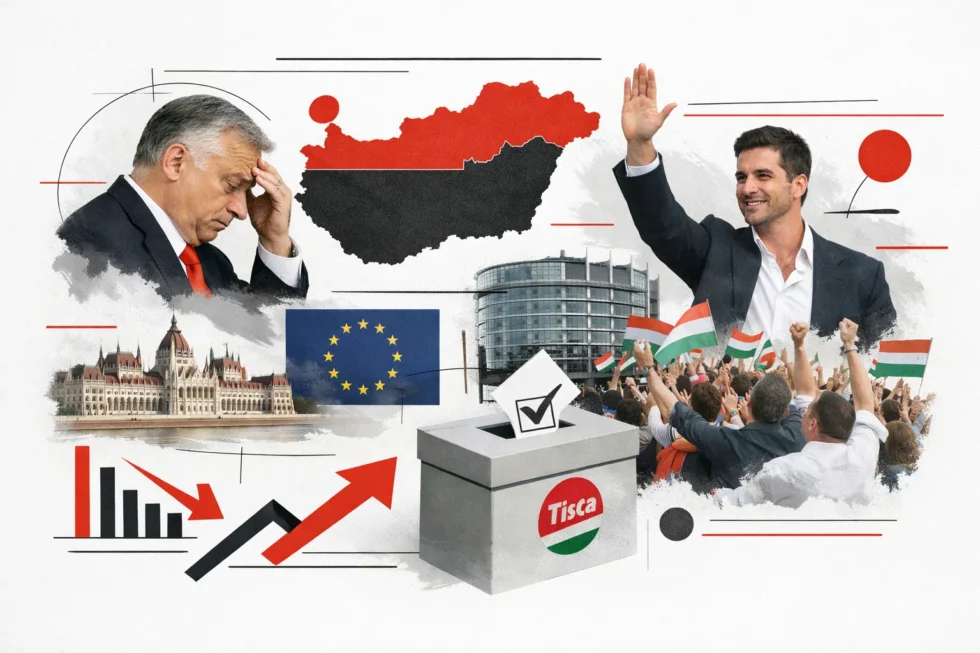
Hungary elections 2026 results confirm a decisive political shift as Viktor Orbán concedes defeat after 16 years in power, with opposition leader Péter Magyar and the Tisza Party projected to secure a commanding parliamentary majority following record turnout on Sunday, 12 April 2026. Early Hungary election results indicate Tisza is on course for more than two-thirds of seats in the 199-member parliament, marking the most significant upset since Orbán’s return in 2010 and signalling a structural reset of governance, EU alignment and institutional control. The WP Times reports, alongside coverage from BBC News and The Guardian in Budapest, that the scale of the margin leaves little ambiguity about the outcome, reinforcing projections that the Hungary elections 2026 will reshape domestic policy, EU relations and Hungary’s strategic positioning within Europe.
Hungarian election data indicates that with over half of votes counted by late evening in Budapest, Tisza had already built an unassailable lead, prompting Orbán to describe the result as “clear and painful” while formally conceding and congratulating his opponent. The scale of the defeat, driven by economic stagnation, corruption concerns and voter mobilisation, leaves little ambiguity about the outcome and opens the path for systemic reforms promised by Magyar, including judicial independence and unlocking frozen EU funds.
Hungary election results 2026: Tisza landslide reshapes parliament
The Hungary election results point to a structural parliamentary transformation rather than a narrow victory. Tisza’s projected seat count exceeds the critical two-thirds threshold required for constitutional change, potentially enabling rapid legislative restructuring across key institutions.
Projected parliamentary outcome (based on partial count)
| Party | Leader | Seats (projected) | Position |
|---|---|---|---|
| Tisza | Péter Magyar | 132–138 | Majority / potential supermajority |
| Fidesz | Viktor Orbán | 50–56 | Opposition |
| Others | Various | Remaining | Minor representation |
This distribution reflects a collapse in support for Fidesz, which previously maintained a dominant constitutional majority. Analysts note that such a swing is rare in modern European electoral cycles, particularly in systems shaped by long-term incumbency advantages.
The turnout, reported at nearly 78%, represents one of the highest participation rates in recent Hungarian elections, reinforcing the legitimacy and scale of the shift.
Why Viktor Orbán conceded quickly after Hungary election
The speed of the concession by Viktor Orbán reflects the magnitude of the projected defeat rather than a contested outcome. Within hours of polls closing, internal and external projections aligned, leaving limited room for dispute. Key drivers behind the concession
- Clear margin in early vote counts across urban and regional districts
- Strong opposition consolidation under a single leadership figure
- High voter turnout reducing statistical uncertainty
- International scrutiny limiting scope for contestation
- Internal acknowledgement of electoral loss within Fidesz
Orbán stated: “Voters did not give us the responsibility to govern,” signalling acceptance of the result and a transition into opposition. The rapid concession contrasts with concerns earlier in the campaign about potential disputes over electoral integrity.
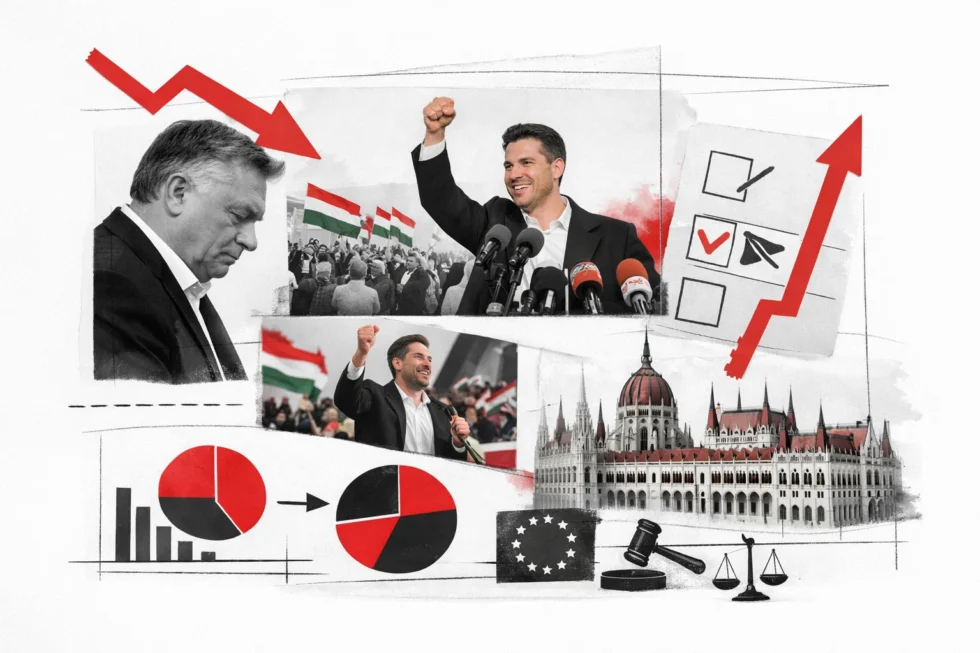
What Péter Magyar victory means for Hungary and EU relations
The victory of Péter Magyar is expected to alter Hungary’s relationship with the European Union, particularly after years of tension under Orbán’s leadership. Magyar has pledged to:
- Restore judicial independence
- Address corruption allegations
- Re-align Hungary with EU institutional frameworks
- Unlock suspended EU funding
- Reform healthcare and taxation systems
The election outcome may also affect Hungary’s stance on Ukraine and broader geopolitical alignment, where Orbán had frequently diverged from EU consensus.
International reaction to Hungary elections 2026 results: EU leaders and allies respond
International reaction to the Hungary elections 2026 results was immediate and coordinated, reflecting the country’s strategic weight within the European political system and its previous positioning under Viktor Orbán. Early responses from European leaders framed the outcome as both a democratic signal and a geopolitical adjustment, particularly in relation to EU cohesion and policy alignment. Among the first to respond, Ursula von der Leyen stated: “Hungary has chosen Europe… together we are stronger, and the Union grows stronger” (European Commission statement, Brussels, 12 April 2026). Emmanuel Macron also confirmed direct contact with the winning side, noting: “France salutes the Hungarian people’s commitment to democratic participation and European values” (Elysée Palace briefing, Paris, 12 April 2026).
Diplomatic analysts across Brussels and London indicated that the result could reconfigure Hungary’s role within the European Union, particularly on issues including Ukraine policy, energy alignment and access to suspended EU funding. Several noted that the outcome may strengthen institutional cohesion after years of friction under Orbán’s administration.
Election night in Budapest: key quotes and confirmed statements
Statements from election night in Budapest reflect both the scale of the political shift and the clarity of the result as vote counting progressed.
“The result of the election is clear and painful” (Viktor Orbán, concession speech, Budapest, 12 April 2026)
“Hungary will once again be a free country” (Péter Magyar, campaign address, Budapest, 12 April 2026)
“He had no option but to concede given the projected scale of defeat” (Ivor Bennett, Sky News, live report, Budapest, 12 April 2026)
These statements confirm both formal acceptance of the Hungary election results and the framing of the outcome as a structural turning point in national governance.
What happens next after Hungary election results 2026
With Hungary election results still being finalised, the immediate institutional focus shifts to transition procedures and government formation under Péter Magyar and the Tisza Party. The scale of the projected majority suggests that legislative action could begin within a compressed timeframe. Confirmed next steps in the transition process:
- Final certification of Hungary election results and seat allocation
- Formal government formation and parliamentary confirmation
- Announcement of initial policy framework and reform priorities
- Negotiations with EU institutions regarding frozen funding mechanisms
- Review and restructuring of judicial and regulatory institutions
If the two-thirds parliamentary threshold is confirmed, Tisza would gain the capacity to initiate constitutional-level reforms, marking a significant departure from the governance model established during Orbán’s tenure. The Hungary elections 2026 therefore represent not only a leadership change but a potential systemic reset across political institutions, economic policy direction and Hungary’s alignment within the European Union.
Read about the life of Westminster and Pimlico district, London and the world. 24/7 news with fresh and useful updates on culture, business, technology and city life: Hormuz Strait blockade: Trump orders US Navy action after Iran talks collapse