
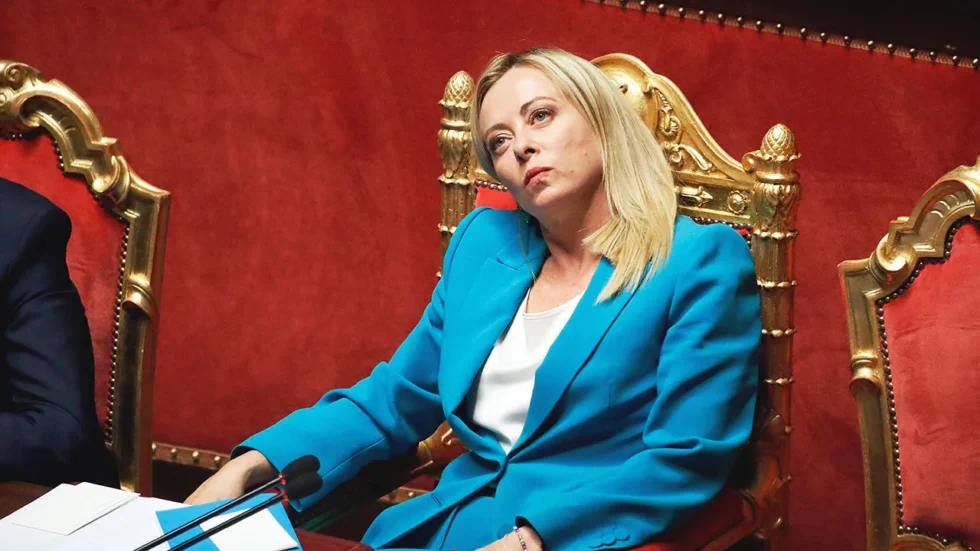
Italian prosecutors in Florence have launched a criminal investigation into Phica, a pornographic website accused of publishing manipulated sexualised images of women, including Prime Minister Giorgia Meloni. The site, active since 2005, amassed more than 700,000 subscribers and allegedly profited by blackmailing victims, demanding up to €1,000 per month for removal of doctored content. Investigators say the operators harvested photos from social media and OnlyFans before altering them with artificial intelligence and distributing them online. Although the site was shut down last week, its digital traces are now central to the inquiry — as reported by The WP Times citing Politico,.
Investigators allege that operators of Phica harvested photographs from social networks and platforms such as OnlyFans, before altering them with artificial intelligence and photo-editing software to produce explicit images. Victims reported that they were pressured to pay as much as €1,000 per month for removal of the material, a practice prosecutors classify as systematic extortion. The “VIP section” of the site highlighted doctored portraits of high-profile women, accompanied by sexist captions and abusive commentary, amplifying both the humiliation and the reach of the fabricated content.
Prime Minister Meloni condemned the site in forceful terms, stating that such practices “demean women and corrode their dignity,” while calling on Italian institutions and European partners to confront online misogyny more aggressively. Her remarks echoed growing anger across Italian society. A petition demanding stricter oversight of pornographic platforms and swift prosecution of those responsible gathered more than 150,000 signatures within days. Feminist groups described the episode as emblematic of the vulnerability women face in digital spaces, regardless of their public standing.
Italy has had legislation criminalising so-called “revenge porn” since 2019, prescribing prison sentences of up to six years and fines reaching €15,000. Yet legal experts argue that the Phica scandal exposes the inadequacy of existing frameworks, particularly against AI-driven image manipulation and anonymous domain operators. “We are witnessing a structural failure to protect women’s rights online,” said a professor of digital law at the University of Milan. “The Meloni case is not an isolated act but a symptom of a much wider crisis.”
The scandal coincided with the revelation of another online abuse network: the Facebook group Mia Moglie (“My Wife”), which had 32,000 members and circulated intimate photos of women without consent. The group was shut down following public outrage, but campaigners warned that countless similar communities remain active.
For prosecutors in Florence, the investigation into Phica represents more than a criminal case: it has become a litmus test of Italy’s ability to enforce digital protections and to align national law with the scale of transnational cybercrime. Observers note that the outcome may also shape European debates on platform accountability, artificial intelligence, and the protection of women’s dignity online.
Read about the life of Westminster and Pimlico district, London and the world. 24/7 news with fresh and useful updates on culture, business, technology and city life: Russia’s Kh-101 cruise missile: expensive weapon at the centre of the Ukraine war