
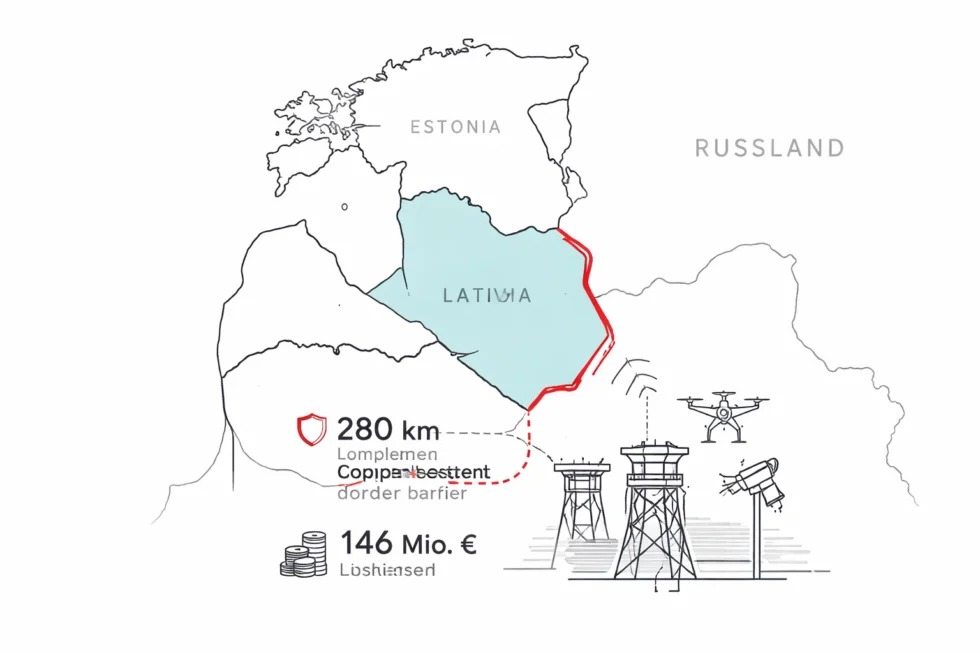
Latvia has officially completed the construction of its border fence with Russia. The WP Times reports, citing the Latvian state infrastructure company Valsts Nekustamie Ipasumi (VNI), that the Baltic EU and NATO member now has a continuous physical barrier along all technically feasible sections of its eastern frontier. The final construction phase saw 72 kilometres of fencing brought into service, completing 99 kilometres of high-security barriers along the Russian border. Latvia’s full land border with Russia stretches for approximately 280 kilometres, and all buildable segments are now physically secured.
The project, valued at around €146 million, represents one of the most significant security investments in Latvia’s modern history. Interior Minister Rihards Kozlovskis has described the fence as a key pillar of national security and a critical shield for the EU’s eastern external border.
The barrier is not merely a metal fence. It is being integrated with electronic surveillance, motion sensors, cameras and monitoring systems, enabling Latvian border forces to detect and respond to crossings in real time.
In parallel, Latvia is building new patrol roads, bridges and engineering structures to allow rapid deployment of border guards and security units. Additional construction is still under way along 41 kilometres of difficult terrain, including swamp and wetland areas, with full completion scheduled for the end of 2026.
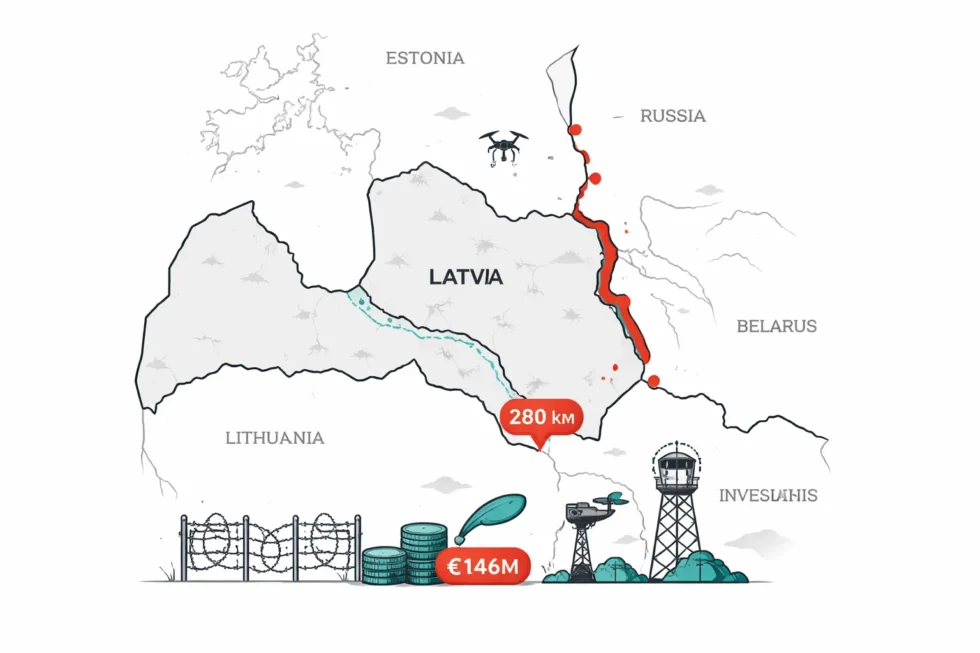
Belarus border also secured
Latvia has already completed the main barrier along its border with Belarus, covering nearly 145 kilometres as of July 2024. Final infrastructure works on selected sections will be finished by spring 2026, at which point Latvia’s entire land-based EU border will be technologically fortified.
A growing Baltic defence line
Latvia’s actions form part of a broader Baltic security strategy. Estonia has begun constructing concrete military bunkers along its south-eastern border with Russia. The first phase includes 28 bunkers, seven of which are already positioned near Setomaa.
Ultimately, the Baltic Defence Line is expected to include around 600 fortifications, supported by a 40-kilometre anti-tank trench, creating a layered NATO defensive system on the alliance’s eastern flank. Estonia’s opposition has also introduced legislation proposing the full closure of the Russian border, underlining how sharply the regional security climate has deteriorated.
Read about the life of Westminster and Pimlico district, London and the world. 24/7 news with fresh and useful updates on culture, business, technology and city life: Are Zelenskyy and Putin set for their first phone call in 5 years after Trump’s Florida talks