
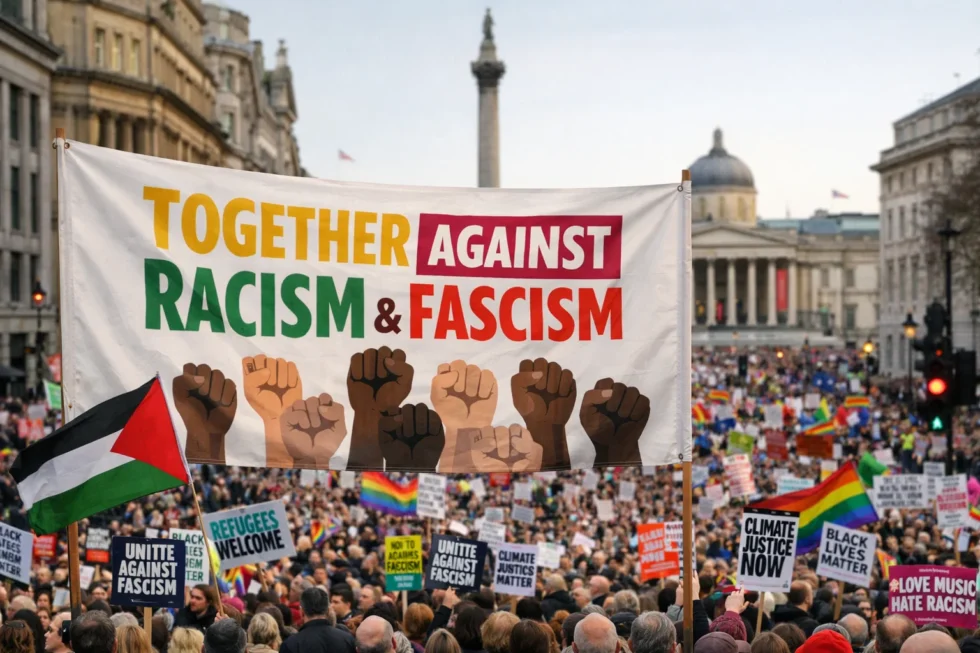
Tens of thousands of people gathered in London on Saturday in what organizers described as the largest multicultural demonstration in the history of the United Kingdom. The protest, organized by the “Together Alliance,” brought together a broad coalition of civil society actors—including charities, activist networks, and trade unions—in a coordinated show of unity against the rise of far-right political movements. This is reported by The WP Times, citing Together Alliance.
According to organizers, attendance reached as high as 500,000 participants, while police estimates placed the figure closer to 50,000. Authorities acknowledged the inherent difficulty in accurately assessing turnout due to the scale and fluidity of the crowd. Despite the discrepancy, both figures confirm a significant mobilization, underscoring the scale of public engagement with the issue.
Structure and Route of the Demonstration
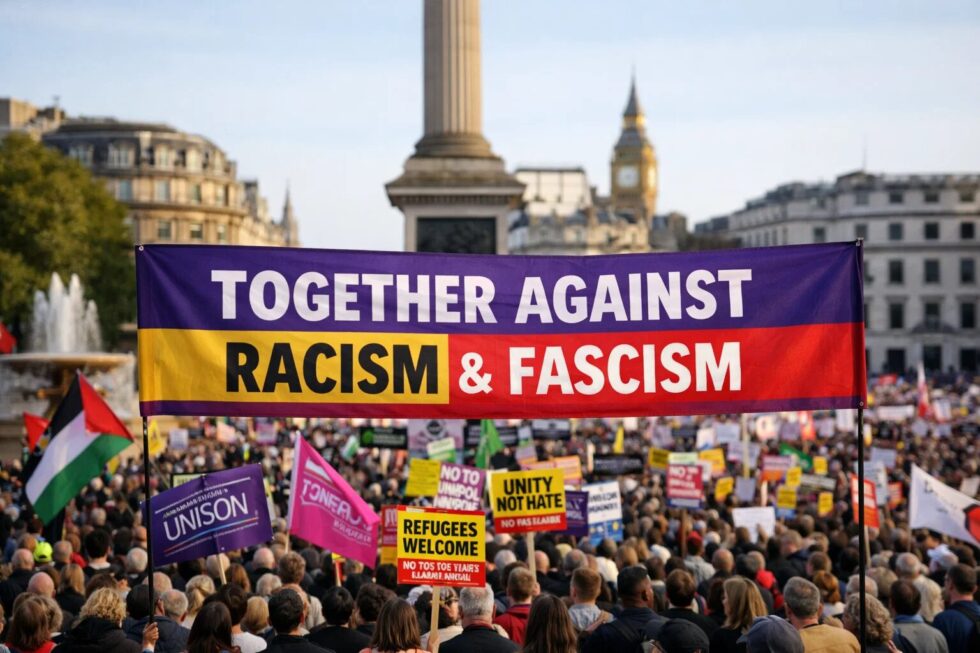
The march began at Park Lane and proceeded through Whitehall before culminating at Trafalgar Square, a route historically associated with major political demonstrations in the UK. Participants carried banners, placards, and symbolic displays reflecting themes of solidarity, anti-racism, and democratic resilience.
More than 100 organizations took part, representing a wide ideological and operational spectrum. These included humanitarian charities, labor unions, environmental groups, and grassroots activist collectives. The diversity of participating entities contributed to the characterization of the protest as “multicultural,” both in demographic composition and in thematic scope.
Logistical coordination involved transportation from across the country. Dozens of buses transported participants into the capital, including at least ten from Manchester alone, indicating a nationwide mobilization effort rather than a purely local demonstration.
Context: Political Catalysts Behind the Protest
The protest was widely understood as a direct response to a previous rally held in September by Tommy Robinson under the banner “Unite the Kingdom.” That earlier event drew approximately 110,000 participants and signaled growing visibility for far-right political narratives in the UK.
Saturday’s demonstration aimed to counter that momentum by presenting an alternative vision centered on inclusivity, diversity, and collective civic engagement. Organizers emphasized that the march was not merely reactive but also proactive—seeking to reinforce democratic values and encourage grassroots organization ahead of upcoming local elections.
The presence of political figures further underscored the event’s strategic timing. Speakers highlighted the importance of community-level mobilization and voter engagement, particularly in the context of imminent electoral processes.
High-Profile Support and Cultural Participation
The demonstration received backing from a range of public figures across the arts and entertainment sectors. Among those publicly supporting or attending were actors such as Christopher Eccleston, David Harewood, and Steve Coogan, as well as musicians including Paloma Faith, Charlotte Church, and Brian Eno.
Live performances formed a central component of the event, contributing to both its scale and its atmosphere. Artists such as Self Esteem, Jessie Ware, Katy B, Joy Crookes, UB40, and Hot Chip performed during the march, blending political messaging with cultural expression.
This integration of cultural and political elements reflects a broader trend in modern protest movements, where artistic participation enhances visibility and engagement while reinforcing shared identity among participants.
Key Speeches and Political Messaging
Prominent political figures addressed the crowd during the march, delivering speeches that emphasized unity and collective action. Diane Abbott, a Member of Parliament from the Labour Party, received strong support from attendees, as did Zack Polanski, deputy leader of the Green Party.
Polanski’s speech focused on the need to normalize hope in political discourse, urging participants to return to their communities and engage actively in civic structures such as unions, local organizations, and neighborhood networks. He framed the protest as part of a broader strategy to counter far-right narratives through sustained grassroots organization.
In subsequent remarks, Polanski suggested that public sentiment may be shifting away from far-right positions, citing the scale of the demonstration as evidence of growing resistance. He explicitly referenced figures such as Nigel Farage in the context of broader political opposition.
Symbolism and Visual Messaging
Participants employed a wide range of visual strategies to convey their messages. Costumes played a notable role, with some attendees dressed as symbolic figures such as Jesus Christ or the Grim Reaper. These representations were often linked to specific political or environmental themes.
One participant, representing a climate-focused campaign group advocating for divestment from fossil fuels, wore a Grim Reaper costume to symbolize the perceived destructive impact of oil and gas industries. The protester highlighted alleged connections between major fossil fuel companies and political movements, arguing for the need to “break ties” with such industries.
Environmental messaging was a recurring theme throughout the march. Multiple climate advocacy groups were present, emphasizing the intersection between ecological concerns and broader political dynamics.
Role of Environmental Activism
Environmental groups maintained a visible and organized presence within the demonstration. Activists associated with climate movements participated both within and alongside the main march.
Members of Extinction Rebellion, for example, staged a silent counter-procession moving in the opposite direction. Dressed in white face paint and red robes, they aimed to draw attention to the climate crisis through symbolic performance rather than direct engagement with the main protest flow.
This dual approach—integrating into the larger demonstration while also maintaining distinct forms of expression—illustrates the layered nature of contemporary protest ecosystems.
Law Enforcement Response and Arrests
The Metropolitan Police maintained a significant presence throughout the event, focusing on crowd management and public safety. While the demonstration remained largely peaceful, several arrests were reported.
Two individuals were detained for climbing columns at the National Gallery, while an additional five arrests were made in connection with various public order offenses. Separately, police arrested 18 individuals near New Scotland Yard during a demonstration linked to support for a pro-Palestinian activist group.
These arrests occurred against a complex legal backdrop. Earlier in the year, the High Court ruled that a government ban on the group in question was unlawful, prompting a temporary suspension of related enforcement actions. However, police recently announced the resumption of arrests pending an appeal process that could extend for several months.
Parallel Political Disruptions
In a separate but related development, two young activists affiliated with the Green New Deal Rising campaign disrupted a rally held by Nigel Farage in Croydon. The event, organized by Reform UK, was interrupted as protesters confronted Farage during his speech.
Video footage circulated by media outlets shows the activists being removed by security personnel amid loud chants from the audience. One protester shouted that Farage was “not welcome in London,” reflecting the broader sentiment expressed during the main demonstration.
This incident highlights the extent to which political tensions are manifesting across multiple venues and formats, from large-scale marches to targeted disruptions of political events.
Broader Implications for UK Political Landscape
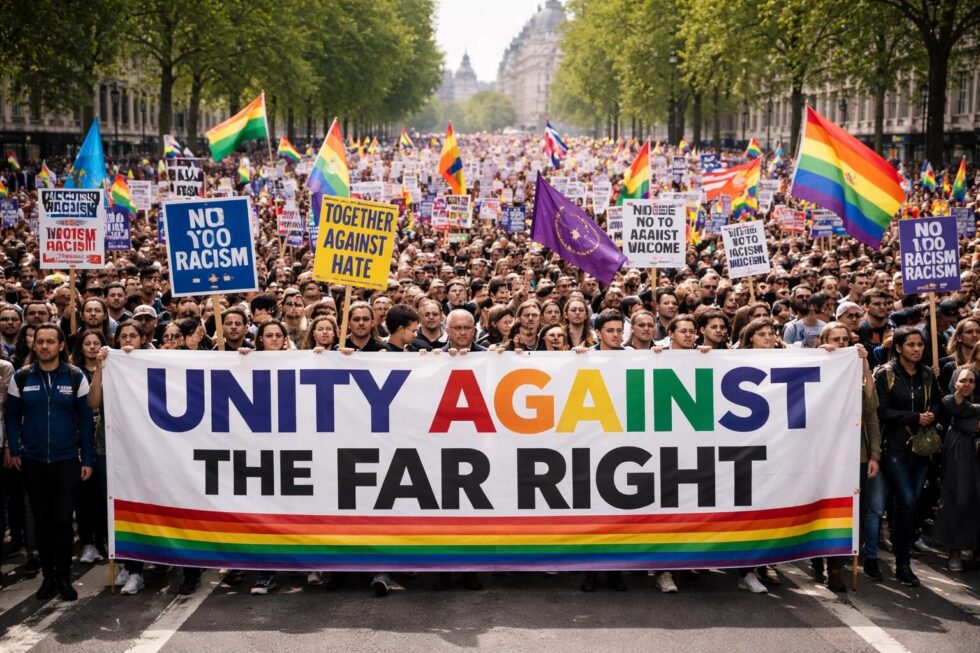
The scale and composition of the London protest suggest a significant moment in the evolution of public political engagement in the UK. The convergence of diverse groups—spanning labor, environmental, and social justice movements—indicates a high level of coordination and shared purpose.
Analysts may interpret the demonstration as evidence of a counter-mobilization dynamic, in which opposition to far-right politics is becoming increasingly organized and visible. The emphasis on multiculturalism and inclusivity reflects broader societal debates حول identity, governance, and the direction of national policy.
The involvement of both grassroots activists and high-profile public figures further amplifies the impact of the event, potentially influencing media narratives and public discourse in the weeks leading up to local elections.
The Together Alliance march in London represents one of the most significant public demonstrations in recent UK history, both in terms of scale and diversity. While estimates of attendance vary, the event clearly mobilized tens of thousands of participants across a wide spectrum of society.
Through a combination of political speeches, cultural performances, and symbolic actions, the protest conveyed a unified message נגד far-right ideologies and in favor of inclusive democratic values. The presence of environmental groups and the occurrence of parallel political disruptions underscore the multifaceted nature of contemporary activism.
Read about the life of Westminster and Pimlico district, London and the world. 24/7 news with fresh and useful updates on culture, business, technology and city life: Protests in London: Together Alliance & Palestine Rally Routes, Road Closures, and Safety Info