
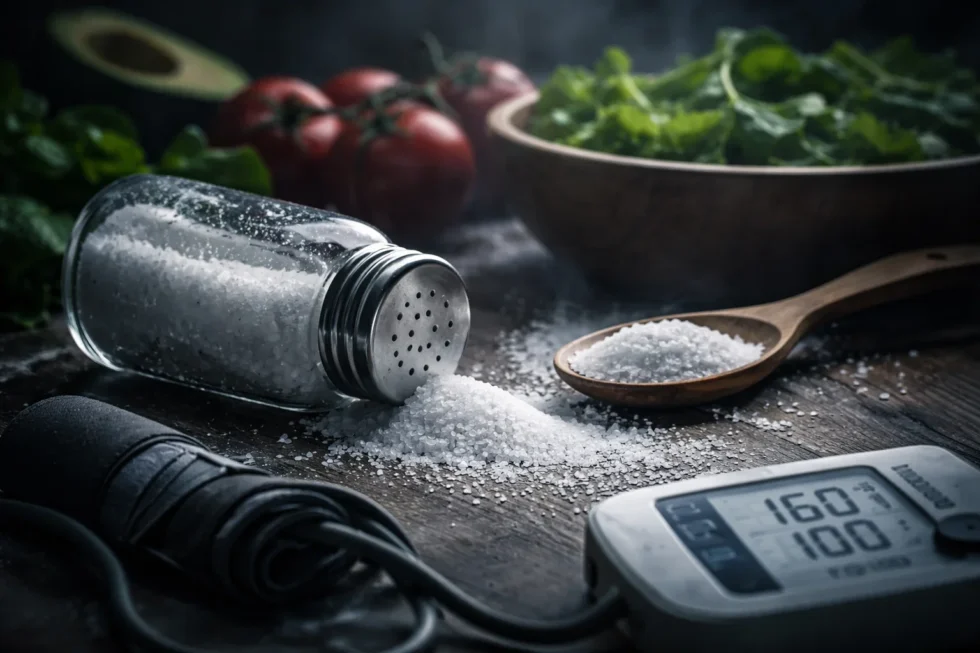
Salt has become one of the most controversial ingredients in modern nutrition. For decades, health authorities around the world have urged people to cut back, warning that excess salt raises blood pressure and increases the risk of heart disease and stroke. Yet a growing number of studies now suggest that reducing salt too much may also be harmful, fuelling headlines that a low-salt diet could be just as unhealthy as a high-salt one. So where does the truth lie? This is reported by The WP Times. editorial team, based on international research and expert analysis.
Salt, or sodium chloride, plays a fundamental role in the human body. Sodium helps regulate fluid balance, enables nerve impulses and supports muscle contraction. Without it, basic physiological processes fail. However, while salt is essential, deficiency is extremely rare in modern diets. The real challenge today is excess, much of it hidden in foods that do not taste particularly salty.
Why salt intake remains a global health concern
Most populations consume far more salt than recommended. The World Health Organization advises limiting sodium intake to less than 2g per day, equivalent to around 5g of salt. In the UK, the recommended maximum is 6g per day. In reality, average intake in the UK is about 8.4g, while global estimates suggest levels closer to 10–11g daily.
Only a small proportion of this comes from salt added during cooking or at the table. The majority is already present in processed and restaurant foods, including bread, cheese, sauces, ready meals and snacks. This makes it easy to exceed recommended limits without realising it. Nutritionist May Simpkin notes that confusion over food labels adds to the problem. “Manufacturers often list sodium rather than salt,” she says. “People don’t realise that 1g of sodium is equivalent to about 2.5g of salt, so they underestimate their intake.”
The established risks of too much salt
The scientific evidence linking high salt intake to raised blood pressure is extensive and consistent. When excess sodium enters the bloodstream, the body retains water to maintain balance. Over time, this increases blood volume and places extra strain on blood vessels, leading to hypertension.
High blood pressure is one of the leading risk factors for heart disease and stroke. According to global estimates, excessive sodium intake contributes to nearly two million deaths each year. A large meta-analysis found that consuming an additional 5g of salt per day increases the risk of cardiovascular disease by 17% and stroke by 23%.
Professor Francesco Cappuccio, a cardiovascular epidemiologist, argues that this evidence should not be downplayed. “We don’t have randomised trials for smoking either,” he says. “Yet no one questions that smoking kills. Salt is similar — the observational evidence is overwhelming.”
What happens when people reduce salt
Cutting salt intake has repeatedly been shown to lower blood pressure. In England, a sustained reduction of around 1.4g per day over several years coincided with a dramatic decline in deaths from stroke and heart disease. More recent clinical trials suggest that even short-term reductions can have measurable effects, comparable in some cases to medication used to treat high blood pressure. Critics argue that people who reduce salt also tend to adopt other healthy behaviours, such as eating more vegetables or exercising more. While this is often true, controlled studies still show a direct blood-pressure-lowering effect from salt reduction alone.
The controversy: can low salt be harmful
The debate intensifies when researchers examine very low salt intake. Several observational studies have reported a J-shaped or U-shaped curve, suggesting that both very high and very low intakes are associated with poorer health outcomes. Some researchers argue that consuming less than around 5–6g of salt per day may increase the risk of cardiovascular events, particularly in people with existing heart disease. Others suggest that a “moderate” intake, higher than current guidelines, is associated with the lowest risk.
Andrew Mente, a nutritional epidemiologist, has argued that this pattern is consistent with other essential nutrients. “At high levels you see toxicity, at low levels deficiency,” he says. “The optimal level is usually somewhere in the middle.”
Why many experts dispute these claims
Despite the headlines, many scientists and public health organisations remain unconvinced. A major concern is how salt intake is measured. Many controversial studies rely on single spot urine samples, which can be highly inaccurate and do not reflect habitual intake. The gold standard involves multiple 24-hour urine collections, which are rarely used in large population studies due to cost and complexity.
There is also concern about reverse causality. People who are already unwell may eat less salt because of illness or medical advice, creating the impression that low salt intake causes poor health outcomes.
Cappuccio is critical of these studies. “They often include participants who are already sick and use flawed measurement methods,” he says. “That makes it very difficult to draw reliable conclusions.”
Individual differences and salt sensitivity
Another complicating factor is that people respond differently to salt. Age, genetics, ethnicity, body weight and existing health conditions all influence salt sensitivity. Some individuals experience significant rises in blood pressure with relatively small increases in salt, while others appear less affected. This variability does not invalidate population-wide recommendations, but it helps explain why salt reduction may benefit some people more than others.
How much salt is in everyday foods
One reason salt reduction is challenging is that many common foods contain more salt than expected.
| Food (typical portion) | Approx. salt content | % of UK daily limit (6g) |
|---|---|---|
| Bread (2 slices) | 0.6 g | 10% |
| Blue cheese (100 g) | 2–3 g | 33–50% |
| Deli meat (1 serving) | 1.5 g | 25% |
| Miso soup (1 cup) | 2.7 g | 45% |
| Frozen pepperoni pizza (100 g) | 1.9 g | 32% |
| Large salted popcorn | ~5 g | 80–85% |
| Cupcake (1 medium) | ~1 g | 17% |
This illustrates why people can exceed daily recommendations without adding salt themselves.
Foods that contribute most to hidden salt intake
When people think about salt, they usually picture the salt shaker on the kitchen table. In reality, the largest share of sodium in modern diets comes from foods that do not always taste overtly salty. Everyday staples — often perceived as neutral or even healthy — can quietly push total intake well beyond recommended limits. This “hidden salt” is one of the main reasons why population-wide salt reduction remains so difficult, despite widespread awareness of health advice. The following food groups account for the majority of salt consumed in Western diets, according to public health data:

- Bread and bakery products
- Cheese, especially blue and processed varieties
- Ready meals and convenience foods
- Pizza and savoury pastries
- Processed meats such as ham, bacon and sausages
- Sauces, dressings and stock cubes
- Savoury snacks including crisps and popcorn
By contrast, fresh fruit and vegetables, legumes, whole grains and minimally processed foods are naturally low in salt and help keep overall sodium intake within healthier limits.etables, legumes and minimally processed foods are naturally low in salt.
Frequently asked questions

Is a low-salt diet dangerous for healthy people
For the vast majority of healthy adults, a low-salt diet is not dangerous. Extremely low sodium intake is rare and difficult to reach through normal eating patterns, particularly in countries where processed foods are widely consumed. Most people who believe they are eating “very little salt” are still well above levels associated with deficiency.
Is sea salt or Himalayan salt healthier than table salt
No. From a physiological perspective, all salts deliver sodium chloride and affect the body in the same way. Trace minerals found in specialty salts are nutritionally insignificant and do not reduce the impact of sodium on blood pressure or cardiovascular risk.
Does regular exercise mean you need more salt
For most people, no. Standard meals provide sufficient sodium to replace losses from everyday physical activity. Additional salt or electrolyte drinks are usually only necessary for endurance athletes training for several hours, particularly in hot conditions with heavy sweating.
Can potassium offset the effects of high salt intake
A diet rich in potassium — found in fruit, vegetables, legumes and dairy — can help lower blood pressure and partially counteract sodium’s effects. However, it does not neutralise the risks associated with consistently high salt intake and should not be seen as a substitute for moderation.
What experts broadly agree on
Despite ongoing scientific debate and occasional headline-grabbing claims, there is broad agreement among nutrition and cardiovascular experts on several fundamental points. Excess salt intake raises blood pressure and, over time, increases the risk of heart disease and stroke. Most people consume significantly more salt than they realise, largely because the majority of sodium comes from processed and restaurant foods rather than salt added at home.
There is also strong consensus that moderate reductions in salt intake benefit public health at population level. Countries that have successfully reduced average salt consumption have seen measurable declines in blood pressure and cardiovascular deaths. At the same time, experts agree that completely eliminating salt from the diet is neither realistic nor necessary, given its essential role in human physiology. Crucially, the claim that a low-salt diet is as dangerous as a high-salt one is not supported by the strongest or most consistent evidence. For the vast majority of people, the greater and more immediate risk lies in chronic excess, not deficiency. As many nutrition experts put it, when it comes to salt, moderation still means eating less — not more.
Read about the life of Westminster and Pimlico district, London and the world. 24/7 news with fresh and useful updates on culture, business, technology and city life: Mental Health on the Plate: Essential Micronutrients for a Stable Psyche
Sources used: World Health Organization (WHO), UK National Health Service (NHS), British Nutrition Foundation, The Lancet, Journal of the American Heart Association, Health Survey for England