

The United Kingdom will observe no statutory bank holidays during the month of March 2026, maintaining a standard operational schedule for public services, financial institutions, and retail sectors across London and the wider country. While significant cultural events such as St. David’s Day on March 1, St. Patrick’s Day on March 17, and Mothering Sunday on March 22 will be celebrated, they do not grant administrative closures. Consequently, Transport for London (TfL) will maintain weekday and weekend schedules, and the London Stock Exchange will remain open during standard hours. Schools and government offices will function as normal throughout the month, reports The WP Times.
Statutory Framework of UK Bank Holidays in 2026
The scheduling of bank holidays in the United Kingdom is governed by the Banking and Financial Dealings Act 1971. For the calendar year 2026, the distribution of these holidays leaves March as a standard working month. In England and Wales, the closest statutory holidays are New Year's Day (January 1) and the Easter weekend, which in 2026 falls in early April. Specifically, Good Friday occurs on April 3 and Easter Monday on April 6.
Because March 2026 lacks a "Substitute Day" or a unique royal proclamation, all contractual obligations regarding working hours remain in effect. For employees in London’s financial district, the "City," and the Canary Wharf tech hub, this means 22 standard working days. Pay cycles and BACS transfer timings will not be delayed by public holiday processing lulls, which usually occur during the May or August bank holidays.
Operational Status of London Transport and Infrastructure
Transport for London (TfL) operates the majority of the capital's mobility network, including the London Underground, Overground, Elizabeth Line, and bus services. In the absence of bank holidays, the service operates on its standard "Monday to Friday," "Saturday," and "Sunday" timetables.
Underground and Rail Services
Throughout March 2026, peak hour frequencies—typically between 07:30–09:30 and 16:30–18:30—will remain at maximum capacity. Commuters using the Northern Line, Central Line, and the Elizabeth Line should expect standard fare capping to apply. The London Overground and DLR will also run without the holiday service reductions often seen during the Christmas or Easter periods.
Planned Engineering Works
While there are no bank holidays, TfL and Network Rail frequently schedule essential maintenance during weekends. In March 2026, travelers are advised to check the "Status Updates" on the official TfL website (tfl.gov.uk) or use the "TfL Go" app. Major works are typically concentrated on Saturdays and Sundays to minimize the impact on the Monday-to-Friday workforce.
Retail and Business Operating Hours in London
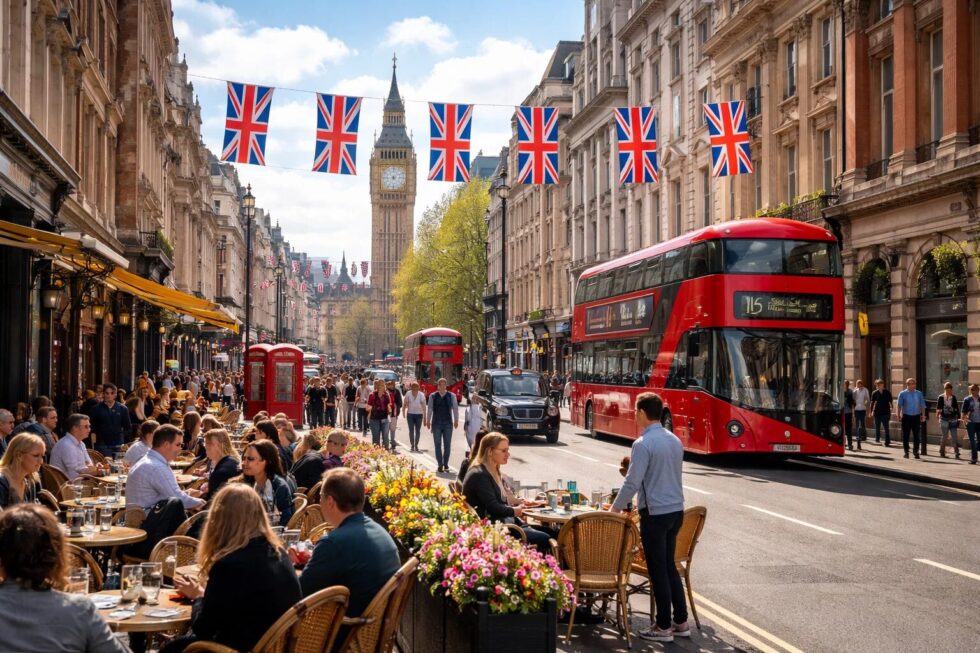
London’s retail sector, particularly in major districts such as Oxford Street, Regent Street, and Westfield (Stratford and White City), operates under standard Trading Act regulations in March 2026.
- Monday to Saturday: Most flagship stores open from 09:00 or 10:00 to 20:00 or 21:00.
- Sundays: Under the Sunday Trading Act 1994, large shops (over 280 square metres) are restricted to six hours of trading, generally between 11:00 and 17:00 or 12:00 and 18:00.
- Small Businesses: Convenience stores and smaller boutiques often maintain longer hours, sometimes 07:00 to 23:00, regardless of the Sunday restrictions.
Government offices, including HM Revenue & Customs (HMRC) and local borough councils like Westminster or Camden, will be open for in-person appointments and telephone inquiries during standard business hours (typically 09:00–17:00, Monday to Friday).
Impact of Cultural Observances: St. David’s and St. Patrick’s Day
March 2026 features two major patron saint days. Although these are of high cultural significance, they are not bank holidays in England.
St. David’s Day (March 1, 2026)
Falling on a Sunday in 2026, St. David’s Day celebrates the patron saint of Wales. In London, this involves cultural events at Wales House and Welsh societies, but all commercial entities follow standard Sunday trading laws.
St. Patrick’s Day (March 17, 2026)
St. Patrick’s Day falls on a Tuesday in 2026. While it is a bank holiday in Northern Ireland, it is a normal working day in London. However, the Mayor of London typically organizes the St. Patrick’s Day Festival in Trafalgar Square.
- Date of Parade: Usually the Sunday closest to the 17th (March 15, 2026).
- Location: Piccadilly to Trafalgar Square.
- Impact: Expect localized road closures and bus diversions in the W1 and WC2 postal codes.
Education and School Term Dates in London
In March 2026, London schools will be in the middle of the Spring Term (often referred to as the Hilary Term). Most London boroughs, including Islington, Southwark, and Kensington & Chelsea, follow a similar academic calendar.
Parents are advised to verify specific "INSET days" (staff training days) with their individual schools, as these can result in localized closures even when there is no national bank holiday. Information can be found on the "Schools and Education" section of each borough's local government website (e.g., westminster.gov.uk).
Healthcare and Emergency Services Availability
The National Health Service (NHS) maintains standard operating procedures throughout March 2026. Unlike bank holidays, where GP surgeries are closed and services are diverted to "Out of Hours" providers, all primary care facilities will be available.
- GP Surgeries: Open Monday to Friday, 08:00–18:30.
- Pharmacies: Standard hours apply. Major chains like Boots or Superdrug in central London (e.g., Piccadilly Circus) often stay open until midnight.
- Emergency Services: A&E departments at major hospitals such as St Thomas' or University College Hospital (UCH) operate 24/7.
- Non-Emergency: Dial 111 for medical advice or use the NHS app for digital consultations.
Financial Services and the London Stock Exchange
The London Stock Exchange (LSE) located at Paternoster Square will follow its standard trading schedule for all 22 working days of March 2026.
LSE Trading Hours
- 08:00: Market Open
- 12:00–12:02: Midday Break
- 16:30: Market Close
Retail banks, including Barclays, HSBC, Lloyds, and NatWest, will be open to the public. Standard hours are typically 09:30 to 16:30. Since there are no bank holidays, there will be no disruption to clearing cycles for cheques or international wire transfers (SWIFT/SEPA) involving UK accounts.
Consumer Rights and Employment Obligations: The "No-Holiday" Context
Since March 2026 does not contain any statutory bank holidays in England, the legal relationship between employers and employees remains strictly bound by individual contracts. This has significant implications for those working in London’s service and corporate sectors.
Statutory Leave Entitlement
In the UK, the legal minimum for paid holiday is 5.6 weeks a year (28 days for a full-time worker). Employers can choose to include bank holidays as part of this entitlement. In March 2026, because there are no bank holidays, any time taken off must be requested as "Annual Leave." Employees should be aware that:
- Notice Periods: Most employers require a notice period at least twice as long as the duration of the leave requested (e.g., 2 days' notice for 1 day off).
- Pay Rates: There is no legal requirement for employers to pay "time and a half" or "double time" for working on cultural days like St. Patrick's Day (March 17), as it is a standard Tuesday.
Retail Return Policies
For consumers shopping in London West End districts, the lack of bank holidays means that standard "cooling-off" periods and return windows are not extended. Most major retailers (such as Selfridges or John Lewis) offer a 28-to-35-day return policy. Unlike the Christmas or Easter periods, where "Bank Holiday Mondays" are often excluded from the count of "working days" for mail-order returns, in March 2026, every Monday through Friday counts as a full business day for processing refunds and statutory rights under the Consumer Rights Act 2015.
The Transition to British Summer Time (BST) and Utility Logistics
The end of March 2026 marks a significant logistical shift in the UK that affects transport, safety, and energy usage: the start of Daylight Saving Time.
Clock Change Logistics (March 29, 2026)
At 01:00 on Sunday, March 29, 2026, the UK moves from Greenwich Mean Time (GMT) to British Summer Time (BST).
- Transport Impacts: Night Tube and Night Bus services on the Saturday/Sunday crossover (March 28/29) see a "lost hour." TfL services typically adjust schedules to ensure that the early morning shift begins correctly at the new time. Travelers catching early flights from Heathrow or Gatwick on that Sunday must manually verify that their alarms are set for the new time, as some older electronic devices may fail to sync automatically.
- Energy Tariffs: For Londoners on "Economy 7" or "Time of Use" energy tariffs, the clock change may shift the period of cheaper electricity. Residents should check their smart meter displays on March 29 to ensure their heavy appliance usage (washing machines, EV charging) still aligns with the off-peak window.
Congestion Charge and ULEZ Enforcement
The absence of bank holidays in March means there are no exemptions for London’s charging zones.
- Congestion Charge: Remains active 07:00–18:00 Monday to Friday and 12:00–18:00 on Saturdays and Sundays.
- ULEZ (Ultra Low Emission Zone): Operates 24 hours a day, every day of the year (except Christmas Day). Visitors driving into Central London for St. Patrick’s Day events must ensure their daily £15 Congestion Charge and £12.50 ULEZ charge (if applicable) are paid via the "Pay to Drive in London" portal or the Auto Pay system to avoid Penalty Charge Notices (PCNs) which start at £180.
Summary of Operational Status: March 2026
To assist residents and visitors in London, the following checklist provides a quick reference for March 2026:
- Check Transport: Standard timetables apply. Use the "Plan a Journey" tool at tfl.gov.uk for weekend engineering updates.
- Verify Appointments: All dental, medical, and legal appointments will proceed as scheduled.
- Council Services: Bin collections and recycling centers will operate on their standard weekly rotas.
- Postal Services: Royal Mail will perform standard collections and deliveries Monday through Saturday. Post Offices will be open.
- Parking: Standard parking restrictions (Yellow lines, Red routes, and Pay-and-Display) remain in effect throughout the month.
Implications for Tourism and Hospitality
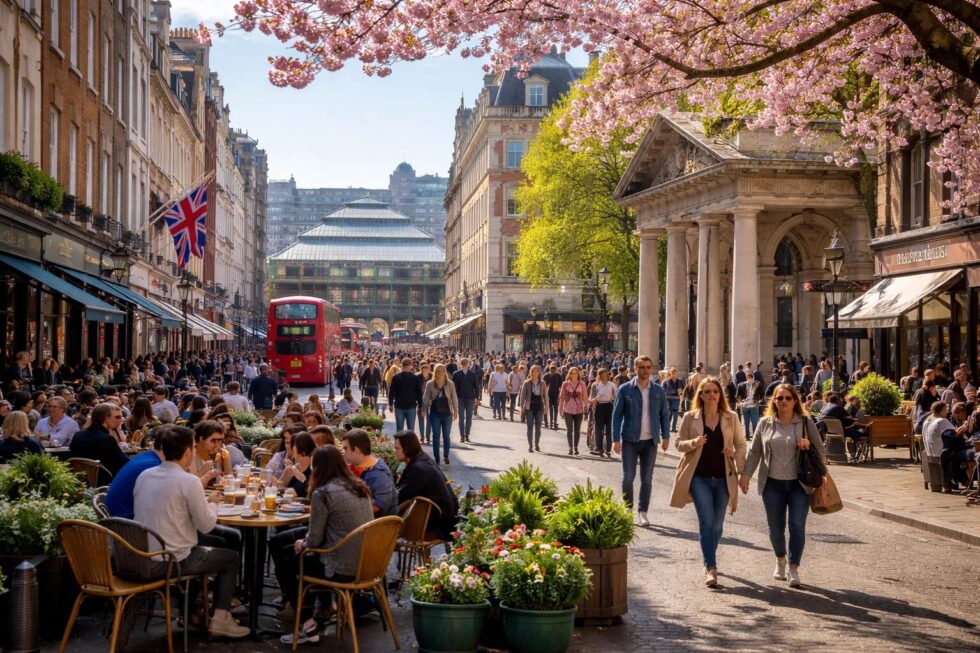
For international tourists visiting London in March 2026, the absence of bank holidays is generally beneficial. Major attractions, including the British Museum, the Tower of London, and the London Eye, remain open daily. Standard ticket pricing applies, and there are no holiday surcharges for hotels or dining. However, the lack of a bank holiday means that crowds in central London remain consistent with peak commuter traffic during the week, rather than the localized "day-tripper" surges seen on bank holiday Mondays.
The transition to British Summer Time (BST) will occur on Sunday, March 29, 2026, when clocks advance by one hour at 01:00. This marks the end of March and provides an additional hour of evening daylight for the hospitality sector’s outdoor terraces.
This operational stability in March allows for uninterrupted economic activity across the capital. For the average resident, the month represents a continuous period of work and education, undisturbed by the logistical shifts that characterize the UK's April and May schedules. Standard civil and commercial law remain the primary guides for all transactions and public movements throughout this 31-day period.
Read about the life of Westminster and Pimlico district, London and the world. 24/7 news with fresh and useful updates on culture, business, technology and city life: What if you inhale second-hand vapour — is passive vaping a real health risk for children under new UK 2026