
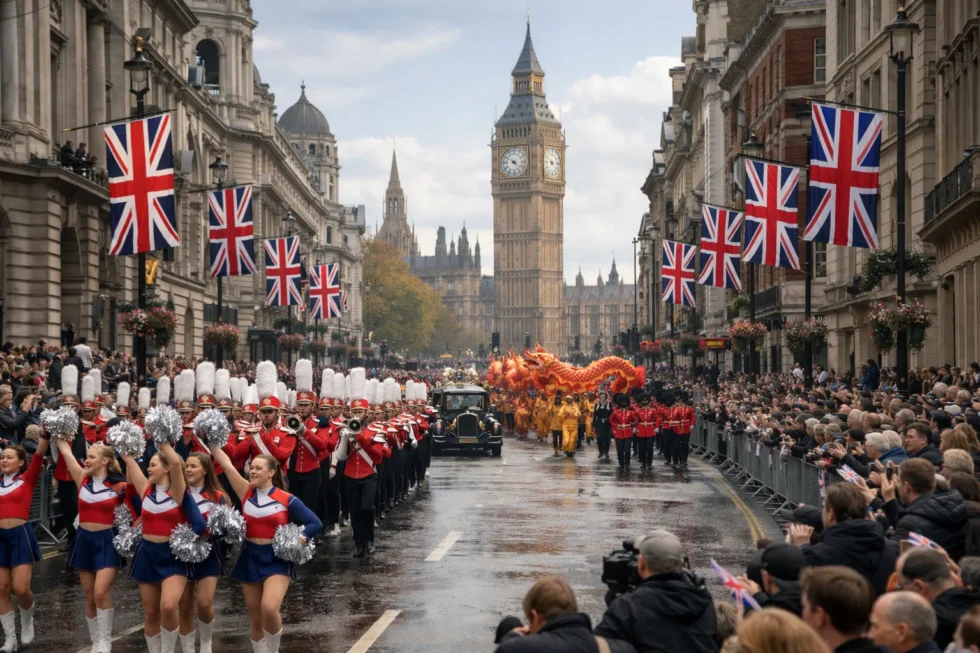
The New year's day parade is London’s first major public ceremony of the year, a tradition that began in 1987 and has since grown into one of the world’s largest free street celebrations. What started as a modest winter procession through the West End has evolved into a global broadcast event that now brings together performers, schools, military units and cultural groups from across Britain, Europe and the United States.
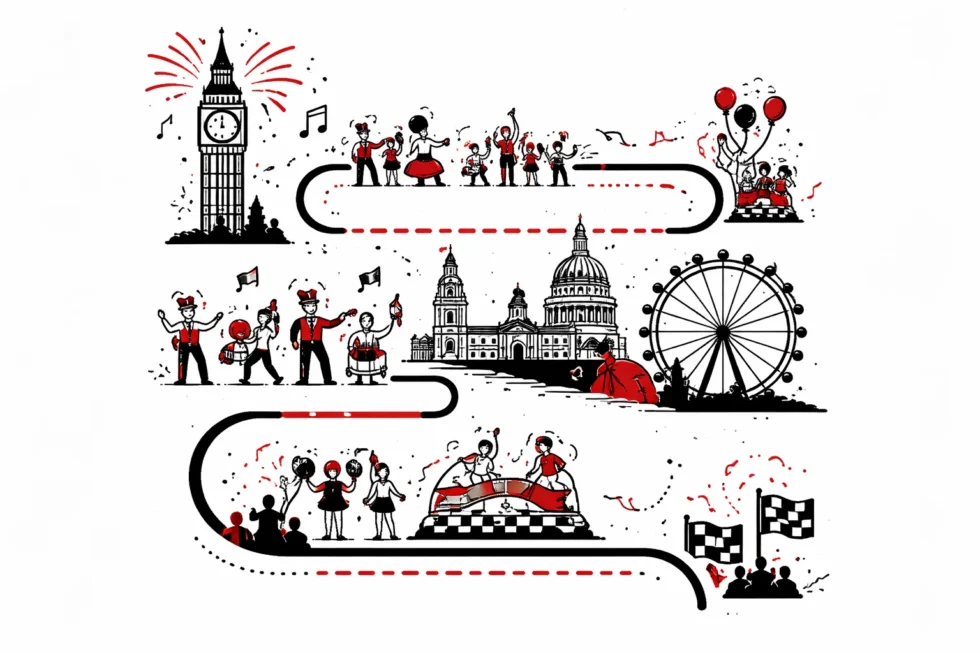
On Thursday 1 January 2026, more than 8,000 performers and an estimated 500,000 spectators will once again transform Piccadilly, Trafalgar Square and Whitehall into a carefully choreographed outdoor stage, blending live music, dance, heritage and civic symbolism. Unlike the ticketed fireworks on the Thames, this parade remains completely free to attend, deliberately designed to be open to families, residents and visitors alike. This is reported by the The WP Times editorial desk. It is not simply a parade. It is the moment when London — after a night of celebration and chaos — publicly and collectively steps into the new year.
The 2026 theme: Global London
Every edition of the parade is built around a theme, and 2026 is dedicated to “Global London” — the idea that the capital is shaped as much by its communities as by its landmarks. This is why the line-up includes American marching bands, European dance groups, London school ensembles and British ceremonial units, all appearing side by side.
The theme is reflected in:
- Multinational music and choreography
- Costumes representing London’s boroughs and cultures
- Eco-friendly floats and community organisations
The parade is designed not just to entertain, but to tell a story about the city London wants to be in 2026.
How the programme works
The parade runs as a three-hour moving show from 13:00 to around 16:30, divided into distinct performance zones.
Opening section – Piccadilly
The largest floats, headline performers and marching bands begin near Green Park and The Ritz Hotel. This is where the parade has its strongest visual impact and where television coverage is focused.
Main performance zone – Piccadilly Circus and Regent Street
This central stretch hosts:
- Live pop and soul performances
- Samba, cheerleading and street dance
- Displays from London boroughs and schools
Large video screens are installed so even people standing far back can follow what is happening.
Finale – Whitehall and Parliament Street
The closing section becomes more ceremonial, featuring:
- Military and heritage groups
- Youth and charity organisations
- The final musical performances
This part of the route symbolically connects the parade with Britain’s government and national identity.
The full parade route
The New year's day parade 2026 follows one of London’s most important ceremonial corridors:
Green Park → Piccadilly → Piccadilly Circus → Regent Street St James’s → Pall Mall → Trafalgar Square → Whitehall → Parliament Street
It runs for almost three miles, crossing the heart of royal, political and commercial London.
Which streets will be closed
To allow the parade to run safely, the following roads will be closed for most of New Year’s Day:
- Piccadilly
- Regent Street St James’s
- Pall Mall
- Cockspur Street
- Whitehall
- Parliament Street
- Waterloo Place
Closures begin in the early hours of the morning and most roads reopen only in the evening, so central London should be approached by Tube or on foot.
Best places to watch
Some parts of the route work better than others depending on what you want to see.
| Area | Why it is good |
|---|---|
| Green Park & Piccadilly | See performers gathering and the parade starting |
| Piccadilly Circus | Big screens and the loudest atmosphere |
| Regent Street St James’s | Long, clear sightlines |
| Trafalgar Square | Iconic London backdrop |
| Whitehall | Ceremonial finale and TV coverage |
Why this parade matters
The New year's day parade exists for a simple but powerful reason. After a night of fireworks, crowds and alcohol, London needs a moment that is public, ordered and shared. This parade provides exactly that. In a city where most major events are ticketed or fenced off, this remains one of the few that belongs to everyone. On 1 January, London does not just celebrate the new year — it presents itself to it.
ТАМ есть где перекрыты улицы или что как проверь все
If you live, work or travel through central London on New Year’s Day, this parade will shape how you move.
Which streets will be closed
These roads form the official parade footprint and will be closed from the early morning until late afternoon or evening:
- Piccadilly
- Piccadilly Circus (junctions and surrounding streets)
- Regent Street St James’s
- Pall Mall
- Cockspur Street
- Trafalgar Square (traffic lanes)
- Whitehall
- Parliament Street
- Waterloo Place
These closures are not symbolic. They are enforced with police cordons, barriers and CCTV control, meaning no taxis, no deliveries and no private vehicles can cross the route.
When the closures start and end
London does not close these streets at 1pm. They are sealed much earlier.
| Time | What happens |
|---|---|
| 02:00–04:00 | Road closures begin as barriers and security zones are installed |
| 06:00–12:00 | Full lockdown of the parade corridor |
| 13:00–16:30 | Parade in progress |
| 16:30–20:00 | Gradual reopening after crowd dispersal |
For residents and businesses inside the footprint, this effectively means no vehicle access for most of the day.
All bus routes that normally use Piccadilly, Trafalgar Square, Whitehall or Regent Street will be diverted. Some routes will be split into two halves that do not cross the centre. Black cabs can still operate, but they cannot cross the parade corridor. If you need to reach the other side of central London, you will have to walk or use the Tube.
Which Tube stations are best
Because roads are sealed, the Underground becomes the only reliable way in and out.
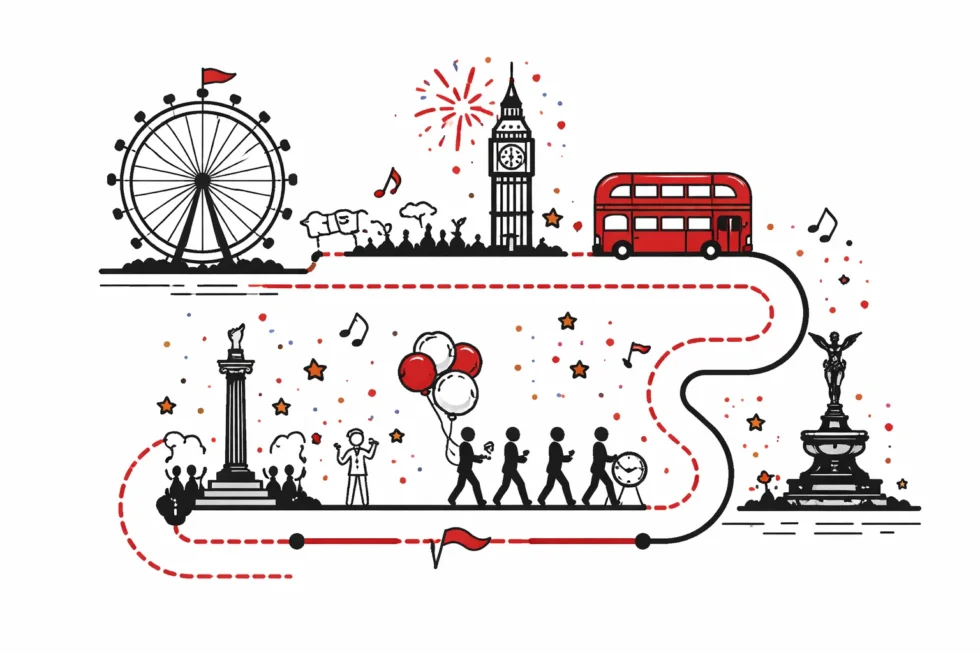
Use these stations depending on where you want to stand:
- Green Park – Best for the start of the parade
- Piccadilly Circus – Best for big screens and atmosphere
- Charing Cross – Best for Trafalgar Square
- Westminster – Best for the finish
- St James’s Park – Good for Whitehall
Some station exits may be temporarily closed to manage crowd flow. The New year's day parade is managed with the same level of planning and security as a royal procession or a major international sporting event. With close to half a million people moving through a narrow historic street network, London must temporarily switch from a traffic city into a pedestrian-first safety zone.
For one day each year, the capital deliberately suspends its normal role as a road system and becomes a walkable civic space, where crowds can move, gather and watch without the risks created by vehicles, deliveries and through-traffic. This is not symbolic. It is a practical decision taken by police, transport authorities and emergency services to prevent congestion, accidents and crowd surges.
That is why these closures are not treated as disruption. They are the price of running one of Britain’s most important public traditions safely — and of allowing London to belong, even briefly, to people rather than cars.
Read about the life of Westminster and Pimlico district, London and the world. 24/7 news with fresh and useful updates on culture, business, technology and city life: Who is on the Military New Year Honours List 2026? Full British Army awards, London and UK impact