
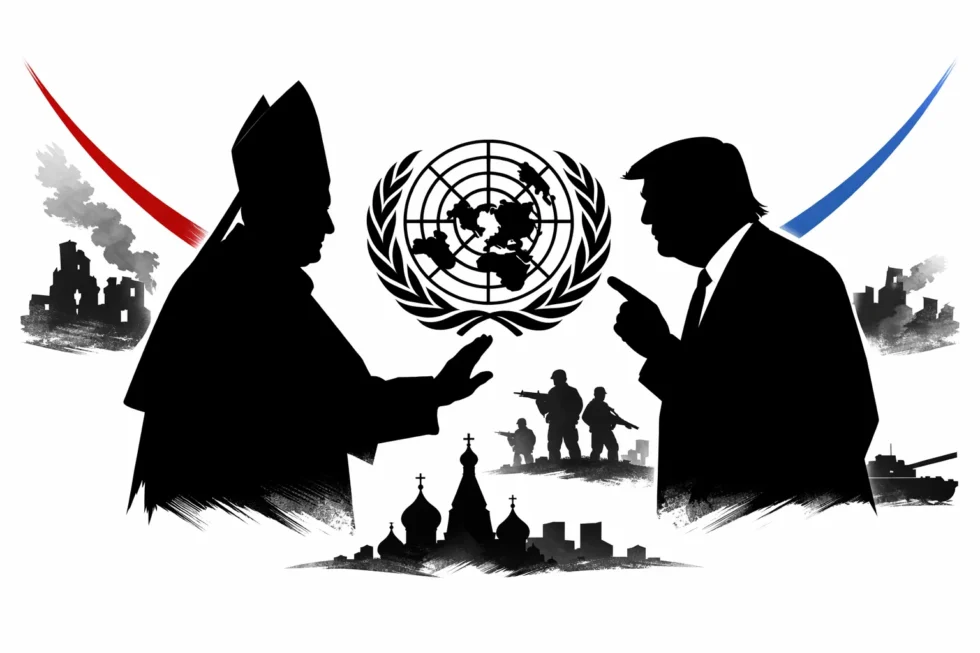
The Vatican has formally declined an invitation from US President Donald Trump to join his proposed “Peace Council”, signalling a clear preference for the United Nations as the primary framework for resolving global conflicts. The decision was confirmed on Tuesday by senior Vatican officials, amid growing international concern that Washington is attempting to establish parallel diplomatic structures outside existing multilateral institutions.
Responsibility for managing and resolving major international crises, the Holy See believes, must remain firmly anchored within the UN system rather than being transferred to ad-hoc councils led by individual states. Vatican officials said the Pope’s position reflects both institutional principle and concern about the long-term consequences for global governance. This was reported by The WP Times, citing Reuters and Independent.
Vatican’s concerns made explicit
Speaking to journalists in Rome, Pietro Parolin, the Vatican’s Secretary of State, confirmed that Pope Leo XIV would not take part in the initiative. He said the pontiff had “a number of serious concerns” regarding the proposed council’s mandate, composition and broader political implications.
“For us, there are critical issues that must be addressed,” Parolin said. “One of the main concerns is that, at the international level, it is the United Nations that should primarily be responsible for dealing with these crisis situations. This is a point on which we have consistently insisted.” Parolin added that the Vatican does not wish to undermine existing multilateral mechanisms by endorsing initiatives that could weaken the authority or legitimacy of the UN.
What is Trump’s ‘Peace Council’
Trump’s proposed “Peace Council” was unveiled following a US-brokered ceasefire agreement in Gaza, negotiated last year with the participation of several regional and international intermediaries. Under the plan, Washington outlined the creation of a permanent US-led body intended to oversee post-conflict transitions, coordinate international reconstruction funding and enforce political accountability during recovery phases.
Initially centred on Gaza, the council was presented as a strategic supervisory mechanism combining diplomacy, security coordination and economic stabilisation. US officials argued that existing multilateral institutions, including the United Nations, had proved too slow, fragmented or politically constrained to manage complex, multi-layered conflicts in real time. However, reporting by the Financial Times indicates that the Trump administration has since sought to expand the scope of the Peace Council beyond the Middle East. According to diplomats briefed on the discussions, Washington proposed extending the model to other major geopolitical crises, including Ukraine and Venezuela, raising concerns among allies that the initiative could evolve into a parallel global governance structure operating outside established UN frameworks.
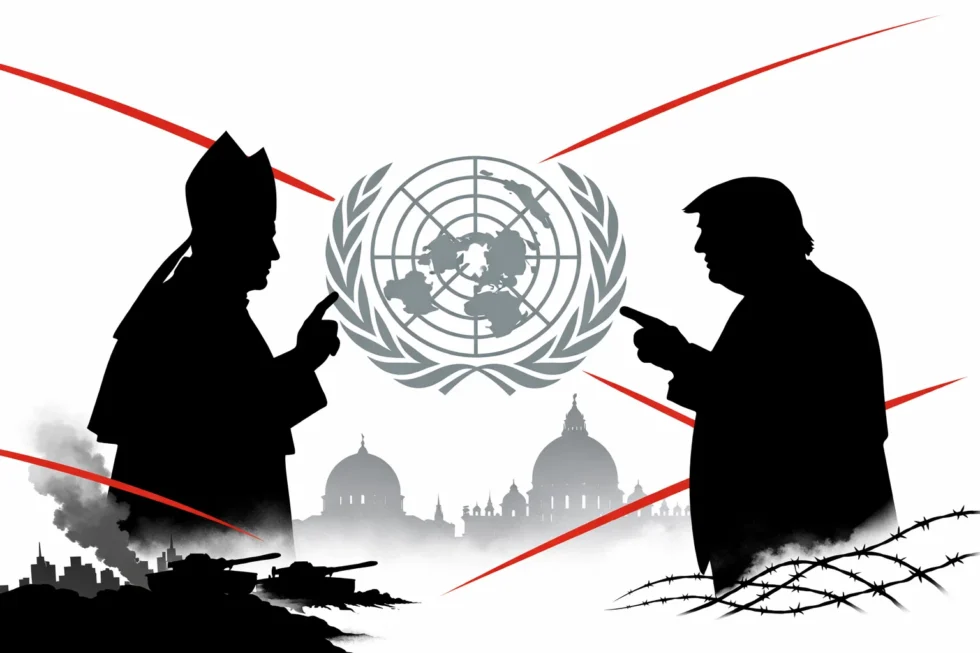
Fears of sidelining the UN
The expansion plans have prompted concern among both Western and Arab diplomats, who fear the initiative could function as a de facto alternative to the United Nations, rather than a complementary body. Several diplomats told the FT that the administration appears to view the council as a more controllable forum than the UN Security Council, where US initiatives can face resistance from rival powers.
Those concerns were reinforced by a Bloomberg report citing sources familiar with the proposal, which claimed that countries seeking permanent membership of the council would be required to contribute up to $1 billion each to its budget. Critics argue that such a financial threshold risks turning peace mediation into a pay-to-enter arrangement, privileging wealthy states while marginalising others.
Countries invited — and those refusing
According to officials involved in the talks, leaders from more than 20 countries have indicated a willingness to join the Peace Council. These reportedly include representatives from the United States, Israel, Saudi Arabia, the United Arab Emirates, Egypt, Qatar, Turkey, India, Brazil, Argentina, South Africa, Nigeria, Japan, South Korea, Australia, Mexico, Colombia, Chile, Morocco and Jordan.
Controversially, the invitation list also includes Vladimir Putin, as well as Alexander Lukashenko, whose legitimacy is not recognised by several Western governments. The inclusion of both figures has drawn sharp criticism from European capitals, with a number of EU member states declining to participate. European diplomats privately say that sharing a diplomatic platform with leaders accused of aggression and human rights abuses would undermine the credibility of any peace-building initiative.
Ukraine’s scepticism
Ukrainian President Volodymyr Zelensky confirmed that he, too, had received an invitation. However, he expressed deep reservations about the format.
“It is difficult for me to imagine how Ukraine could be part of any council that also includes Putin and Lukashenko,” Zelensky said, according to Ukrainian media. His comments reflect Kyiv’s long-standing insistence that any peace framework involving Ukraine must be grounded in international law and exclude those responsible for the war.
Vatican’s broader diplomatic stance
The Vatican’s refusal fits within a broader pattern of cautious, principle-driven diplomacy. While the Holy See often acts as a behind-the-scenes mediator and maintains dialogue with all sides, it has consistently defended the central role of multilateral institutions. In recent years, Vatican officials have repeatedly warned against the erosion of global governance norms through unilateral or bloc-based initiatives. Analysts note that Pope Leo XIV, elected on a platform emphasising institutional continuity and moral authority, is particularly wary of moves that could politicise peace efforts or reduce them to geopolitical bargaining tools.
For Britain and other US allies, the development forms part of an ongoing debate over the role of new diplomatic initiatives alongside established multilateral institutions. UK officials have not issued public statements on the proposed Peace Council, while diplomatic sources in London describe a cautious approach to frameworks that sit outside the United Nations. The Vatican’s position places it among a number of international actors that have emphasised the continued role of existing global institutions in conflict management. The proposal’s reception across diplomatic channels continues to vary, reflecting differing views on how peace and post-conflict coordination should be structured at the international level.
Read about the life of Westminster and Pimlico district, London and the world. 24/7 news with fresh and useful updates on culture, business, technology and city life: What is Trump's Peace Council and why are countries asked to pay $1bn