
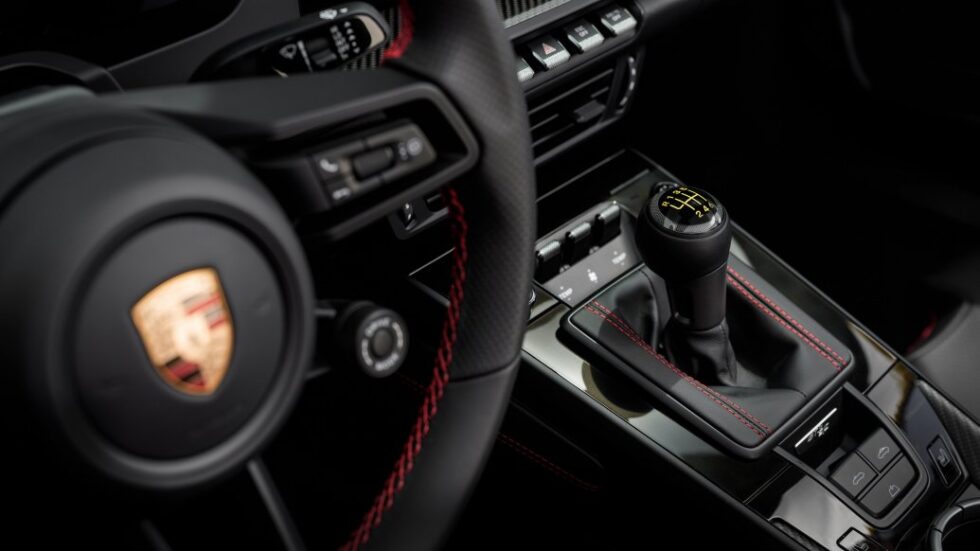
Porsche 911 GT3 S/C has been unveiled on 14 April 2026 as the first-ever GT3 variant to combine a high-revving naturally aspirated engine with a fully automatic convertible roof, marking a structural shift in how Porsche positions its most driver-focused models. Developed under a renewed strategy led by Michael Leiters to prioritise high-margin, emotive derivatives, the model responds directly to long-standing customer demand for an open-top GT car without the compromises of manual roof systems or limited production runs, The WP Times reports.
Positioned between the track-focused GT3 and collectible Speedster lineage, the 911 GT3 S/C integrates lightweight architecture, motorsport-derived hardware and a 510hp flat-six engine into a two-seat convertible format, while remaining a series-production model rather than a capped special. The result is a product that blends engineering opportunism with strategic intent—leveraging existing GT components to deliver a new segment within the 911 range.
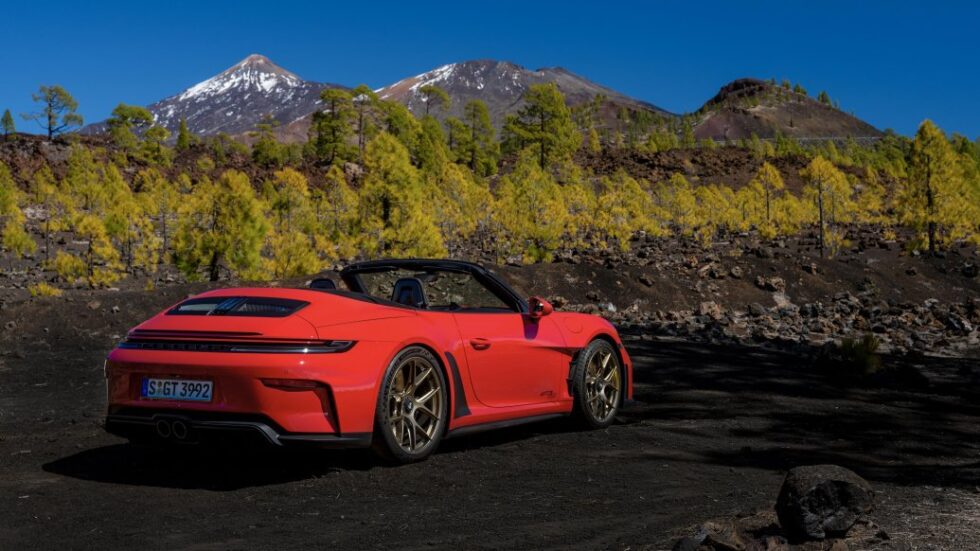
GT3 S/C architecture explained: how Porsche engineered an open-top GT car
The defining breakthrough of the GT3 S/C lies in combining GT3 performance fundamentals with a fully automated cabriolet structure—without materially compromising rigidity, weight or balance. Porsche engineers adapted components across the GT ecosystem, merging elements from multiple models to achieve this. The chassis and suspension are derived directly from the GT3 Touring, while body components and lightweight systems come from higher-end variants such as the S/T and GT3 RS. The convertible mechanism itself is adapted from the Carrera Cabriolet, but re-engineered using magnesium elements to maintain structural efficiency.
This hybrid approach reflects a deliberate engineering philosophy: maximise performance continuity while minimising development complexity.
Key structural and engineering elements:
- Carbon fibre bonnet, wings and doors (from S/T and GT3 RS)
- GT3 Touring chassis geometry and suspension setup
- Magnesium-reinforced automatic soft-top mechanism
- Weight increase limited to approximately +30kg vs 991 Speedster
- Near GT3 Touring-level aerodynamic balance front-to-rear
Despite removing the fixed roof, torsional rigidity is described internally as “extraordinary”, indicating reinforcement at key load-bearing points without significant mass penalties.
Powertrain and performance: naturally aspirated focus in a turbo era
At the core of the GT3 S/C is Porsche’s 4.0-litre naturally aspirated flat-six engine, producing 510hp (375 kW) and engineered to rev up to 9,000rpm. In a segment increasingly dominated by turbocharging and electrification, this configuration remains central to Porsche’s GT identity.
Crucially, the model is offered exclusively with a six-speed manual gearbox, reinforcing its positioning as a purist driver’s car. The transmission features a shorter final-drive ratio—approximately 8% shorter than the previous Speedster—enhancing responsiveness and engagement.
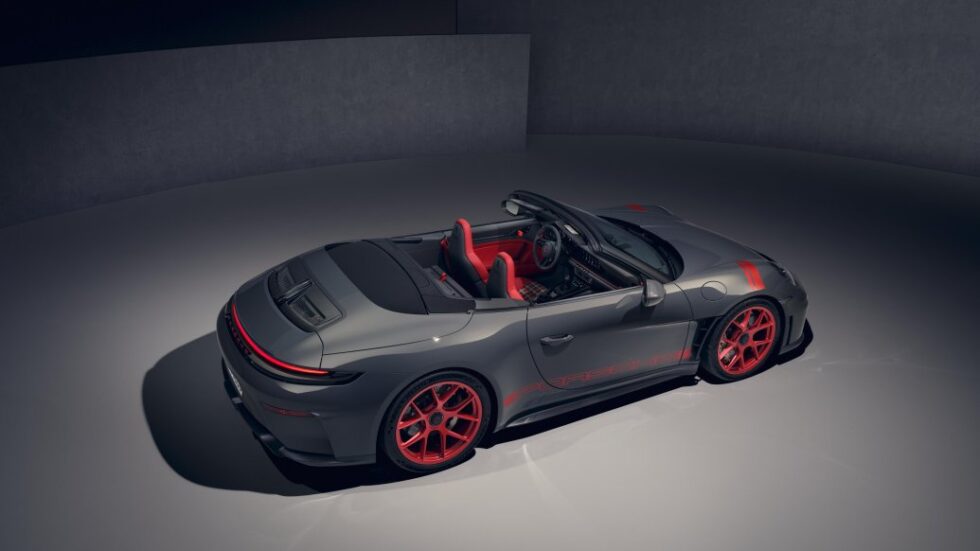
Performance metrics align closely with fixed-roof GT models:
| Specification | 911 GT3 S/C |
|---|---|
| Engine | 4.0L NA flat-six |
| Power | 510 hp |
| 0–100 km/h | 3.9 seconds |
| Top speed | 313 km/h |
| Transmission | 6-speed manual only |
The decision to exclude PDK was not only philosophical but technical—weight savings of 28kg were critical to maintaining homologation within the GT3 category.
“For the first time, we are combining a high-revving naturally aspirated engine with an open-top 911 GT platform without compromising driving dynamics,” said Andreas Preuninger (Stuttgart, April 2026).
Lightweight strategy and materials: how Porsche kept weight under control
Maintaining a sub-1,500kg weight target in a convertible configuration required extensive use of advanced materials and component optimisation.
Porsche applied lessons from the limited-run S/T model, transferring both visible and hidden lightweight technologies into the GT3 S/C. This includes structural carbon elements, reduced rotating mass and optimised battery systems.
Weight reduction measures include:
- Carbon ceramic brakes (≈20kg lighter than steel)
- Magnesium wheels (≈9kg weight saving)
- Lithium-ion battery (≈4kg reduction)
- Carbon anti-roll bars and shear plate
- Magnesium-reinforced roof structure
The final kerb weight stands at approximately 1,497kg, positioning the car within the same performance envelope as closed GT variants despite the added complexity of a convertible system.
Interior and configuration: two-seat driver-focused layout
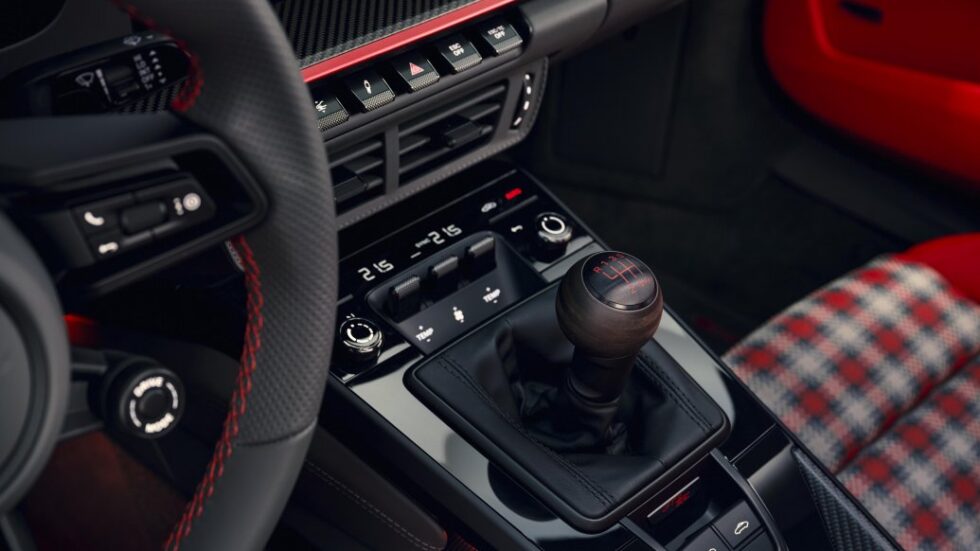
The GT3 S/C is configured strictly as a two-seater, eliminating rear seats entirely in favour of weight savings and structural reinforcement. This decision mirrors the 2019 Speedster but diverges in practicality by offering optional storage solutions. The interior blends motorsport minimalism with customisation options via Porsche Exclusive Manufaktur. Interior highlights:
- Lightweight door panels and carpets
- Optional carbon bucket seats with integrated airbags
- ‘Track Screen’ digital display mode for focused data output
- Rotary ignition switch (left-side, traditional Porsche layout)
- Optional ‘Street Style’ package with woven leather detailing
A newly developed 80-litre rear storage box addresses usability concerns, providing functional space without reintroducing rear seating weight.
Market positioning and pricing: strategy behind the GT3 S/C
Unlike previous open-top GT models such as the 911 Speedster, the GT3 S/C will not be limited in production. This marks a strategic shift by Porsche to monetise demand more broadly while maintaining exclusivity through allocation control rather than production caps. Pricing begins at approximately £200,500, placing it:
- Above the standard GT3
- Below limited-edition S/T and Speedster models
- Within reach of repeat GT customers seeking differentiation
From a commercial perspective, the GT3 S/C serves multiple roles:
- Expands the GT3 product family
- Captures unmet demand for open-top GT driving
- Increases profitability through shared component architecture
“The emotional powertrain becomes even more intense with the roof down, particularly on dynamic country roads,” said Frank Moser (Stuttgart, April 2026).
The arrival of the Porsche 911 GT3 S/C marks a decisive shift in Porsche’s industrial logic: this is not experimentation, but controlled expansion built on proven assets. Instead of committing fully to high-risk electrification timelines, the company is extracting additional value from its most resilient architecture—the 911—by layering new emotional use-cases onto an already amortised platform.
What distinguishes this move is precision. The GT3 S/C is engineered almost entirely from existing high-performance components, yet repositioned to unlock a previously underserved niche: an uncompromised, open-top GT experience with an automated roof. That combination—once considered structurally or philosophically incompatible—has now been industrialised without triggering major cost escalation or engineering reset. The implications are financial as much as technical. By reusing homologated systems and limiting incremental weight, Porsche preserves regulatory efficiency while widening its pricing envelope. Premium derivatives such as this allow margin expansion without proportional increases in R&D spend, effectively turning engineering depth into recurring revenue.
At the same time, the product reinforces Porsche’s core identity at a moment when brand dilution is a risk across the industry. The insistence on a naturally aspirated engine and manual-only configuration is not nostalgia—it is segmentation. It isolates a high-value customer group that prioritises engagement over convenience, ensuring that even as the broader portfolio evolves, the brand retains a clear performance anchor.
In effect, the GT3 S/C is less about adding a convertible to the range and more about validating a scalable formula: take a fully optimised performance base, introduce a new experiential dimension—here, open-top driving with a fully automatic mechanism—and bring it to market with minimal structural compromise. If successful, this template is likely to be repeated across future derivatives. The conclusion is unambiguous. Porsche is not choosing between heritage and innovation—it is monetising both simultaneously. The GT3 S/C demonstrates that, when executed with discipline, legacy engineering can still generate new demand, new margins and new relevance without waiting for the next technological cycle.
Read about the life of Westminster and Pimlico district, London and the world. 24/7 news with fresh and useful updates on culture, business, technology and city life: Nissan Juke EV 2026: what is known about the all-electric crossover, CMF-EV platform, UK production and launch timeline
Photos from the official Porsche press release