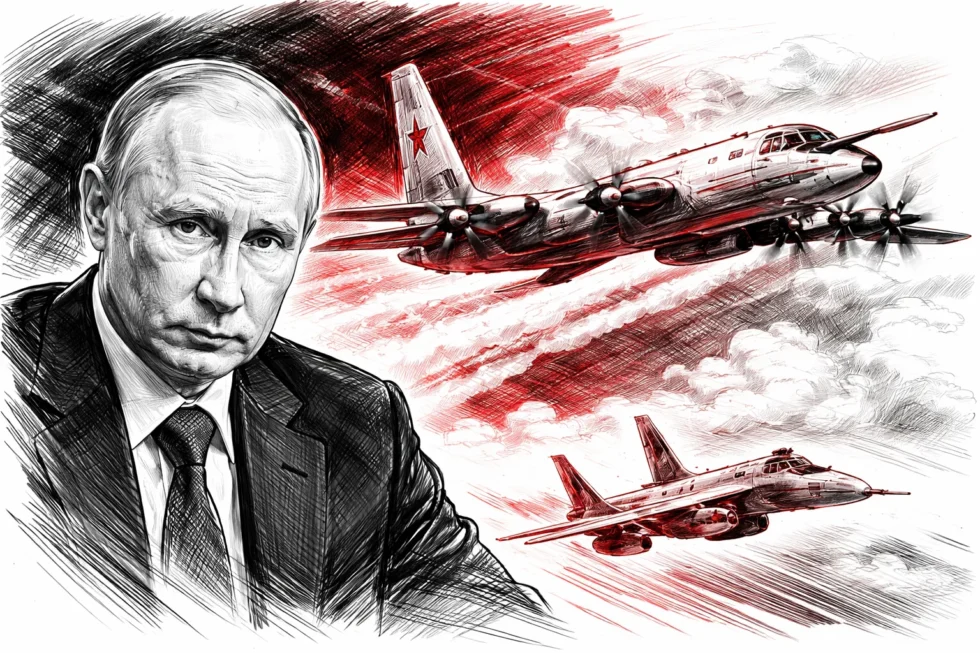
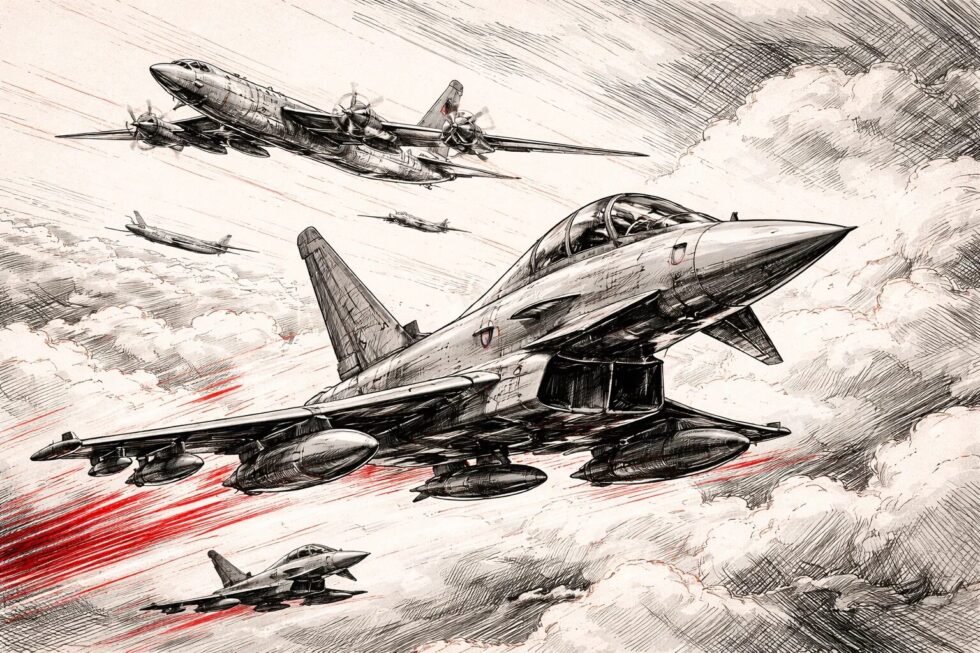
The Royal Air Force (RAF) urgently deployed Typhoon fighter jets from RAF Lossiemouth today after a suspected Russian long-range bomber was tracked heading towards the United Kingdom’s sovereign area of interest. Supported by a Voyager refuelling tanker from RAF Brize Norton, the Royal Air Force interceptors successfully shadowed the unidentified aircraft as it skirted the Shetland Islands, ensuring the integrity of the nation's air defence shield during a period of heightened NATO-Russia tensions, according to a report by The WP Times via The Telegraph.
The incident, occurring late on April 14, 2026, forced the RAF to maintain a "shadowing" posture as the Kremlin-operated warplane approached the Arctic fringes of British territorial waters. While the Ministry of Defence confirmed that the Russian aircraft ultimately remained within international airspace, the deployment underscores the heightened state of readiness currently maintained by NATO allies in the North Sea.
Defence sources indicate that the scramble was not a localized event but rather a synchronized response involving wider NATO monitoring assets, following a pattern of increased Russian long-range aviation activity designed to test the reaction times of Western air defence systems.
Escalating Aerial Tensions: The Strategic Role of RAF Lossiemouth and NATO Surveillance
The deployment of Typhoon jets is part of a standing Quick Reaction Alert (QRA) protocol designed to counter "zombie flights"—aircraft that fail to communicate with air traffic control or broadcast their location. Today's scramble specifically targeted a potential Tupolev Tu-160 "Blackjack" or similar strategic asset, which, despite staying outside sovereign limits, represents a significant hazard to civil aviation due to its non-cooperative flight profile.
This latest encounter highlights the strategic importance of the UK's northern bases in monitoring the "GIUK Gap" (Greenland, Iceland, and the United Kingdom), a maritime corridor of critical importance for Atlantic security.
RAF Mission Profile and Deployment Assets (April 14, 2026)
Primary Interceptors: Two Eurofighter Typhoons launched from RAF Lossiemouth, Scotland.
Support Craft: One Voyager KC2/KC3 aerial refuelling tanker from RAF Brize Norton.
Target Area: North-east of the Shetland Islands, approaching the UK area of interest.
Outcome: Unidentified aircraft shadowed; no breach of sovereign UK airspace occurred.
Strategic Context: Part of a broader NATO Integrated Air and Missile Defence response.
The "Shadow Fleet" and Maritime Security: Russia’s Channel Maneuvers
The aerial scramble coincides with a worrying trend in the English Channel, where Russian naval assets have recently escorted sanctioned tankers and cargo vessels through British territorial waters. Intelligence reports suggest that the vessel Universal, which passed through the Channel uncontested under a Kremlin warship escort, was carrying "militarily relevant" cargo intended for the Russian army.
This dual-front activity—simultaneous pressure in the air over Scotland and on the water in the Channel—is viewed by maritime security experts as a deliberate attempt by Moscow to normalize the frequent presence of military assets near UK shores.
"Today's incident is not an isolated event; it is the sixth time in twelve months that militarily relevant Russian vessels or aircraft have tested our resolve. The lack of transponder usage by these bombers makes them a direct hazard to civilian aviation, forcing the RAF into these high-speed interceptions to ensure the safety of our skies." — Senior NATO Maritime Source, London, April 2026.
Today’s interception mirrors a similar event in 2020 when Typhoons shadowed two massive Tu-160 Blackjack bombers that flew out of the Arctic Circle toward UK waters. These supersonic, nuclear-capable aircraft, with wingspans exceeding 50 metres, are a staple of Russian power projection in the North Atlantic.
While the RAF stated at the time that the aircraft were escorted safely away, the frequency of these missions has increased since the onset of the conflict in Ukraine, leading to calls for sustained investment in the UK’s long-range radar and interception capabilities to prevent any accidental escalation.
Comparison of Russian Air & Sea Activity (2025–2026)
Asset Type
Activity Description
Security Concern
Tu-160 Bomber
Long-range flight near Shetlands
Air safety & nuclear signaling
'Universal' Vessel
Escorted transit through English Channel
Transport of military-grade hardware
Shadow Tankers
Sanctioned vessels in UK waters
Environmental & geopolitical risk
Intelligence Ships
Monitoring North Sea infrastructure
Sabotage & espionage potential
Why the UK Scrambles Typhoons for Non-Intruding Aircraft
The decision to scramble jets even when an aircraft remains in international airspace is rooted in the principle of "Active Air Policing." By intercepting Russian bombers early, the RAF demonstrates that there are no "blind spots" in the UK’s radar coverage.
Furthermore, these missions provide vital intelligence on the electronic signatures and performance metrics of the latest Russian aviation upgrades.
For the pilots at RAF Lossiemouth, these scrambles are a daily reality of the "New Cold War," ensuring that any deviation from international flight norms is met with an immediate and visible British military presence.
Communication Failure: Russian military aircraft frequently ignore international hailing frequencies.
Sovereignty Protection: Interception occurs before an aircraft can enter the 12-mile territorial limit.
Civilian Safety: Typhoons provide a visual reference for air traffic controllers to manage civilian flights around the "dark" military aircraft.
NATO Solidarity: These missions are often coordinated with Norwegian and Danish air forces as part of a relay system.
Read about the life of Westminster and Pimlico district, London and the world. 24/7 news with fresh and useful updates on culture, business, technology and city life:Lufthansa strike on April 14 disrupts Manchester flights as cancellations hit UK routes via German hubs