Roland Garros 2026 delivered a gripping men's final on Court Philippe-Chatrier as Alexander Zverev defeated Flavio Cobolli in five sets to claim the first Grand Slam title of his career. The German survived a determined challenge from the Italian, eventually prevailing 6-1, 4-6, 6-4, 6-7, 6-1 after more than four hours of fluctuating momentum and intense baseline exchanges. The victory ended years of frustration in major finals and finally secured the Grand Slam breakthrough that had long eluded the world No. 3, The WP Times reports.
Roland Garros 2026 had already become one of the most unpredictable editions of the tournament before the final began. The early exits of world No. 1 Jannik Sinner, the elimination of Novak Djokovic, and the withdrawal of defending champion Carlos Alcaraz transformed the men's draw. Yet Zverev still had to survive an inspired performance from Flavio Cobolli, who reached the first Grand Slam final of his career and pushed the German to the limit before physical issues and cramp problems took hold in the deciding set.
Alexander Zverev finally breaks through on the biggest stage
For years Alexander Zverev carried the reputation of being one of the finest players never to win a Grand Slam singles title. The German had repeatedly come close, reaching major finals and deep runs at the biggest tournaments without managing to take the final step.
Paris appeared different from the beginning. Zverev arrived as one of the strongest remaining contenders after several leading names disappeared from the draw. His experience, consistency and physical resilience made him the favourite, but the pressure was enormous because another defeat in a major final would have intensified questions about his ability to perform under the greatest pressure.
Instead, he produced the most important victory of his career. The title means:
- First Grand Slam singles title
- First Roland Garros crown
- End of a long major-final losing streak
- Biggest achievement of his professional career
- Confirmation of his status among the elite generation of players
Roland Garros 2026 final result and match statistics
The scoreline alone illustrates how complicated the match became.
| Set | Winner | Score |
|---|---|---|
| 1 | Zverev | 6-1 |
| 2 | Cobolli | 6-4 |
| 3 | Zverev | 6-4 |
| 4 | Cobolli | 7-6 |
| 5 | Zverev | 6-1 |
The opening set suggested a comfortable afternoon for the German. Zverev dominated from the baseline, controlled rallies and repeatedly exposed weaknesses in Cobolli's service games.
However, the Italian refused to disappear.
Cobolli responded impressively in the second set, increasing his aggression and forcing Zverev into longer exchanges. The momentum shifted several times during the third and fourth sets, with neither player able to establish lasting control. The fourth-set tie-break produced some of the loudest reactions of the tournament as Cobolli forced the contest into a deciding fifth set.
Why Flavio Cobolli became the surprise story of Paris
Before the tournament began, few observers expected Flavio Cobolli to reach the championship match.
The Italian entered Roland Garros as a talented player with potential but without significant Grand Slam success. He had never previously advanced beyond the quarter-final stage of a major tournament.
Several developments helped create his opportunity.
The elimination of fellow Italian Jannik Sinner opened part of the draw. Cobolli then took advantage with increasingly confident performances, defeating higher-ranked opponents and demonstrating remarkable composure throughout the fortnight.
His route included:
- Victory over Félix Auger-Aliassime
- First Grand Slam semi-final
- First Grand Slam final
- Career-best performance at a major
- Significant rise in the ATP rankings
Even in defeat, the Italian leaves Paris with a dramatically enhanced reputation.
A fifth set decided by experience, endurance and composure
The decisive turning point arrived within minutes of the fifth set. After more than four hours on the Paris clay, the physical balance of the match began to shift dramatically. Flavio Cobolli had spent much of the fourth set scrambling across the baseline, retrieving seemingly impossible balls and extending rallies that appeared lost. Those efforts helped him force a deciding set, but they also came at a significant physical cost.
As the final entered its closing stages, visible signs of fatigue began to emerge. Cobolli's movement became less explosive, his recovery between points slowed and cramps started to affect his ability to push off and change direction. The Italian continued to fight for every point, but the intensity that had carried him through the fourth set became increasingly difficult to sustain.
Alexander Zverev sensed the change immediately. Rather than retreating into a defensive approach, the German raised the tempo, hitting deeper into the corners and forcing Cobolli to cover maximum distance. He repeatedly targeted the backhand wing, stretched rallies and used his superior serving power to shorten critical games. What had been a finely balanced championship contest suddenly became a battle of endurance.
The result was decisive. Zverev secured two early breaks in the fifth set and never allowed his opponent back into the match. Cobolli's resistance remained admirable, but the German's experience from previous Grand Slam finals, combined with his superior physical reserves, ultimately proved the difference. The 6-1 final set score scarcely reflected how competitive the contest had been for much of the afternoon.
The moments that defined the Roland Garros 2026 final
Beyond the quality of tennis, the final produced a series of scenes that will remain among the most memorable images of Roland Garros 2026.
The atmosphere inside Court Philippe-Chatrier evolved throughout the afternoon as spectators increasingly embraced Cobolli's underdog story. The Italian repeatedly responded to pressure with fearless shot-making, earning loud support from large sections of the crowd whenever he appeared on the brink of defeat.
One of the most unusual moments came during the fifth set when television cameras appeared to capture Cobolli briefly placing flowers from the courtside decoration into his mouth before immediately spitting them out. The incident sparked confusion among commentators, reactions from spectators and widespread discussion on social media during the closing stages of the match.
Several other moments defined the final:
- A dominant opening set from Zverev followed by an immediate Cobolli response.
- Multiple momentum swings across all five sets.
- A dramatic fourth-set tie-break that pushed the final into a decider.
- Visible cramp struggles affecting both players late in the contest.
- Emotional celebrations from Zverev after converting championship point.
- A standing ovation from the Paris crowd for both finalists.
Together, those scenes transformed the match from a straightforward title contest into one of the most memorable Grand Slam finals of recent years. For spectators inside the stadium and millions watching worldwide, Roland Garros 2026 delivered the unpredictability and drama that define the sport at its highest level.
The friendship behind a historic Grand Slam final
An additional layer of intrigue surrounded the relationship between the two finalists. While Grand Slam finals often feature fierce rivals, this championship match brought together two players who have developed a genuine bond away from competition.
Their connection began during the 2024 edition of the Laver Cup, where players spent extended time together as teammates rather than opponents. The event allowed Cobolli to interact more closely with some of the ATP Tour's most experienced figures, including Zverev.
Since then, the pair have remained in regular contact. Both have spoken publicly about conversations extending far beyond tennis, covering life on tour, personal challenges and the pressures of competing at the highest level.
Ahead of the final, Zverev described Cobolli as a player with a "big heart" and praised both the Italian and his family. Cobolli, meanwhile, called the German one of his key references on the ATP Tour, explaining that he frequently seeks advice from him and values his experience.
Yet once they stepped onto Court Philippe-Chatrier, friendship became irrelevant.
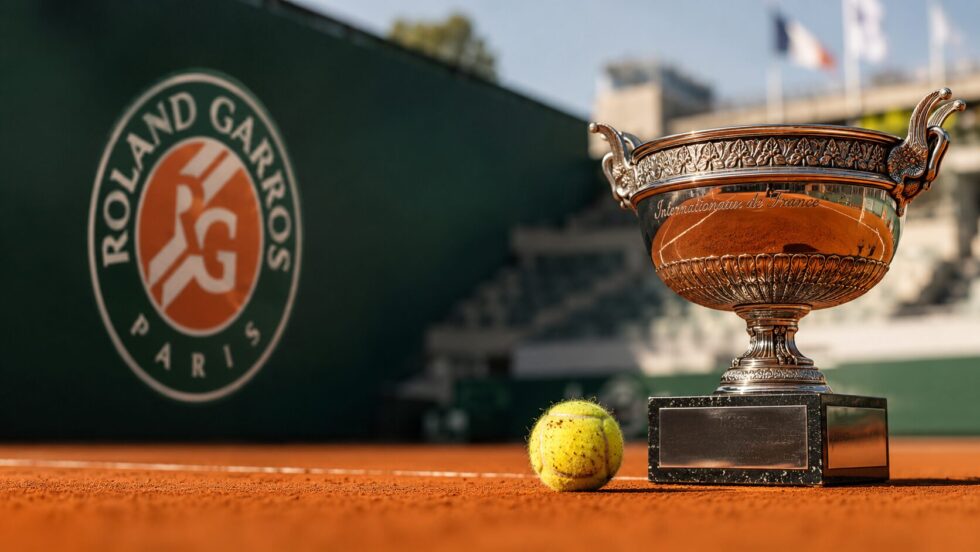
As both players acknowledged before the match, Grand Slam finals offer little room for sentiment. With the Coupe des Mousquetaires at stake, respect remained intact but competition took priority. The warmth of their relationship merely added another compelling storyline to a match already rich in significance.
What Roland Garros 2026 could mean for the future of men's tennis
The 2026 edition of Roland Garros may ultimately be remembered as more than the tournament where Alexander Zverev finally captured a major title. It may also represent a significant moment in the ongoing evolution of men's tennis.
For much of the past decade, Grand Slam success has been dominated by established champions. More recently, attention shifted towards younger stars such as Jannik Sinner and Carlos Alcaraz. Yet Paris demonstrated that the competitive landscape remains broader than many expected.
Zverev's triumph showed that persistence and experience can still be rewarded at the highest level. After multiple setbacks in major finals, the German finally found a way through.
Cobolli's run to the final may prove equally significant. The Italian arrived in Paris without previous Grand Slam semi-final experience and left as one of the most talked-about players in the sport. His performances against elite opposition suggest he could become a regular contender deep into major tournaments.
The women's event delivered a similar storyline, with Mirra Andreeva capturing her first Grand Slam singles title and confirming her arrival among the game's leading figures.
Taken together, the results in Paris highlighted a sport entering another period of transition. New champions are emerging, established contenders continue to evolve and the battle for future Grand Slam titles appears more open than at any point in recent seasons.
Questions and answers
Who won Roland Garros 2026 men's singles?
Alexander Zverev won the title after defeating Flavio Cobolli in a five-set final on Court Philippe-Chatrier.
What was the final score?
Zverev defeated Cobolli 6-1, 4-6, 6-4, 6-7, 6-1.
Was this Alexander Zverev's first Grand Slam title?
Yes. The victory in Paris gave Zverev the first Grand Slam singles trophy of his professional career after several previous final appearances.
Was it Flavio Cobolli's first Grand Slam final?
Yes. The Italian reached both his first Grand Slam semi-final and first Grand Slam final during Roland Garros 2026.
Why was Roland Garros 2026 considered unusual?
The tournament featured a series of surprises, including the early exits of several leading contenders and the absence of defending champion Carlos Alcaraz, creating opportunities for new finalists and breakthrough performances.
Who won the women's singles title?
Mirra Andreeva won the women's singles title, securing her first Grand Slam championship in Paris.
How long did the men's final last?
The match lasted more than four hours and was decided only after a dramatic fifth set.
What was the key factor behind Zverev's victory?
His superior physical endurance, experience in high-pressure matches and ability to raise his level during the decisive fifth set proved crucial.
Roland Garros 2026 ultimately delivered what elite sport often promises but rarely provides: a defining breakthrough. Alexander Zverev arrived in Paris carrying the burden of previous Grand Slam disappointments and left with the Coupe des Mousquetaires in his hands after defeating Flavio Cobolli in a dramatic five-set final. Alongside his first Grand Slam title, the German also secured the men's singles champion's cheque worth approximately €2.75 million, while runner-up Flavio Cobolli earned around €1.38 million for reaching his maiden major final. Cobolli may have fallen short of the trophy, but his remarkable run established him as one of the breakout stories of the 2026 season. For Zverev, however, this afternoon on Court Philippe-Chatrier will forever be remembered as the day years of persistence, setbacks and near misses finally culminated in Grand Slam glory.
Read about the life of Westminster and Pimlico district, London and the world. 24/7 news with fresh and useful updates on culture, business, technology and city life: UK Visa Changes 2026: What Foreign Workers Need To Know About New Salary Rules, English Tests And Settlement Delays