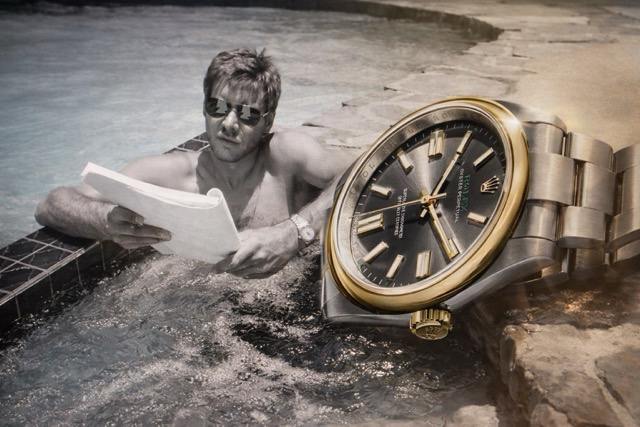
Rolex has missed no opportunity to reposition its core identity as it unveiled its 2026 collection at Watches & Wonders in Geneva (14–20 April), marking 100 years since the Oyster case redefined durability and water resistance in watchmaking. The launch centres on a forward-looking reinterpretation of the brand’s most recognisable platform, with updates spanning Oyster Perpetual, Datejust, Daytona and Yacht-Master II, combining material innovation, dial engineering and mechanical redesign. The WP Times reports the releases are structured not as a retrospective but as a strategic refresh aimed at reinforcing Rolex’s dominance in the global luxury watch market amid rising competition and shifting collector demand.
At the core of the announcement is a calibrated balance between heritage signalling and technical progression: a centenary Oyster Perpetual 41 referencing early designs, a radically reworked Yacht-Master II with a new calibre, and dial innovations across multiple models. Industry positioning suggests Rolex is prioritising long-term product continuity while introducing incremental but commercially significant upgrades rather than disruptive redesigns (Watches & Wonders, Geneva, April 2026; Financial Times analysis, April 2026).
What Rolex released in 2026: key models and technical changes
The 2026 line-up spans multiple segments of Rolex’s catalogue, with clear segmentation between heritage pieces, design experimentation and mechanical upgrades. The most visible anchor is the Oyster Perpetual range, expanded across sizes and materials, alongside updates to flagship lines.
Core releases and features:
- Oyster Perpetual 41 (centenary edition)
Yellow Rolesor (Oystersteel + yellow gold), slate dial with “100 years” marking, engraved crown - Oyster Perpetual 36 (Jubilee dial)
Multicolour lacquer dial with 10 applied colours using pad-printing technique - Oyster Perpetual 28 / 34
Solid 18k gold variants with stone lacquer dials and natural stone hour markers - Datejust 41
Green ombré lacquer dial, white Rolesor configuration, refined contrast display - Yacht-Master II (new generation)
New calibre 4162, redesigned regatta chronograph with counterclockwise countdown - Day-Date 40
New proprietary “Jubilee Gold” alloy combining yellow, grey and pink tones - Cosmograph Daytona (Rolesium)
Oystersteel + platinum, ceramic bezel with tungsten carbide, sapphire caseback
These releases reflect a layered strategy: visible aesthetic differentiation (dials, colours, alloys) paired with selective technical upgrades in high-margin models.
Technical direction: materials, movements and dial engineering refined for 2026
Rolex’s 2026 strategy is defined by a targeted engineering upgrade cycle, where advances in material science and dial construction take priority over large-scale movement overhauls across the catalogue. The brand is concentrating mechanical innovation into selected flagship references while preserving the stability and reliability of its core calibres, a model that reduces risk while sustaining long-term product continuity. The most significant shift sits within the Yacht-Master II, where a full mechanical rethink introduces a new generation calibre designed for regatta timing precision and functional clarity. This selective deployment signals a deliberate approach: evolve performance where it matters commercially and technically, while reinforcing proven architectures elsewhere (Watches & Wonders, Geneva, April 2026).
At the same time, Rolex is pushing the boundaries of dial engineering and proprietary alloys, using manufacturing complexity as a differentiator rather than relying solely on complications. The application of multi-layer lacquer, natural stone indices and gradient finishes reflects a move towards high-precision aesthetic engineering, where production difficulty itself becomes part of the value proposition. As one industry specialist notes, “Rolex is investing in what the customer sees and feels first — the surface — while quietly reinforcing what sits beneath” (watch manufacturing analyst, Geneva, April 2026). This dual-track strategy allows the brand to maintain technical credibility while expanding visual distinction in an increasingly competitive luxury segment.
Technical highlights (2026)
| Area | Development | Functional impact |
|---|---|---|
| Movement | Calibre 4162 (Yacht-Master II) | Counterclockwise countdown, improved regatta timing control |
| Materials | Jubilee Gold (new alloy) | Multi-tone composition, exclusivity and corrosion stability |
| Dials | Multi-layer lacquer / pad printing | High-complexity visuals, limited production scalability |
| Markers | Natural stone indices | Unique variation per piece, premium positioning |
| Case & bezel | Cerachrom with tungsten carbide | Enhanced durability, scratch resistance and legibility |
Crucially, this direction confirms that Rolex is not pursuing radical disruption but incremental precision engineering, where each upgrade — whether visible or mechanical — is tightly controlled, scalable and aligned with long-term brand equity.
Market positioning and strategy: why the 2026 Rolex launch matters now
The 2026 release cycle represents a strategic consolidation rather than expansion, with Rolex tightening its identity around the Oyster platform as the central pillar of both brand equity and commercial performance. Instead of diversifying outward, the company is reinforcing a single, highly recognisable architecture that underpins nearly every reference, using controlled variation in materials, dials and selective mechanics to sustain demand. This approach reflects a mature market strategy: protect the core, elevate perceived value and minimise structural risk while competitors pursue more aggressive innovation cycles (Watches & Wonders, Geneva, April 2026).
At the same time, Rolex is calibrating its positioning against a volatile luxury market shaped by speculative pricing, supply constraints and shifting buyer behaviour. The emphasis on scarcity, incremental upgrades and visual differentiation signals a deliberate attempt to stabilise both primary and secondary market dynamics. As recent auction and resale trends demonstrate, demand is no longer driven purely by functionality but by narrative, rarity and recognisable design codes: “A turquoise-blue 41mm sold… for just under $70,000 — more than 11 times its original price” (Financial Times, Geneva, April 2026).
Key strategic signals in 2026:
- Reinforcement of Oyster as the core architecture across the portfolio
- Expansion of luxury signalling via proprietary materials and metal blends
- Controlled innovation designed to support long-term secondary market stability
- Continued prioritisation of scarcity, waiting lists and desirability over volume growth
This framework positions Rolex not as a reactive player but as a market stabiliser, shaping expectations around value retention and product hierarchy.
What has changed: from incremental updates to controlled evolution
The shift in 2026 is subtle but structurally important. Rolex is moving away from evenly distributed updates across the catalogue towards a selective innovation model, where attention is concentrated on models with the highest cultural and financial leverage.
Then vs now:
- Earlier approach: incremental updates across the full range
- Current approach: targeted upgrades in strategically important models
- Earlier identity: tool-watch heritage and functional dominance
- Current identity: hybrid positioning — heritage combined with luxury experimentation
- Earlier dial strategy: restrained, conservative colour palette
- Current dial strategy: high-complexity lacquer, stone elements and multicolour execution
- Earlier market logic: product-led demand
- Current market logic: narrative, scarcity and collectability-led demand
A senior industry observer captured the transition clearly:
“Rolex is no longer just refining — it is selectively reinterpreting its icons while protecting their core DNA” (watch industry analyst, Geneva, April 2026).
Practical implications for buyers and collectors in 2026
For buyers, the 2026 releases reinforce a market where access, timing and model selection are as critical as price. Rolex continues to operate within a controlled supply environment, meaning product availability remains a defining factor of ownership.
What to watch now:
- Centenary Oyster models are likely to face immediate supply pressure
- Jubilee dial variants may generate strong secondary market premiums
- Yacht-Master II redesign could reset expectations in niche performance segments
- New alloys such as Jubilee Gold may establish new pricing benchmarks
Buying considerations:
- Heritage-linked editions tend to achieve faster collector recognition and liquidity
- Increased dial complexity introduces production limitations and longer wait times
- Mechanical innovation remains focused and selective, not widespread
The result is a buying environment where informed decisions depend on understanding both product positioning and market psychology, rather than specifications alone.
Rolex background: brand, history and why the Oyster remains central
Founded in London in 1905 before relocating to Switzerland, Rolex built its global reputation on a single defining innovation: the Oyster case (1926), widely recognised as the first commercially successful waterproof wristwatch. This breakthrough established the brand’s core principles of durability, reliability and everyday usability, setting it apart from early competitors.
The Oyster remains the structural foundation of the entire catalogue. As industry analysis notes, “With the Oyster, Rolex became Rolex” (Financial Times, April 2026). The addition of automatic winding in 1931 introduced the “Perpetual” mechanism, creating the Oyster Perpetual system that continues to define the brand today. Over time, this architecture has evolved into a full ecosystem — including Submariner, GMT-Master II and Day-Date — all derived from the same technical lineage. The 2026 releases confirm that Rolex is not moving away from this foundation but doubling down on it, using precision evolution rather than reinvention to maintain its position at the top of the luxury watch market.
Read about the life of Westminster and Pimlico district, London and the world. 24/7 news with fresh and useful updates on culture, business, technology and city life: HMRC still sending cheques: 178,000 taxpayers miss £800 rebates as £144m goes unclaimed in 2026