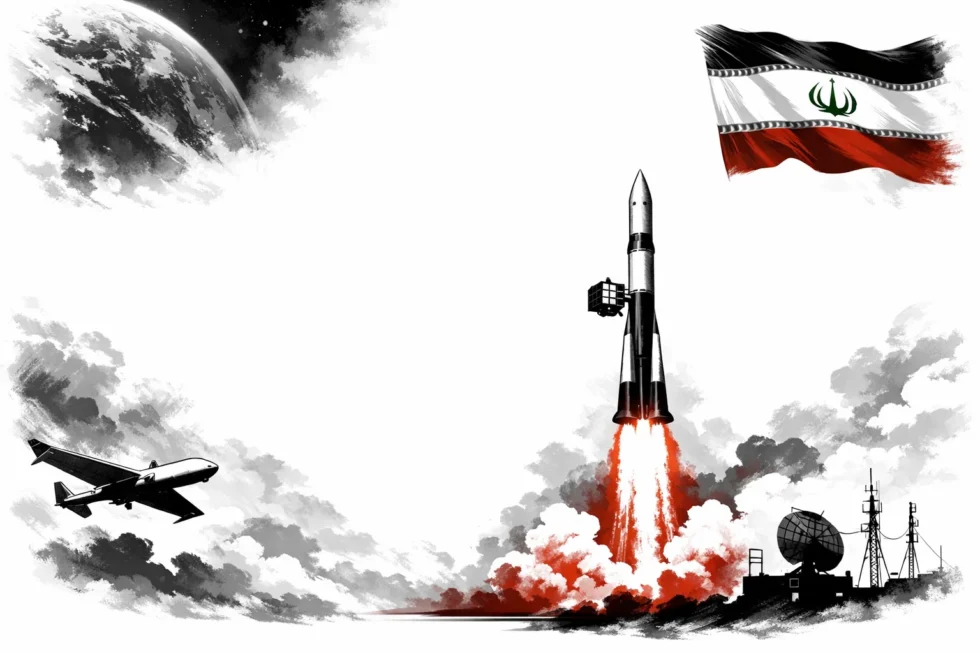
Russia on Sunday, 28 December 2025, launched three Iranian communications satellites into orbit, marking the second Iranian satellite mission carried out by Moscow since July. As The WP Times reports, citing the Associated Press, the spacecraft — Paya, Kowsar and Zafar-2 — were sent into space from the Vostochny Cosmodrome in Russia’s Far East.
The satellites were placed into a low-Earth orbit at an altitude of around 500 kilometres. Paya, weighing 150 kilograms, is the heaviest satellite Iran has ever put into space. Kowsar weighs 35 kilograms, while the mass of Zafar-2 has not been disclosed.
According to mission data, the satellites are capable of transmitting imagery with a resolution of up to three metres. Such data can be used for water management, agriculture and environmental monitoring, while similar systems are also widely used for state and security-related purposes. Their expected operational life is up to five years.
The launch is widely seen as another sign of the deepening technological and strategic partnership between Moscow and Tehran. Russia previously put Iran’s communications satellite Nahid-2 into orbit in July, establishing a pattern of repeated joint space missions.
The mission comes amid growing international concern over the militarisation of space. Russia is reported to be developing a new anti-satellite weapon aimed at the Starlink network, involving the deployment of hundreds of thousands of small projectiles in orbit.
Such a system could disable multiple Starlink satellites simultaneously, but would also create a serious risk of widespread debris and collateral damage to other civilian and commercial satellite systems.
Ukraine’s foreign intelligence service has previously stated that China is supplying Russia with satellite data. The Kremlin has denied the claim, with spokesman Dmitry Peskov saying Russia has its own space-based capabilities for conducting the war against Ukraine.
Hintergrund: Why these Iranian satellites matter
Iran has been working to build its own space-based observation and communications network, but has limited domestic launch capacity for heavier payloads. Russia’s rockets and spaceports therefore provide Tehran with a practical route into orbit. By deploying several satellites at once, Iran gains more frequent coverage of key regions, allowing for improved data collection for infrastructure monitoring, environmental analysis and communications.
In modern conflicts, satellite imagery and data links are critical for everything from logistics and disaster response to military planning and drone operations. The expansion of Iran’s orbital footprint therefore represents not only a civilian upgrade, but also a strategic enhancement of its technological independence.
For Russia, launching satellites for partner states helps sustain its space industry under sanctions while reinforcing strategic alliances beyond the West — making space an increasingly important arena of geopolitical competition.
Read about the life of Westminster and Pimlico district, London and the world. 24/7 news with fresh and useful updates on culture, business, technology and city life: Kremlin says Ukraine’s refusal to join NATO is a cornerstone of any future peace negotiations