
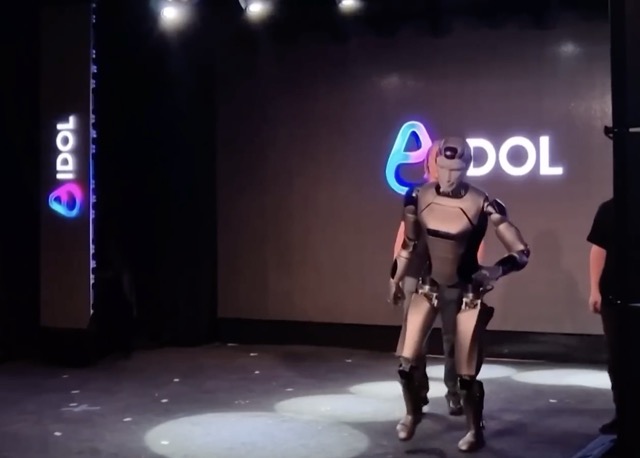
Russia’s flagship humanoid AI robot, AIDOL, was meant to showcase the country’s drive for technological leadership. Instead, its debut at a major technology conference in Moscow ended in scenes that have now been viewed worldwide: the robot walked onto the stage, took several steps – and abruptly fell forward, face-first. The WP Times reports this, citing international media coverage, while Russian state broadcasters largely avoided showing the incident.
A highly choreographed moment that went wrong
The debut, scheduled as a centrepiece demonstration, opened with dramatic staging: spotlights, cinematic music and a packed hall of government officials, industry guests and invited media. But only seconds into its first public appearance, AIDOL lost balance, wobbled visibly and fell to the floor. Technicians rushed to pull the robot behind a curtain while the audience remained silent.
Footage of the collapse spread rapidly online, amplified by international outlets, while Russian domestic broadcasters aired only tightly edited fragments of the presentation, cutting out the fall entirely.
A setback with political implications
While a robot stumbling is hardly unusual in early-stage robotics, the symbolism is difficult to ignore. Russia has spent years framing its AI and defence robotics as evidence of scientific resilience despite sanctions and technological isolation. AIDOL’s collapse therefore strikes at a sensitive moment: a project framed as a national showcase instead became a visible stumble in front of the global tech community.
Analysts note that Russia’s strategy has increasingly relied on public demonstrations to show progress in autonomy, AI and robotics. In this context, the failed debut raises questions not only about engineering maturity but also about the political pressure placed on such projects.
What’s known about AIDOL’s design
Developers describe AIDOL as a full-size humanoid robot equipped with:
- a 186 cm frame and around 95 kg weight
- advanced motion sensors and balance modules
- a camera array for environmental detection
- software for object manipulation and interaction
- AI modules for behavioural simulation
What remains unclear is the level of actual autonomy during the demonstration, with some robotics experts suggesting the robot could still rely on partial operator input.
Official reactions and unanswered questions
The developers attributed the collapse to calibration issues and lighting conditions but offered no timeline for a second demonstration. No technical documentation has been released, and the absence of transparent reporting in Russia has led to speculation that the project may now move into a less public phase.
Several key questions remain:
- Was AIDOL fully autonomous during its walk?
- How mature is Russia’s domestic robotics industry under sanctions?
- Will the failure delay future demonstrations?
For now, the incident stands as both a technological and symbolic setback — highlighting the widening gap between Russia’s public narrative of technological strength and the realities of complex humanoid robotics.
Read about the life of Westminster and Pimlico district, London and the world. 24/7 news with fresh and useful updates on culture, business, technology and city life: Tesla Glide: Could the “levitating sneakers” really be Tesla’s next breakthrough — or just a myth