
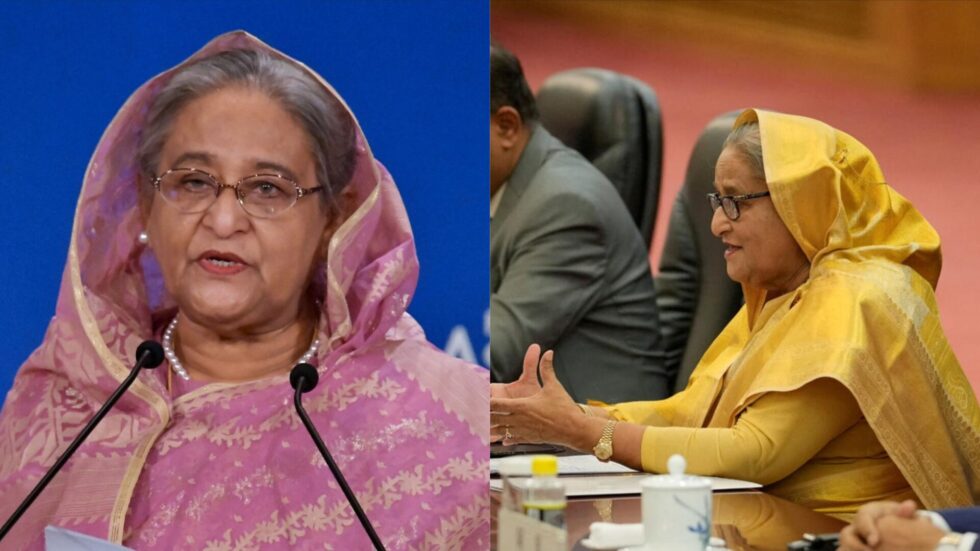
Bangladesh's former Prime Minister Sheikh Hasina has been sentenced to death in abstentia by a court in Dhaka. The verdict was delivered by the country's international crimes tribunal, finding her guilty of crimes against humanity linked to the brutal suppression of a student-led uprising that occurred last year. Hasina, who was ousted and subsequently fled the country, was convicted on charges that included incitement, issuing orders to kill, and a failure to act to prevent widespread atrocities during the anti-government protests. Justice Golam Mortuza Mozumder, reading the court's decision, stated that the “accused prime minister committed crimes against humanity by her order to use drones, helicopters and lethal weapons,” reports The WP Times with reference to Guardian.
The conviction follows a months-long tribunal process that proceeded without Hasina in the courtroom. Since she escaped in August last year, the deposed leader has been residing in exile in neighbouring India under protection. The Indian government has notably disregarded requests for her extradition to Bangladesh to stand trial. The former Home Minister, Asaduzzaman Khan, was the co-accused in the trial and was also handed a death sentence. Hasina maintained her innocence throughout, having pleaded not guilty to all charges, and publicly labelled the tribunal as a “politically motivated charade.” In an audio message recorded prior to the verdict, she remained defiant: “Let them announce whatever verdict they want. It doesn’t matter to me. Allah gave me this life and only he can end it. I will still serve my people,” she asserted.
The prosecution of Sheikh Hasina was a key pledge of the interim government, now led by the Nobel laureate Mohammad Yunus, who was appointed by the protest leaders following the upheaval. Mohammad Tajul Islam was named chief prosecutor to build the case heard before the international crimes tribunal in Dhaka. Hasina’s 15-year tenure in power was frequently described as a reign of terror by many in Bangladesh, characterized by allegations of corruption, torture, and forced disappearances, which were documented by international human rights organizations and the UN. The protest movement began with students but rapidly evolved into a nationwide “July revolution” against her authoritarian rule. In response to the unrest, Hasina directed a merciless state-led crackdown, during which security forces were documented using live ammunition against civilians. The UN human rights office estimated that the uprising resulted in the deaths of up to 1,400 people, marking the worst political violence witnessed in Bangladesh since its 1971 war of independence.
Ahead of the highly anticipated decision, the capital city of Dhaka was tense, with security measures significantly amplified and police, army, and paramilitaries sealing off the tribunal area. Authorities in the city issued a “shoot-on-sight” order aimed at anyone found throwing crude bombs or setting fire to vehicles. On Monday morning, a small explosive was thrown onto the roads near the courthouse, causing panic and prompting police to establish roadblocks. Inside the courtroom, family members of those killed during the crackdown reportedly wept as the judges handed down the death sentences to Hasina and Khan.
Read about the life of Westminster and Pimlico district, London and the world. 24/7 news with fresh and useful updates on culture, business, technology and city life: Ukraine and UK Launch Strategic Dialogue Session on Century Partnership, Focusing on Security.