
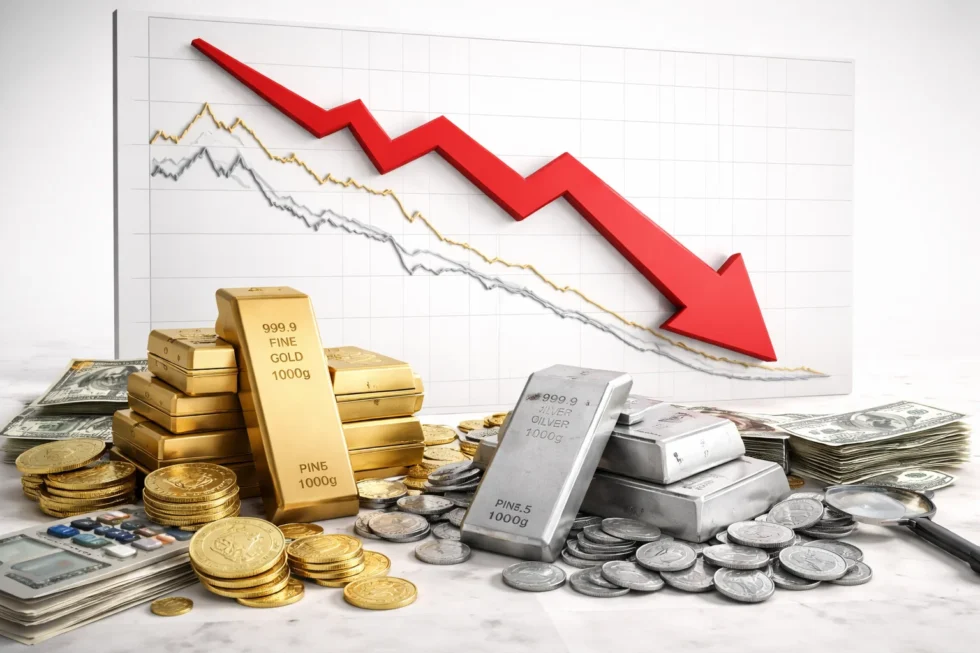
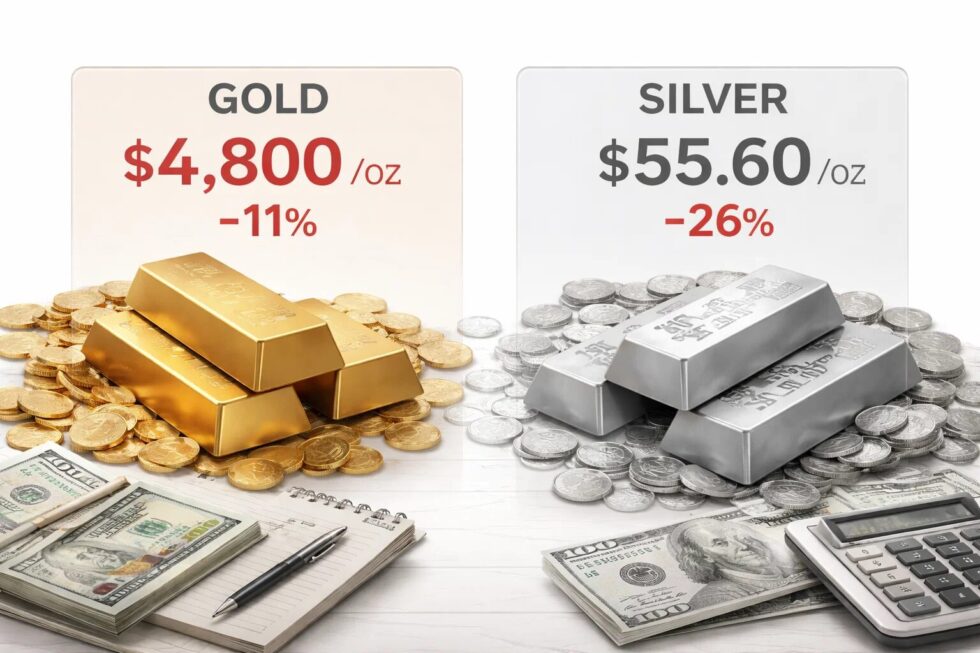
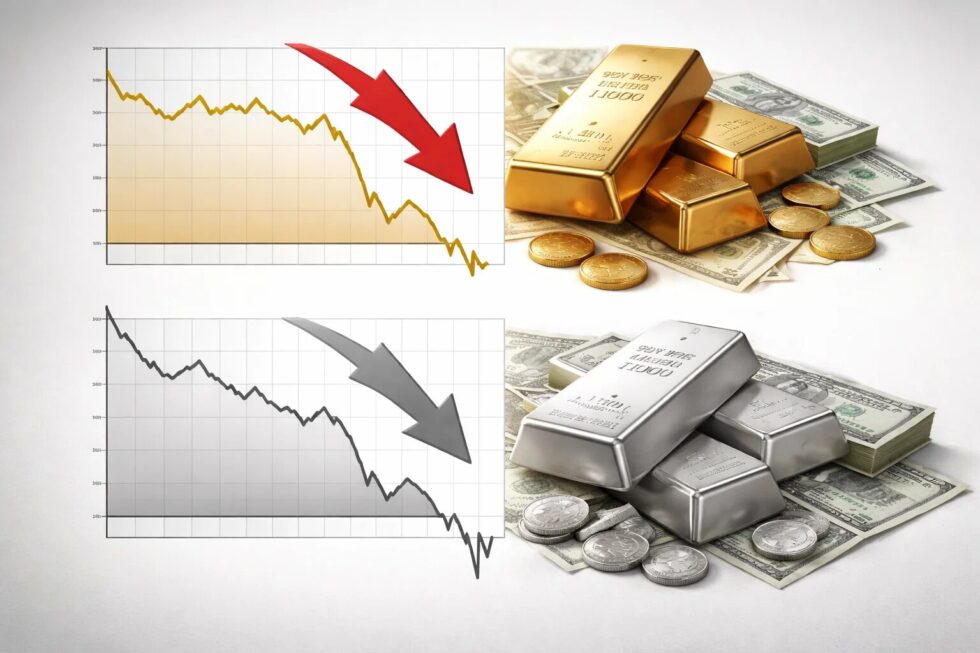
Gold, silver, and platinum prices experienced sharp declines on Friday, January 30, 2026, following the announcement that U.S. President Donald Trump would nominate Kevin Warsh as the next Federal Reserve chair. Gold dropped by approximately 11% to $4,800 per troy ounce from a peak near $5,600 on Thursday, while silver fell 26% in a single day, marking a record decline. Platinum decreased by 18%. The move triggered significant sell-offs in precious metals mining stocks, including Newmont, Barrick Mining, and Fresnillo. The volatility reflects investor uncertainty amid global political tensions, inflation concerns, and anticipated monetary policy shifts. Reports The WP Times, via onegold.
Market Reaction to Warsh Nomination
The nomination of Kevin Warsh, an economist considered more orthodox than other candidates, has influenced investor sentiment. Traders anticipated a Federal Reserve that could adopt stricter inflation controls, reversing expectations of looser monetary policy. As a result, the U.S. dollar strengthened, reducing demand for gold and other metals as safe-haven assets.
In practical terms, investors saw a rapid shift from record-high positions in precious metals to liquidating holdings. Analysts describe this as “classic top-of-market behavior,” indicating that prices had reached unsustainable levels given the underlying economic conditions.
Price Movements Across Precious Metals
The plunge in precious metal prices was unprecedented in recent months. Key figures include:
| Metal | High (Jan 29, 2026) | Low (Jan 30, 2026) | Change (%) |
|---|---|---|---|
| Gold | $5,600 | $4,800 | -11% |
| Silver | $135 | $100 | -26% |
| Platinum | $1,950 | $1,600 | -18% |
These fluctuations have had ripple effects on related markets, including mining equities and commodities futures.
Impact on Mining Stocks
Mining companies listed in New York and London experienced steep declines in share prices. Notable movements include:
- Newmont (NYSE: NEM): Down 10%
- Barrick Mining (NYSE: GOLD): Down 10%
- Fresnillo (LSE: FRES): Down 5%
The sell-offs represent a reversal of a multi-month rally, during which metals stocks had surged alongside rising commodity prices.
Global Factors Driving Volatility
Analysts cite several contributing global factors:
- Political instability in Venezuela, Iran, and Greenland
- Persistent inflation concerns in the U.S. and Europe
- Speculation over monetary policy and Fed direction
Charles-Henry Monchau, Chief Investment Officer at Swiss bank Syz, described the market activity as “capitulation on the buy side,” with investors rapidly closing long positions after extreme gains.
Regulatory Measures in Asia
Authorities in China, including the Shanghai Futures Exchange (SHFE), have implemented measures to curb excessive speculative activity:
- Suspension of 10 groups of trading accounts on January 30, 2026
- Official guidance encouraging “rational investment” to maintain market stability
These interventions aim to temper volatility and prevent systemic disruptions within the global metals market.
Investor Guidance and Risk Management
Financial institutions and market strategists emphasize cautious strategies during periods of heightened volatility. Recommended measures include:
- Monitoring central bank communications for policy guidance
- Diversifying portfolios across multiple asset classes
- Consulting registered investment advisors before executing large trades
Investors should verify official trading limits and account suspensions via exchange websites, including SHFE.
Comparative Analysis of Market Scenarios
Analysts present three potential scenarios for the near-term trajectory of precious metals:
| Scenario | Likely Outcome | Implications for Investors |
|---|---|---|
| Stabilization | Prices consolidate near current levels | Opportunity to evaluate strategic entry points |
| Continued Decline | Further 5–15% drops across metals | Risk mitigation and potential capital preservation |
| Rebound | Recovery due to geopolitical tensions or inflation shocks | Gains for long-term holders of gold and silver |
This structured approach allows market participants to adjust positions according to risk tolerance and investment horizon.
Consequences for Retail and Institutional Investors
Immediate implications include:
- Retail investors may experience margin calls on leveraged positions
- Institutional investors face portfolio rebalancing requirements
- Hedging strategies against currency and inflation risks may become more prominent
Banks and brokerage firms recommend clients review account statements regularly and access official market data for informed decision-making.
Summary of Key Dates and Data
- Jan 29, 2026: Gold reaches $5,600 per troy ounce
- Jan 30, 2026: Prices drop—gold $4,800, silver $100, platinum $1,600
- Jan 30, 2026: Kevin Warsh confirmed as Federal Reserve chair nominee
- Jan 30, 2026: SHFE suspends trading accounts to limit speculative risk
These data points provide a factual timeline for assessing market trends.
For investors and the general public, the metal price reversals signal increased market uncertainty. Individuals holding precious metals, either directly or via ETFs, should monitor regulatory announcements, Fed policy decisions, and international developments. Institutions and private investors alike must remain attentive to liquidity and leverage exposure to mitigate potential financial losses.
Read about the life of Westminster and Pimlico district, London and the world. 24/7 news with fresh and useful updates on culture, business, technology and city life: Could Nationwide’s new benefits service give Britons up to £560 a month in extra support