

Skipton 4.55% Cash ISA has emerged as one of the more closely watched savings products in the UK as interest rates stabilise and potential tax reforms raise questions over the long-term value of Individual Savings Accounts. The product, offered by Skipton Building Society, comes at a time when policymakers are reviewing how tax-free savings are structured, prompting renewed scrutiny among savers seeking certainty, The WP Times reports.
At the centre of the debate is whether existing ISA benefits — including tax-free interest and stable annual allowances — will remain unchanged under proposals associated with Chancellor Rachel Reeves. While no immediate overhaul has been confirmed, signals from government and commentary within Parliament suggest reforms could affect how savings incentives operate, creating uncertainty in a market already adjusting to a post-peak interest rate environment.
How the Skipton 4.55% Cash ISA fits into the UK savings market
The 4.55% rate places Skipton’s Cash ISA within a competitive but narrowing band of UK savings products. Rates across the market have moderated slightly compared with previous highs, reflecting expectations that borrowing costs may gradually ease as inflation pressures stabilise. For many savers, the appeal of a Cash ISA remains tied not only to the headline rate but to the tax-free wrapper it provides. Interest earned within an ISA is not subject to income tax, which can significantly increase effective returns, particularly for higher-rate taxpayers. Typical features influencing saver decisions include:
- Whether the rate is fixed or variable
- Limits on withdrawals or access
- Duration of the product term
- Provider stability and brand trust
- Protection under the Financial Services Compensation Scheme
While some niche providers continue to offer higher promotional rates, mainstream institutions such as Skipton often attract savers seeking a balance between return and perceived security.
What proposed tax changes could mean for ISA savers
Attention has shifted towards how future tax policy could reshape savings behaviour. The Treasury has indicated that reforms are being considered to simplify the tax system and improve efficiency, though specific measures affecting ISAs have not been formally detailed. However, the discussion has been enough to trigger concern among some policymakers and industry participants. A senior Labour MP has warned that proposed changes risk introducing “complexity and confusion” into a system that has historically been designed to encourage straightforward saving. Possible areas of change under discussion include:
- Adjustments to the £20,000 annual ISA allowance
- Simplification of different ISA types (cash, stocks and shares, lifetime ISAs)
- Changes to how tax-free savings are integrated into the wider tax system
- Rebalancing incentives between cash savings and investment products
At present, these remain proposals or areas of consultation rather than confirmed policy. Nonetheless, the uncertainty itself is influencing saver behaviour.
Snapshot: current ISA conditions versus potential changes
| Element | Current position (2026) | Possible direction of change |
|---|---|---|
| ISA allowance | £20,000 per year | Could be reviewed or adjusted |
| Tax on interest | 0% within ISA | No confirmed change, but debated |
| Product structure | Multiple ISA types | Potential simplification |
| Saver behaviour | Strong demand for ISAs | Increased early contributions |
| Market rates | Around 4–5% for leading products | Likely gradual decline |
This comparison highlights that while the framework remains unchanged for now, the direction of travel is under review.
How savers are responding to uncertainty
Financial advisers and market analysts report a shift in behaviour among savers, with some choosing to maximise their ISA contributions earlier in the tax year rather than spreading them out. The rationale is straightforward: locking in current rules may provide protection against future changes, even if those changes ultimately prove limited. Common strategies observed include:
- Using the full ISA allowance at the start of the tax year
- Splitting savings between easy-access and fixed-rate ISAs
- Holding a mix of ISA and taxable savings accounts
- Monitoring policy announcements before making long-term commitments
For many households, the decision is no longer based solely on comparing interest rates but also on assessing regulatory stability.
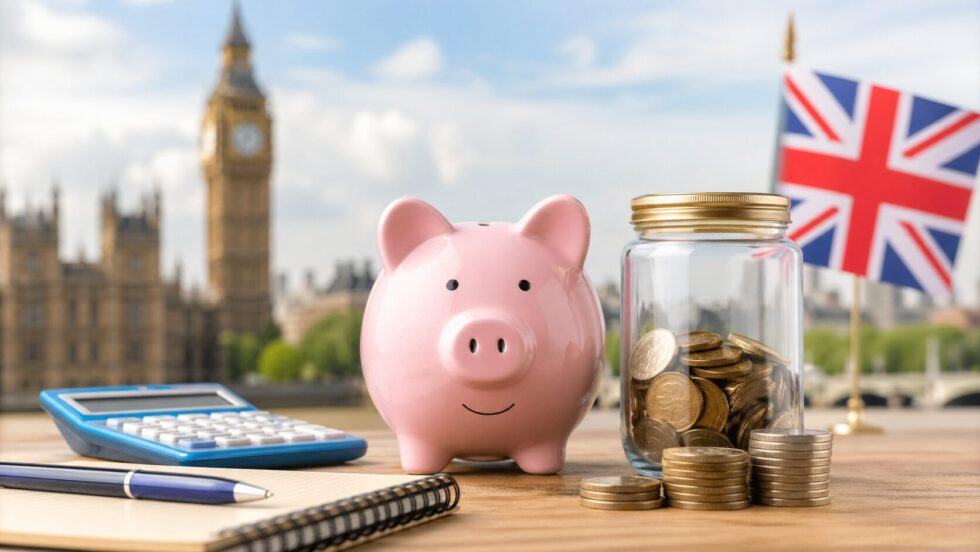
Official signals and policy context: reform versus clarity for savers
(“We want a system that is simpler, fairer and supports long-term economic growth,” said Rachel Reeves during a Treasury briefing, London, 2026)
(“There is a real concern that reforms could make the system harder to understand for ordinary savers,” said a senior Labour MP, Westminster, April 2026)
These statements frame a clear policy tension: the Treasury is signalling structural reform aimed at efficiency, while lawmakers warn of unintended complexity at the consumer level. For the savings market, the risk is not immediate disruption but erosion of clarity, which has historically been central to ISA uptake. The direction of travel points towards review and recalibration rather than removal, but even incremental changes to allowances, product structure or tax treatment could materially affect saver behaviour.
What the 4.55% Cash ISA rate signals in 2026
In market terms, a 4.55% Cash ISA reflects a transition phase: rates are no longer at cyclical highs but remain elevated relative to long-term averages. The headline yield alone is not exceptional; its significance lies in the tax-free wrapper, which continues to enhance net returns, particularly for higher-rate taxpayers facing reduced allowances elsewhere.
More importantly, the product’s relevance is time-sensitive. It sits within a window where current ISA rules are still intact, while policy discussions introduce uncertainty about future conditions. This shifts the decision-making framework from simple rate comparison to rate plus regulatory stability. For savers, the assessment is therefore two-dimensional:
- The nominal return today (interest rate competitiveness)
- The certainty of tax treatment tomorrow (policy risk exposure)
Outlook for UK savings: rates, policy and behaviour
The forward outlook for UK savings is being shaped by two converging forces: normalising interest rates and potential fiscal reform. If inflation continues to moderate and central bank policy loosens, savings rates are expected to trend lower, increasing the relative importance of tax efficiency in preserving real returns.
At the same time, any changes to ISA rules are likely to follow a structured path — consultation, announcement, and phased implementation — reducing the likelihood of abrupt shifts but prolonging uncertainty. This creates a behavioural response already visible in the market: savers accelerating ISA usage under existing conditions.
In this environment, products such as the Skipton 4.55% Cash ISA are being evaluated not purely as yield instruments, but as positioning tools within a potentially evolving tax framework. The central strategic question is no longer where the highest rate sits, but how to secure returns within a system whose rules may gradually change.
Read about the life of Westminster and Pimlico district, London and the world. 24/7 news with fresh and useful updates on culture, business, technology and city life: Glasgow Edinburgh rail disruption: full ScotRail suspension via Carstairs amid engineering works and signalling fault