
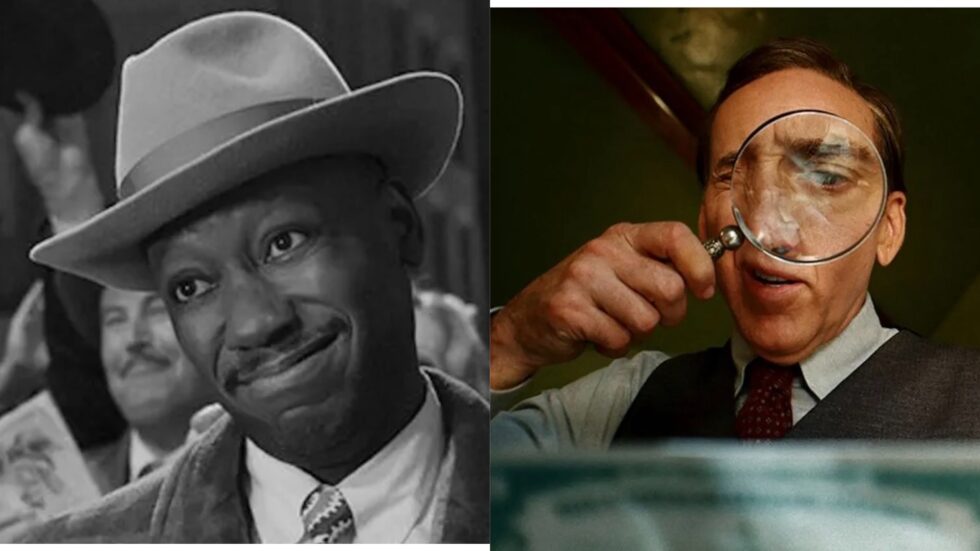
Spider-Noir arrives at a critical moment for Marvel television, with the long-awaited spiderman noir adaptation placing Nicolas Cage at the centre of one of the studio’s most visually experimental live-action projects yet, transforming the familiar superhero mythology into a smoky 1930s detective thriller built around corruption, grief, organised crime and fractured morality, as The WP Times reports amid growing global interest in darker comic-book storytelling and prestige streaming television. Released worldwide on Prime Video on 27 May 2026, the series immediately separated itself from the standard Marvel formula through black-and-white cinematography, noir-inspired dialogue and a psychologically older version of Spider-Man mythology that deliberately distances itself from traditional blockbuster superhero spectacle.
The eight-episode series — also stylised as spider-noir — stars Nicolas Cage as Ben Reilly, a private investigator navigating gang violence, political corruption and personal trauma in Depression-era New York, while Prime Video gives viewers the unusual choice of watching the programme either in colour or fully monochrome. That technical decision has already become one of the entertainment industry’s most debated creative gambles of 2026 because Marvel rarely allows projects to reject mainstream visual expectations so aggressively, especially in an era dominated by bright CGI-heavy franchise productions.
Why Spider-Noir feels radically different from modern Marvel television
Marvel’s recent television output has often been criticised for visual sameness, overloaded continuity and dependence on interconnected universe storytelling. Spider-Noir attempts almost the opposite approach. The series narrows its focus into one damaged central character, strips away futuristic spectacle and rebuilds superhero storytelling around detective fiction traditions associated with 1940s Hollywood noir cinema.
Instead of multiverse chaos or cosmic destruction, the story follows Ben Reilly through murder investigations, political conspiracies and criminal power struggles unfolding across rain-soaked streets, underground jazz clubs and shadow-filled offices. The pacing is intentionally slower than traditional Marvel productions, allowing scenes to build tension through silence, lighting and atmosphere rather than constant action sequences.
Critics across British and international media have repeatedly focused on the project’s confidence in abandoning conventional superhero aesthetics. The monochrome presentation gives the series visual links to classic noir films associated with directors such as John Huston and Billy Wilder, while the dialogue often echoes hard-boiled detective fiction from writers including Raymond Chandler and Dashiell Hammett.
Several reviewers have described the production as Marvel’s most stylistically coherent streaming series in years because the visual language, costume design, music and narrative structure all support the same noir identity rather than feeling assembled from disconnected franchise requirements.
What makes Nicolas Cage’s performance unusual
Much of the global attention surrounding the project centres on Nicolas Cage himself. The actor previously voiced Spider-Man Noir in Spider-Man: Into the Spider-Verse, but this live-action interpretation deliberately avoids becoming a direct continuation of that character. Here, Cage plays Ben Reilly rather than Peter Parker, although the performance still contains recognisable traces of the exaggerated cadence and eccentric intensity associated with his earlier animated role. British reviewers have repeatedly noted that Cage appears unusually liberated by the noir framework, balancing emotional exhaustion with absurd humour and exaggerated detective-style monologues. Rather than portraying a youthful hero discovering responsibility, Cage’s character feels exhausted by violence, haunted by failure and emotionally disconnected from the city he once tried to protect. That maturity fundamentally changes the tone of the storytelling. Key elements repeatedly highlighted in reviews include:
- cigarette-smoke visual aesthetics
- trench-coat detective styling
- morally ambiguous investigations
- jazz-inspired soundtrack choices
- slow-burn dialogue scenes
- vintage newsroom environments
- organised crime narratives
- psychological trauma themes
The result is closer to prestige crime drama than traditional Marvel entertainment.
Spider noir release date and streaming details explained
The official spider noir release date was confirmed for Wednesday 27 May 2026, with all eight episodes launching simultaneously on Prime Video internationally. That release strategy reflects streaming industry trends favouring binge-viewing for darker prestige dramas, especially those relying heavily on atmosphere and narrative immersion. Prime Video executives reportedly viewed the series as a major global streaming event because it combines three commercially valuable elements:
| Element | Why it matters |
|---|---|
| Marvel branding | Guarantees immediate global awareness |
| Nicolas Cage | Attracts older cinema audiences |
| Noir aesthetic | Creates prestige television positioning |
| Black-and-white option | Generates social media debate |
| 1930s setting | Differentiates project visually |
| Detective narrative | Appeals beyond superhero fans |
Industry analysts in Britain and the United States have also pointed out that Spider-Noir arrives during an increasingly competitive streaming environment where platforms need visually distinctive franchises capable of cutting through audience fatigue.
Unlike many recent superhero releases, Spider-Noir attempts to market itself not only to comic-book fans but also to viewers interested in classic crime cinema, detective fiction and experimental television production.
Why the black-and-white debate matters
One of the most controversial aspects of the production remains the decision to offer audiences both monochrome and colour versions of the series. Producers digitally colourised the programme after filming, allowing viewers to choose their preferred presentation.
Supporters argue the monochrome format deepens immersion and preserves the integrity of the noir inspiration. Critics argue the dual-version strategy weakens artistic confidence by refusing to commit entirely to one visual philosophy.
British critics have sharply divided over the issue.
Some reviewers praised the monochrome presentation for enhancing shadows, moral ambiguity and emotional isolation. Others argued that allowing a colour alternative undermines the conceptual boldness of the project itself.
Actors within the production also addressed the issue publicly during promotional interviews. Cast members described practical challenges involving costume contrasts, lighting balance and set decoration choices specifically designed for black-and-white viewing.
The debate has unexpectedly become part of the marketing success because audiences continue discussing which version delivers the “correct” experience.
How Spider-Noir changes Marvel’s approach to adult storytelling
Marvel’s biggest challenge over recent years has been maintaining audience excitement while expanding its cinematic and streaming universe across increasingly interconnected narratives. Spider-Noir partially avoids that problem by functioning almost entirely as a standalone story.
The series contains references to broader Marvel mythology, but viewers are not required to memorise years of continuity to follow the narrative. That independence may ultimately become one of its greatest strengths.
Instead of world-ending stakes, the emotional tension remains intensely personal:
- unresolved grief
- corruption inside public institutions
- manipulation by organised crime
- moral compromises made for survival
- emotional isolation of vigilantes
- consequences of violence
This creates a noticeably older emotional tone than many Marvel productions aimed primarily at younger audiences.
Critics in Britain have compared the atmosphere less to mainstream superhero cinema and more to prestige detective dramas associated with HBO or classic neo-noir thrillers.
Characters shaping the darker atmosphere
Supporting characters contribute heavily to the series’ noir identity.
Karen Rodriguez plays Janet, the loyal assistant navigating dangerous investigations alongside Ben Reilly. Her performance introduces emotional restraint rather than exaggerated comic-book energy.
Lamorne Morris portrays journalist Robbie Robertson, whose newsroom investigations gradually expose corruption linking politicians, criminal syndicates and police institutions.
Li Jun Li appears as singer Cat Hardy, a classic noir archetype combining vulnerability, mystery and strategic manipulation. Meanwhile Abraham Popoola’s portrayal of Tombstone introduces physical intimidation and criminal power without relying excessively on CGI spectacle.
The ensemble cast collectively reinforces the impression that Spider-Noir wants to behave like detective fiction first and superhero entertainment second.
Review reactions from Britain and international critics
Early critical responses have been significantly more positive than several recent Marvel streaming releases. Many reviewers praised the production for creative confidence and tonal consistency.
British entertainment critics particularly highlighted:
| Critical focus | Reaction |
|---|---|
| Visual identity | Strongly praised |
| Cage performance | Widely celebrated |
| Noir atmosphere | Highly positive |
| Dialogue style | Mixed but mostly favourable |
| Colour option | Divisive |
| Pacing | Positive among noir fans |
| Action scenes | Intentionally restrained |
| Marvel connections | Minimal but effective |
Some critics described the project as “Marvel for adults”, while others argued the noir concept occasionally prioritises atmosphere over narrative momentum.
However, even sceptical reviews generally acknowledged the production’s originality compared with formulaic franchise television dominating streaming platforms.
What audiences are saying online
Audience reactions across Britain, Europe and North America have centred around several recurring themes:
- surprise at the seriousness of the tone
- fascination with the monochrome option
- praise for Nicolas Cage’s unpredictability
- comparisons to classic detective cinema
- appreciation for smaller-scale storytelling
- nostalgia for practical set design
Social media discussions also show younger viewers discovering film noir aesthetics through the series for the first time, something both Prime Video and cast members openly hoped would happen.
Why Spider-Noir matters beyond superhero entertainment
Spider-Noir may ultimately become important not because of its connection to Marvel but because of what it represents for streaming television itself.
For years, major franchise productions increasingly pursued wider audiences through safer storytelling, brighter visuals and simplified emotional stakes. Spider-Noir instead leans into stylisation, slower pacing and visual experimentation.
That does not guarantee universal success. Some viewers will inevitably find the deliberate noir pacing too restrained compared with mainstream Marvel action. Others may reject the black-and-white presentation entirely.
But the production demonstrates that globally recognised intellectual property can still support stylistic risk when studios allow directors and actors to pursue a coherent creative identity.
The larger industry question now is whether Spider-Noir becomes a one-off experiment or the beginning of broader franchise diversification across streaming platforms.
Questions audiences are searching about Spider-Noir
When is the Spider noir release date?
The official spider noir release date is 27 May 2026, with all eight episodes released simultaneously on Prime Video worldwide.
Is Spider-Noir connected to Spider-Man: Into the Spider-Verse?
The series is inspired by the same noir comic mythology, but Nicolas Cage plays a different version of the character named Ben Reilly rather than the animated Peter Parker interpretation.
Can viewers watch Spider-Noir in black and white?
Yes. Prime Video allows audiences to choose between monochrome and colour versions of the series.
Who stars in Spider-Noir?
The series stars Nicolas Cage alongside Karen Rodriguez, Lamorne Morris, Li Jun Li and Abraham Popoola.
Why is Spider-Noir different from other Marvel shows?
The production focuses on noir detective storytelling, psychological themes and 1930s aesthetics rather than conventional superhero spectacle.
What comes next for Spider-Noir and Marvel television
The long-term future of Spider-Noir will likely depend on whether audiences embrace its slower, stylised approach strongly enough to justify continuation. Marvel and Prime Video executives are expected to closely monitor completion rates, international streaming performance and audience retention over the coming weeks.
If successful, Spider-Noir could influence future franchise projects by proving that mature genre experimentation remains commercially viable within large entertainment universes. If unsuccessful, studios may interpret the response as evidence that audiences still prefer more conventional blockbuster superhero formulas.
Either way, Spider-Noir has already succeeded in becoming one of the most discussed television releases of May 2026 because it refuses to resemble standard franchise entertainment. The combination of Nicolas Cage’s eccentric screen presence, monochrome cinematography, detective fiction structure and emotionally exhausted storytelling has created a superhero series willing to look backwards toward classic Hollywood while simultaneously testing how far modern streaming audiences will follow experimental mainstream television.
Read about the life of Westminster and Pimlico district, London and the world. 24/7 news with fresh and useful updates on culture, business, technology and city life: Horoscope June 2026 UK: what will really happen to each zodiac sign this month