
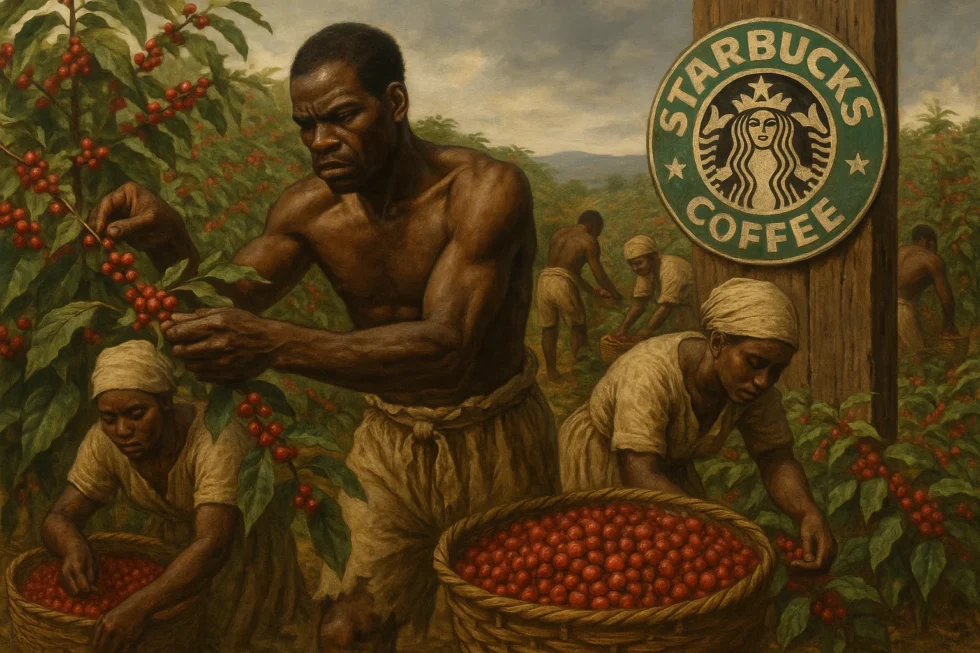
The international coffee industry has been rocked by a lawsuit filed against Starbucks, accusing the global giant of indirectly profiting from severe human rights violations in its Brazilian supply chain. Eight Brazilian farmworkers initiated the civil action in the U.S. District Court in Washington D.C. on October 30, 2025, alleging they were victims of trafficking and forced labor on coffee plantations. The core of the complaint targets the coffee cooperative Cooxupé in Minas Gerais, a major, long-standing supplier to Starbucks. This case, supported by the human rights advocacy group International Rights Advocates (IRA), raises profound questions about the validity of international sustainability certifications, including the company's own C.A.F.E. Practices program, reports The WP Times with reference to Spiegel.
The workers, identified as John Doe 1-8 in the lawsuit due to fear of retaliation, describe working conditions that observers and Brazilian authorities have previously categorized as "slavery-like". Their accounts detail being recruited by local labor brokers, known as “Gatos”, and transported to remote farms where they faced extreme exploitation.
Key details from the complaint include:
- Excessive Hours: Workers were allegedly forced to endure workdays lasting up to 14 hours.
- Wage Theft and Debt: Earnings were heavily reduced by illegal deductions for necessary work equipment, transportation costs, and even poor quality accommodation. This system of debt bondage effectively trapped the workers on the farms, limiting their freedom of movement.
- Substandard Conditions: Plaintiffs report miserable living quarters, a lack of contracts, and almost no access to basic medical care.
- Child Labor: Brazilian authorities have previously documented instances of child labor and hazardous working conditions on farms linked to the supply chain.
Challenging Certification: The Role of Cooxupé
Cooxupé, recognized as Brazil's largest coffee exporter, is central to Starbucks' self-developed ethical sourcing standard, C.A.F.E. Practices. The lawsuit, supported by investigations from media outlets like Der Spiegel, claims that the certification system failed to prevent or immediately halt abuses. Specifically, there is evidence that some farms remained certified by the C.A.F.E. Practices program even after having been flagged for labor violations by Brazilian authorities. Critics argue this points to a systemic failure where the audits focus too heavily on documentation rather than the grim reality faced by workers on the ground.
The lawsuit filed by IRA is part of a two-pronged attack on the industry. Simultaneously, the NGO Coffee Watch filed a petition with U.S. Customs and Border Protection (CBP). This petition aims to invoke Section 307 of the Tariff Act to block the import of Brazilian coffee produced with forced labor, directly threatening Starbucks and other major importers including Nestlé, Dunkin', and Illy.
Terry Collingsworth, IRA's executive director, stated that the case is a crucial wake-up call, emphasizing that global brands are "profiting from an entrenched system of trafficking and forced labor." Coffee Watch further asserts that the documented cases are merely "the tip of the iceberg" in widespread exploitative conditions across the Brazilian coffee sector.
Starbucks' Response and Future Implications
Starbucks has publicly stated that it rejects the allegations, asserting that it only sources coffee from certified farms and adheres strictly to its ethical sourcing policies. However, the company has also announced it will conduct an "intensive review" of its Brazilian supply chains, specifically examining its relationship with Cooxupé for potential breaches.
This landmark case, filed under the U.S. Trafficking Victims Protection Reauthorization Act (TVPRA), has the potential to fundamentally reshape global supply chain due diligence. Given that Brazil is the world's leading coffee producer and has documented over 3,000 workers rescued from slavery-like conditions in 2023 alone, the legal and economic pressure on global brands to prove traceability and ethical sourcing is immense. The outcome of this case could accelerate the adoption of stricter due diligence laws, like those being developed by the European Union.
Read about the life of Westminster and Pimlico district, London and the world. 24/7 news with fresh and useful updates on culture, business, technology and city life: Donald Trump Arrives in South Korea Amidst Tariff Talks Deadlock and Local Protests