
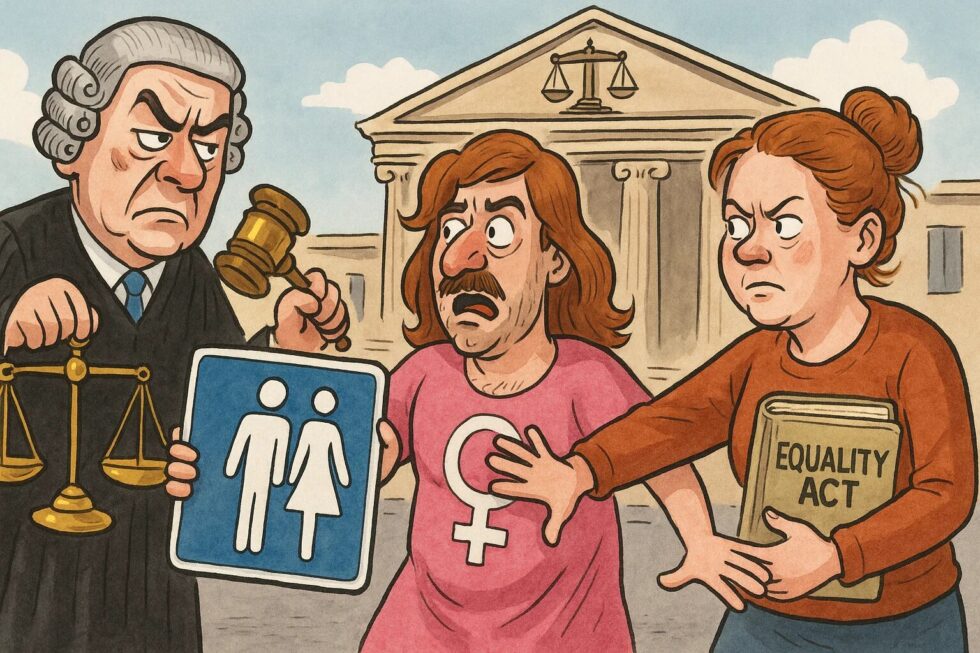
The Equality and Human Rights Commission (EHRC) has suffered a legal defeat in the Supreme Court concerning its guidance on single-sex spaces and the inclusion of transgender individuals. The ruling involves the EHRC's technical guidance provided to service providers regarding the application of the Equality Act 2010, particularly the use of 'single-sex' and 'separate-sex' exceptions. The Supreme Court's decision essentially means that the EHRC’s previous guidance was unlawful as it advised service providers that they could not exclude transgender people from spaces designated for the sex they identify with, reports The WP Times with reference to the Independent.
The challenge was brought forth by the campaign group For Women Scotland (FWS), which argued that the EHRC guidance misrepresented the law and incorrectly stated that transgender people could not legally be excluded from single-sex services intended for the opposite biological sex. The Supreme Court upheld the earlier finding by the Court of Session in Scotland, confirming that the EHRC exceeded its legal authority when issuing the technical guidance. The primary concern of FWS was that the EHRC's position undermined the rights of women to access services and spaces exclusively based on biological sex.
The legal battle centered on interpreting key exceptions within the Equality Act 2010. Section 7 of the Act allows service providers to restrict access to a service based on sex (the 'single-sex' exception) or to provide separate services for each sex (the 'separate-sex' exception). The FWS successfully argued that these exceptions permit service providers to exclude trans women from female-only spaces (and trans men from male-only spaces) if such exclusion is a 'proportionate means of achieving a legitimate aim'.
Following the judgment, the EHRC stated that it acknowledges the ruling and will carefully consider the implications for its future guidance. The Commission emphasized that it remains committed to upholding the legal rights of all individuals, including transgender people. However, FWS hailed the decision as a major victory for women's rights and clarity in the law regarding sex-based protections. The case highlights the ongoing complex legal and social debates surrounding sex, gender identity, and rights in the United Kingdom.
Read about the life of Westminster and Pimlico district, London and the world. 24/7 news with fresh and useful updates on culture, business, technology and city life: Chinese ‘Cryptoqueen’ Gets Over 11 Years in UK Prison for $6.6 Billion Bitcoin Ponzi Scheme.