
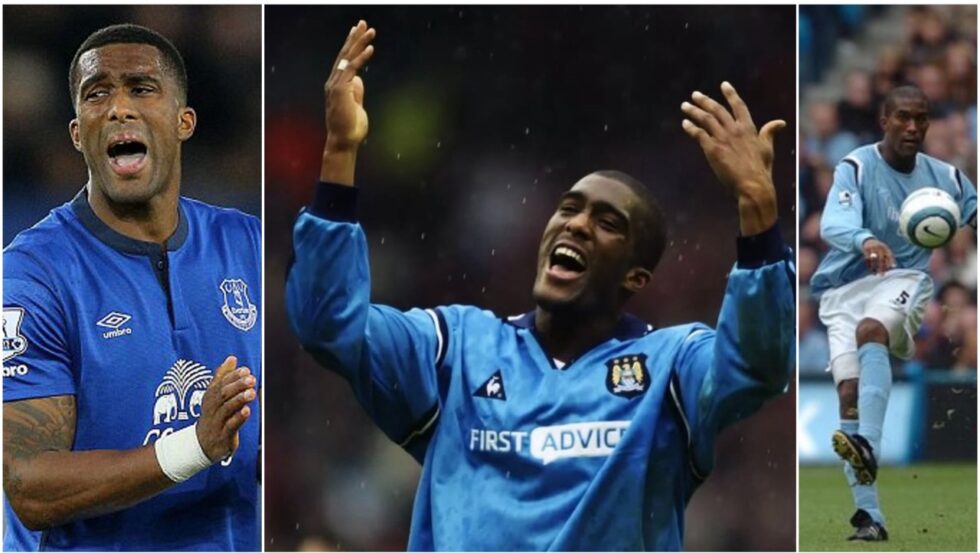
Sylvain Distin is not a fringe former footballer nor a fleeting name from the early 2000s. He is one of the most durable and statistically significant defenders in the history of the Premier League, holding the record for the most Premier League appearances by a foreign outfield player in England. That distinction places him in a narrow category of players whose relevance is defined not by celebrity or controversy, but by longevity, physical resilience and sustained tactical trust at the highest level of English football.
The WP Times reports that renewed attention on a long-standing personal allegation involving Distin has reignited debate around reputation, privacy and legacy in modern football.
A Premier League career built on consistency, not celebrity
Born in France in 1978, Distin arrived in English football in 2001 and built a career defined by reliability rather than headlines. Operating primarily as a centre-back, he was never regarded as a stylistic innovator or media-facing figure. Instead, his value lay in positional discipline, recovery pace and availability — qualities that allowed him to remain a first-choice option across multiple clubs for more than a decade. He made over 450 Premier League appearances, a figure unmatched by any non-British outfield player, and one that reflects a rare combination of fitness, professionalism and managerial trust.
His Premier League journey included spells at Newcastle United, Manchester City, Portsmouth and Everton. At Manchester City, Distin captained the side during a transitional pre-takeover period, earning the club’s Player of the Year award in the 2002–03 season. His time at Portsmouth culminated in FA Cup success in 2008, while his longest and most stable tenure came at Everton, where he spent six seasons as a defensive cornerstone.
Despite this record, Distin was never capped by France. The absence of international recognition remains one of the curiosities of his career and has often been cited as evidence of how his contributions were undervalued beyond the Premier League. In England, however, his reputation rested on consistency rather than acclaim — a player selected because he could be relied upon, not because he generated attention.
The allegation that later defined a different narrative
Away from the pitch, Distin has been linked to allegations that he maintained a three-year affair while misrepresenting his identity to a British air stewardess. According to accounts revisited by British media, he initially claimed to work as a milkman, later offering alternative explanations — including that he was a tennis player or cyclist — to obscure his status as a Premier League footballer.
The episode reportedly came to light when the woman recognised him in an Everton kit, at which point he allegedly claimed the image depicted a twin brother. No criminal proceedings followed, and no sporting sanctions were imposed. The matter remained firmly within the realm of personal conduct rather than legal judgment. Distin himself has not publicly addressed the allegations, and no verified statements exist beyond media reporting.
Why this story still attracts attention
What distinguishes this case from routine football gossip is contrast. Distin’s public career was marked by restraint, professionalism and an almost complete absence of controversy. He was known as a dependable defender rather than a celebrity athlete, rarely featured in lifestyle coverage and did not cultivate a public persona beyond the pitch. For much of his career, he existed at the opposite end of the spectrum from the endorsement-driven, media-visible footballer that has since become commonplace.
As a result, the resurfacing of this allegation challenges the traditional separation between professional legacy and private behaviour. In an era when former players are increasingly reassessed through ethical as well as sporting lenses, even long-past episodes can shape how careers are remembered. The scrutiny applied to Distin reflects not only on the individual, but on changing expectations around accountability and transparency in football culture.
Reputation, privacy and the modern reassessment of football careers
Distin retired as a Premier League mainstay whose statistical record remains intact. More than 450 top-flight appearances secured his place among the most durable defenders of his generation. Yet in the current football environment, reputations are no longer sealed at the moment of retirement. Career legacy is now assessed over time, shaped not only by appearances and honours but by perceived integrity, credibility and the alignment between public image and private conduct.
Distin’s case illustrates how even players who avoided attention during their careers can later be re-evaluated as narratives evolve and standards of public accountability shift. Football legacies have become long-term reputational assets rather than closed chapters, influenced by retrospective scrutiny and changing cultural norms.
Personal life: what is known and what remains private
Distin has consistently kept his private life out of public view. It is known that he was in a long-term relationship during his playing career and has a child. He has never publicly disclosed the name of a spouse, and there is no confirmed public record of marriage. Allegations regarding an extramarital relationship were never followed by legal action or formal proceedings and remain limited to media accounts rather than verified statements.
Since retirement, Distin has largely withdrawn from public platforms. He does not maintain an active presence on social media, does not regularly give interviews and has not sought to shape his post-career narrative through media engagement. His approach contrasts sharply with that of many contemporaries who transitioned into punditry, coaching or brand partnerships.
Commercial profile and earnings
Unlike many modern Premier League figures, Distin did not build a personal commercial brand. No individual sponsorship deals or ambassador roles were publicly documented, and he was never closely associated with a specific sportswear or lifestyle endorsement. His income during his playing career was primarily salary-based, reflecting a pre-social-media era in which elite players could sustain high earnings without personal branding strategies.
During his Everton years, Distin’s reported peak salary reached approximately £45,000 per week. Over a career spanning more than 15 seasons in top-flight English football, his total career earnings are commonly estimated in the range of £18–22 million before tax, excluding bonuses and post-retirement investments.
Coaches and career context
Distin’s longevity was shaped by managers who prioritised defensive structure and positional reliability over individual exposure. His career was influenced by Kevin Keegan during his early Premier League adaptation, Stuart Pearce during his leadership period at Manchester City, Harry Redknapp during Portsmouth’s FA Cup-winning campaign, and most significantly David Moyes at Everton. Under Moyes, Distin operated within a system that valued discipline, durability and tactical clarity — attributes that defined his peak years.
Read about the life of Westminster and Pimlico district, London and the world. 24/7 news with fresh and useful updates on culture, business, technology and city life: Emma Heming-Willis reveals plan to donate Bruce Willis’s brain to boost dementia research
Collage created by the editorial team of The WP Times