

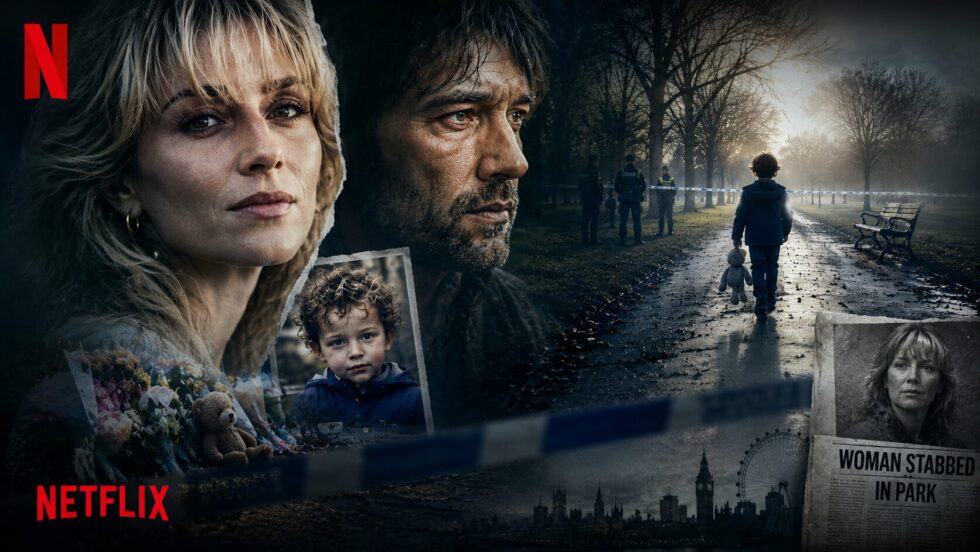
The Witness Netflix has brought renewed attention to one of the most devastating crimes in modern British history, revisiting the murder of Rachel Nickell through the perspective of her son Alex Hanscombe, who was just two years old when he witnessed the attack on Wimbledon Common in south-west London. Released alongside the documentary The Murder of Rachel Nickell, the new Netflix productions examine not only the killing itself but also the decades of trauma, unanswered questions and controversial investigative decisions that followed, reports The WP Times.
More than thirty years after Rachel Nickell was stabbed to death in broad daylight, her son and former partner André Hanscombe have agreed to tell their story publicly. Their aim is not simply to revisit a famous criminal case but to explore the long-term impact that violent crime, media attention and investigative failures can have on surviving family members. The productions arrive at a time when public interest in true crime remains high, but they place unusual emphasis on the victims rather than the perpetrator.
How Rachel Nickell was murdered on Wimbledon Common in 1992
On 15 July 1992, Rachel Nickell was walking across Wimbledon Common with her two-year-old son Alex and the family dog Molly. It was a warm summer morning and the common was being used by walkers, runners and local residents.
Without warning, a man emerged and launched a frenzied attack. Rachel was sexually assaulted and stabbed 49 times. The brutality of the crime shocked investigators and quickly became front-page news across Britain.
Alex Hanscombe was knocked to the ground during the assault and became the only direct witness to the murder. When the attacker fled, the toddler reportedly remained beside his mother's body and attempted to wake her.
The image of a small child found next to his murdered mother became one of the most haunting symbols of the case and helped turn the investigation into one of the most closely followed criminal inquiries in Britain.
Key facts about the murder
| Detail | Information |
|---|---|
| Victim | Rachel Nickell |
| Age | 23 |
| Date | 15 July 1992 |
| Location | Wimbledon Common, London |
| Witness | Alex Hanscombe, aged 2 |
| Cause of death | Multiple stab wounds |
| Attack type | Sexual assault and murder |
| Killer identified | Robert Napper |
The Witness Netflix focuses on the child who survived rather than the man who killed
Unlike many modern true-crime dramas that centre on the perpetrator, The Witness deliberately shifts attention away from the killer and towards the people forced to live with the consequences of the crime. Rather than retelling the murder through the lens of the investigation alone, the series places Alex Hanscombe and his father André at the heart of the story, exploring how a single morning on Wimbledon Common shaped the rest of their lives.
At just two years old, Alex became the only direct witness to the attack that claimed his mother's life. Detectives viewed him as a crucial source of information at a time when investigators had few leads. Over the following months, police repeatedly attempted to piece together the events of 15 July 1992 using fragments of memory from a traumatised child. Those efforts helped generate important information about the attacker but also left lasting emotional scars that would follow Alex into adulthood.
The series examines the impossible position faced by André Hanscombe. As a grieving partner and single father, he was forced to navigate two conflicting responsibilities: assisting one of Britain's biggest murder investigations while protecting his young son from further psychological harm. The programme reveals how every decision carried consequences, raising difficult questions about memory, justice and recovery that remain relevant decades later.
Rather than presenting a conventional whodunnit, Netflix frames The Witness as a story about survival, resilience and the hidden aftermath of violent crime. The drama explores what happens after the headlines fade, the cameras leave and a family is left to rebuild its life. In doing so, it offers a rare examination of how trauma can echo across generations and why the experiences of victims often continue long after a criminal case appears to be over.
Major themes explored in The Witness
- Childhood trauma and its lifelong effects
- The burden of being the only witness
- Memory, testimony and recollection
- Grief after violent crime
- Father-son relationships under pressure
- Police investigative failures
- Media intrusion and public scrutiny
- The search for justice and accountability
- Faith, healing and recovery
- Long-term psychological consequences for survivors
- Life after national tragedy
- The hidden impact on victims' families decades later
Why the Rachel Nickell investigation became one of Britain's most controversial police failures
The investigation into Rachel Nickell's murder remains one of the most scrutinised criminal inquiries in modern British history, not only because of the brutality of the crime but also because of the serious mistakes that followed. What began as a desperate search for a killer gradually evolved into a case study frequently cited by legal experts, investigators and academics when discussing investigative failures, media pressure and miscarriages of justice.
Facing intense public outrage and relentless media attention after the murder shocked the nation in July 1992, detectives came under enormous pressure to deliver results. Their focus eventually narrowed on Colin Stagg, a local man who lived near Wimbledon Common. Although there was no forensic evidence directly linking him to the crime, investigators became convinced he was responsible and launched one of the most controversial undercover operations ever used in a British murder inquiry.
Police recruited an undercover female officer who developed a relationship with Stagg as part of what became known as the "honeytrap" operation. Investigators hoped that emotional manipulation would produce a confession or incriminating statements. However, when the case reached court, the strategy unravelled dramatically. The trial judge ruled that the operation had crossed legal and ethical boundaries, describing aspects of the evidence as fundamentally flawed and inadmissible. The prosecution collapsed before it could proceed to trial, and Stagg was formally cleared.
The consequences extended far beyond the courtroom. For years, Colin Stagg remained publicly associated with one of Britain's most notorious murders despite never being convicted. His reputation, personal life and mental wellbeing were severely affected by the investigation, while public confidence in the handling of the case suffered significant damage.
Most critically, while detectives concentrated resources on the wrong suspect, the real killer remained at liberty. Robert Napper was not identified until years later through advances in DNA technology. By then, he had committed additional violent crimes, including the murders of Samantha Bisset and her four-year-old daughter Jazmine. The revelation intensified criticism of the original investigation and raised difficult questions about whether opportunities to stop Napper earlier had been missed.
More than three decades later, the Rachel Nickell case continues to be referenced as one of the clearest examples of how public pressure, media scrutiny and investigative tunnel vision can derail a major criminal inquiry. The Witness and The Murder of Rachel Nickell revisit these failures in detail, exploring not only how the investigation went wrong but also how its consequences continued to affect victims, families and public trust in the years that followed.
Key failures highlighted by the case
Enduring impact on victims' families and survivors
Excessive focus on a single suspect
Lack of forensic evidence against Colin Stagg
Controversial undercover "honeytrap" operation
Judicial rejection of critical prosecution evidence
Years of public suspicion directed at an innocent man
Failure to identify Robert Napper sooner
Missed opportunities to prevent further attacks
Lasting damage to confidence in the investigation
Continued debate over police accountability
Investigation controversies
| Issue | Outcome |
| Undercover operation | Failed |
| Colin Stagg prosecution | Collapsed |
| Public criticism | Significant |
| Media scrutiny | Intense |
| Review of investigation | Conducted |
| DNA breakthrough | Led to identification of killer |
How Robert Napper was finally identified after years of investigative failures
For more than a decade after Rachel Nickell's murder, the man responsible remained beyond the reach of investigators despite one of the largest murder inquiries in Britain. While public attention focused on Colin Stagg and the controversial undercover operation that ultimately collapsed, the real killer continued to evade detection. The breakthrough finally came when advances in forensic science enabled detectives to re-examine biological evidence collected from the crime scene using DNA techniques that were unavailable during the early stages of the investigation.
The new analysis pointed investigators towards Robert Napper, a violent offender who was already known to police and was serving a prison sentence for the murders of Samantha Bisset and her four-year-old daughter Jazmine. The discovery transformed understanding of the Rachel Nickell case and reignited scrutiny of decisions made during the original inquiry. Many observers questioned how a man later linked to multiple serious offences had remained outside the investigation's primary focus while detectives concentrated so heavily on another suspect.
The revelation also intensified concerns about missed opportunities. By the time Napper was formally connected to Rachel's murder, years had passed and numerous questions remained unanswered. Critics argued that investigative resources had become too narrowly focused, while alternative leads and intelligence may not have received sufficient attention. The case became a powerful example of how tunnel vision can affect major criminal investigations when pressure to solve a crime overwhelms broader investigative strategy.
Today, the identification of Napper is viewed not only as a forensic breakthrough but also as a turning point that exposed wider weaknesses in the handling of one of Britain's most infamous murder cases. Both The Witness and The Murder of Rachel Nickell revisit these issues through interviews, archive material and personal testimony from those who lived through the consequences of the investigation.
What Alex Hanscombe reveals about witnessing the murder of his mother
Among the most powerful and emotionally challenging aspects of The Witness are the reflections of Alex Hanscombe, who was just two years old when he became the only direct witness to the attack that killed his mother. More than three decades later, he continues to speak about memories that have never entirely disappeared, despite the passage of time and years spent trying to rebuild his life away from public attention.
The Netflix productions explore how Alex's recollections became central to the investigation. As detectives struggled to identify a suspect, they repeatedly turned to the only person who had seen what happened. Although he was a toddler, investigators believed fragments of his memory could help reconstruct the sequence of events and provide clues about the attacker. Those early interviews would become some of the most unusual and sensitive witness interactions in modern British criminal history.
Alex describes his participation in the documentary as an opportunity to share testimony rather than revisit tragedy for its own sake. His focus is less on the killer and more on the long-term impact of surviving such an event. Through interviews, he reflects on trauma, memory and the burden of carrying experiences that most people could scarcely imagine. The programme also examines how childhood trauma can remain embedded for decades, influencing relationships, identity and mental wellbeing long into adult life. Rather than presenting Alex simply as a witness, The Witness portrays him as a survivor whose life story became inseparable from one of Britain's most notorious criminal cases. His account forms the emotional core of the series and provides a perspective rarely explored in traditional crime documentaries.
André Hanscombe reflects on loss, fatherhood and life after national tragedy
For André Hanscombe, Rachel Nickell's murder was not only the loss of a partner but the beginning of a decades-long struggle to protect their son while living under extraordinary public scrutiny. The Witness explores how he was forced to navigate grief, parenthood and an intense media spotlight at the same time, often making decisions under circumstances few people could imagine.
In the months following the murder, André found himself balancing two competing responsibilities. On one hand, investigators needed information from Alex to help solve the case. On the other, he wanted to shield his young son from further psychological harm. The series examines this dilemma in detail, highlighting decisions that continue to shape public discussion about how child witnesses should be treated during major criminal investigations.
As media attention intensified, André eventually left Britain with Alex, relocating first to France and later to Spain. The move was intended to create distance from the constant headlines and public fascination surrounding the case. Yet geographical distance could not erase the emotional impact of what had happened. The documentary explores how both father and son carried the consequences of the crime into every stage of their lives. Perhaps the most moving aspect of André's testimony is his description of resilience. Despite years of difficulty, strained periods in their relationship and the enduring shadow of the murder, both men describe finding ways to move forward. Their interviews transform the story from a crime narrative into a broader exploration of grief, recovery and the enduring bonds between parent and child.
Why Netflix released both The Witness and The Murder of Rachel Nickell
Netflix's decision to release both a dramatized series and a documentary reflects the complexity of the Rachel Nickell case. Each production approaches the story from a different perspective, allowing audiences to understand not only what happened but also why the case continues to resonate more than thirty years later. The Witness focuses primarily on the emotional and human consequences of the murder. Through dramatic storytelling, it explores the experiences of Alex and André Hanscombe and the challenges they faced in the years that followed. The series places viewers inside the family's journey, emphasising grief, survival and recovery rather than investigative procedure.
By contrast, The Murder of Rachel Nickell examines the case through documentary filmmaking, combining archive footage, interviews and expert analysis. It explores the investigation, the mistakes that occurred, the eventual identification of Robert Napper and the broader implications for British policing and criminal justice.
Together, the two productions create a fuller picture than either could achieve alone. One explains the facts; the other explores the emotional reality. For viewers unfamiliar with the case, the combination provides both historical context and personal perspective, helping explain why the murder of Rachel Nickell remains one of the most discussed criminal cases in modern Britain.
Questions and answers about The Witness Netflix
What is The Witness on Netflix?
The Witness is a three-part drama series that explores the aftermath of Rachel Nickell's murder through the experiences of her son Alex Hanscombe and partner André Hanscombe.
Is The Witness based on a true story?
Yes. The series is based on the real events that followed Rachel Nickell's murder on Wimbledon Common in July 1992.
Who was Rachel Nickell?
Rachel Nickell was a 23-year-old mother from London who was murdered while walking with her young son on Wimbledon Common.
Who was the only witness to the attack?
Her two-year-old son Alex Hanscombe was the only direct witness to the murder.
How was Robert Napper identified?
Advances in DNA technology allowed investigators to re-examine evidence years later, leading to Napper's identification.
Why is the investigation still controversial?
The inquiry became controversial because police focused heavily on Colin Stagg, who was later cleared, while the real killer remained unidentified for years.
What documentary accompanies The Witness?
Netflix released The Murder of Rachel Nickell alongside the drama series.
Why did Alex and André participate?
They wanted to share their experiences, explain the long-term impact of the crime and encourage wider discussion about victims, trauma and investigative failures.
The Witness resonates because it challenges many conventions of the true-crime genre. Instead of centring the narrative on the offender, it focuses on the people left behind and examines how a single act of violence can shape entire lives. In doing so, the series asks difficult questions about justice, accountability, memory and the treatment of victims long after public attention fades.
More than thirty years after Rachel Nickell's murder shocked Britain, the case continues to evoke strong emotions because its consequences never truly ended for those closest to her. Through the voices of Alex and André Hanscombe, Netflix presents a story that is not simply about a crime committed in 1992, but about survival, resilience and the enduring impact of tragedy across generations. The result is a powerful examination of one of Britain's most significant criminal cases and a reminder that the effects of violence often extend far beyond the moment it enters the headlines.
Read about the life of Westminster and Pimlico district, London and the world. 24/7 news with fresh and useful updates on culture, business, technology and city life: Kurban Bayram 2026 in London: Dates, Eid al-Adha Prayer Times, Events, Qurbani Rules and the Full Travel Guide