
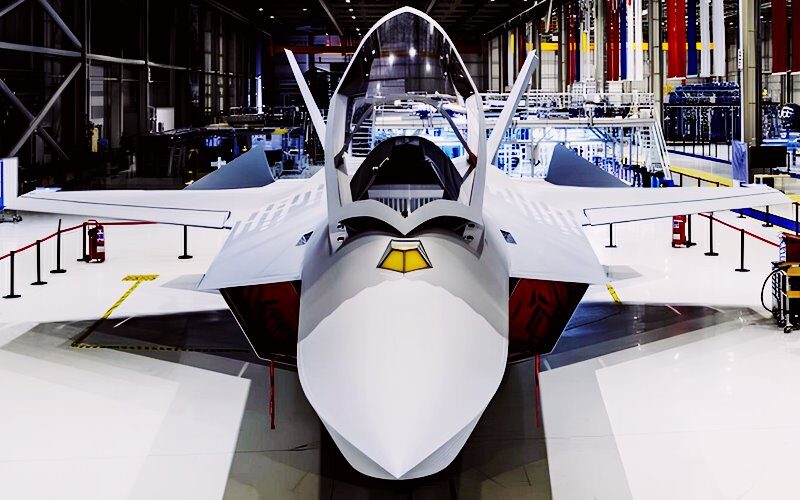
Turkey has reached another milestone in the development of its first fifth-generation fighter aircraft. The second prototype of the KAAN has now moved into the system integration phase. According to Ulusavunma, two new test models are currently undergoing advanced assembly with upgraded internal systems, designed using flight data collected from the initial P0 prototype, which successfully completed two test flights in 2024. TUSAŞ confirmed that integration work is being carried out on the final assembly line, , reports The WP Times citing ulusavunma.
Replacing the F-16 fleet
The KAAN program is part of Turkey’s National Combat Aircraft initiative and aims to replace the Turkish Air Force’s fleet of aging F-16s. The first flight of the enhanced prototypes is scheduled for the second quarter of 2026. Production takes place on a dedicated line in Ankara, where major components such as the 14-meter wings and a center fuselage section weighing approximately 3.3 tons are vertically assembled. Current capacity allows for the assembly of up to eight aircraft per year, but company officials are reviewing options to scale production for full-rate manufacturing.
Production goals and international demand
The Turkish Air Force has stated an initial requirement for 148 KAAN fighters. It is not yet clear if this number includes the 48 aircraft ordered by Indonesia or represents only Turkey’s domestic needs. The first serial production version, Block 10, is expected to enter service in 2029 with a limited flight envelope that will be gradually expanded through additional testing and software updates. The production variant will feature advanced avionics, stealth characteristics, and compatibility with Turkey’s indigenous air-to-air and air-to-ground weapons.
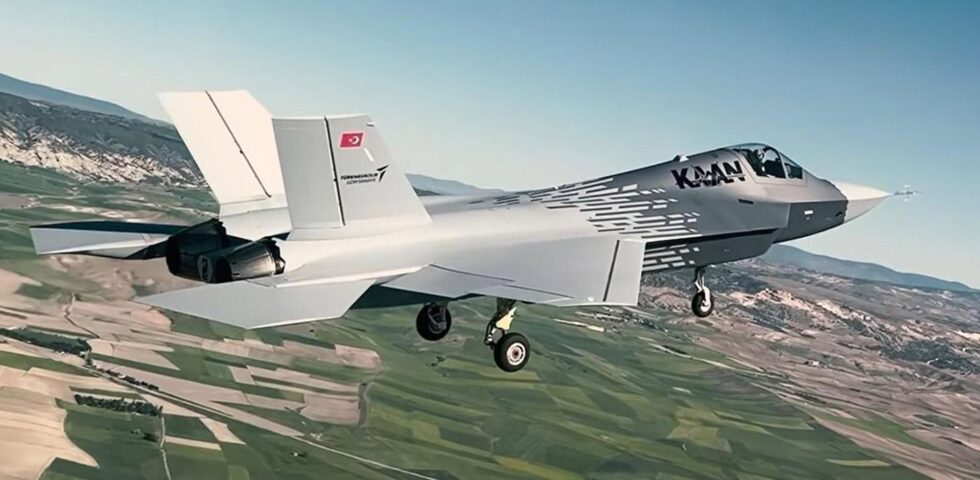
Strategic importance of KAAN
In a presentation to Turkish media, TUSAŞ executives emphasized that KAAN represents the cornerstone of Turkey’s strategy to achieve independence in the defense aerospace sector. The fighter is intended to operate alongside, and eventually replace, foreign-designed aircraft within the Turkish Air Force.
“KAAN is not just a fighter jet; it is the product of an entire national aerospace ecosystem,” said Tolga Demiroglu, a senior executive at TUSAŞ, during an industry panel on August 29. He added that while the company is already exploring requirements for a sixth-generation fighter, the immediate focus remains on serial production of KAAN, validating its performance through trials, and ensuring interoperability with Turkish and allied air defense systems.
Comparison with Ukrainian missiles
Alongside Turkey’s advancements in combat aviation, Ukraine has also achieved significant progress in missile technology. A prime example is the Neptune cruise missile, which entered service in 2020 and has been actively used in combat operations since 2022. While KAAN is being designed as a multi-role stealth fighter of the fifth generation with cutting-edge avionics, Ukraine’s developments focus on range, precision, and adaptability to various launch platforms. Both approaches highlight a drive for technological independence: Turkey is investing in an advanced air combat platform, whereas Ukraine is strengthening its defense capabilities with high-precision missile systems.
Technical comparison: KAAN vs Neptune
| Parameter | KAAN (Turkey) | Neptune (Ukraine) |
|---|---|---|
| Type | Fifth-generation multi-role fighter jet | Cruise missile (anti-ship, land-attack capable) |
| Purpose | Air superiority, strike missions, F-16 replacement | Destruction of naval and coastal targets |
| Developer | TUSAŞ (Turkish Aerospace Industries) | Luch Design Bureau (Kyiv) |
| First tests | P0 prototype in 2024, two flights | First public test in 2019 |
| Status | Second prototype in system integration, serial production planned | Serial production, in combat use since 2022 |
| Dimensions | Length ~19 m; wingspan 14 m | Length 5.05 m; wingspan 1.33 m |
| Weight | Center fuselage 3.3 t; takeoff weight >25 t (est.) | Launch weight 870 kg; warhead 150 kg |
| Range | Estimated 2,500–3,000 km | Up to 280 km |
| Max speed | ~Mach 2 (≈2,450 km/h) | ~Mach 0.8–0.9 (≈900–1,000 km/h) |
| Armament | Turkish air-to-air and air-to-ground missiles, precision-guided bombs | 150 kg high-explosive penetrating warhead |
| Stealth | Yes, reduced radar cross-section, internal weapon bays | No |
| Entry into service | Block 10 planned for 2029 | In service since 2020 |
| Orders | 148 for Turkey, +48 for Indonesia (preliminary) | Operational with Ukrainian Armed Forces |
| Strategic role | Aerospace independence, export potential | Coastal defense and precision strike capability |
The KAAN program marks a turning point in Turkey’s defense industry. With the second prototype entering the system integration stage, the country is moving closer to full-scale serial production. Ankara’s facilities already demonstrate the capacity for limited production, and expansion plans could secure Turkey’s long-term position as an aerospace manufacturer. The Turkish Air Force’s requirement of 148 aircraft, combined with Indonesia’s order, highlights both domestic and international demand. The planned Block 10 entry into service in 2029 represents a significant step in modernizing Turkey’s air power. At the same time, comparisons with Ukraine’s Neptune missile show how both nations are investing in independent defense capabilities. While Turkey is building a next-generation stealth fighter, Ukraine is fielding precise cruise missiles. Both programs underline the trend toward reducing reliance on foreign suppliers and strengthening sovereign defense industries.
Read about the life of Westminster and Pimlico district, London and the world. 24/7 news with fresh and useful updates on culture, business, technology and city life: Is France’s Syderal Laser Weapon Poised to Redefine Europe’s Defence Strategy.
Photo: ulusavunma \\\ Militär Aktuell