Tyson Fury will return to the ring on Friday, 11 April 2026, in a UK-based heavyweight comeback fight against Arslanbek Makhmudov, live on Netflix, with the event scheduled to begin at 7:00 pm BST and main-event ringwalks expected around 10:00 pm BST for UK viewers. The contest is being positioned not as a farewell or exhibition, but as a strategic re-entry into elite heavyweight contention following Fury’s second defeat to Oleksandr Usyk in December 2024.
According to The WP Times, citing UK broadcast and promotional briefings, the fight will take place in the United Kingdom, with the venue to be confirmed, and will be broadcast live worldwide on Netflix. It will mark Fury’s first professional appearance in more than 15 months and his first fight on British soil since December 2022, after a run of Saudi Arabia-hosted bouts.
The April showdown is widely viewed within the sport as a career reset rather than a legacy event, designed to assess Fury’s competitive level at 37 and his ability to manage risk against a pressure-heavy puncher outside immediate title politics.
Why This Fight — And Why Now
Tyson Fury’s decision to return to the ring follows a familiar pattern in his career: withdrawal after defeat, a period of distance from the sport, and re-engagement once competitive motivation resurfaces. However, this comeback differs markedly in tone and strategic intent.
There is no immediate world title at stake, no Saudi-backed mega-event, and no legacy opponent attached to the promotion. Instead, the April bout is positioned as a controlled re-entry — a fight designed to measure Fury’s current competitive level rather than to reshape his historical legacy. At its core, the contest is intended to answer three fundamental questions:
- Is Fury still physically and mentally capable of competing at elite heavyweight level at the age of 37?
- Can he manage risk against a pressure-driven puncher after suffering consecutive defeats?
- Does he still command mainstream global attention beyond the traditional pay-per-view boxing audience?
The choice of opponent and broadcast platform suggests these questions are being addressed deliberately rather than symbolically. Arslanbek Makhmudov presents genuine in-ring danger without the political complications of immediate title contention, while Netflix’s global distribution signals confidence that Fury’s commercial appeal extends well beyond boxing’s core fan base.
Taken together, the timing points to a strategic reset rather than an emotional return — a recalibration designed to determine whether Fury’s career still has competitive headroom, or whether April will mark its final meaningful chapter at elite level.
Fighter Comparison: Tyson Fury vs Arslanbek Makhmudov
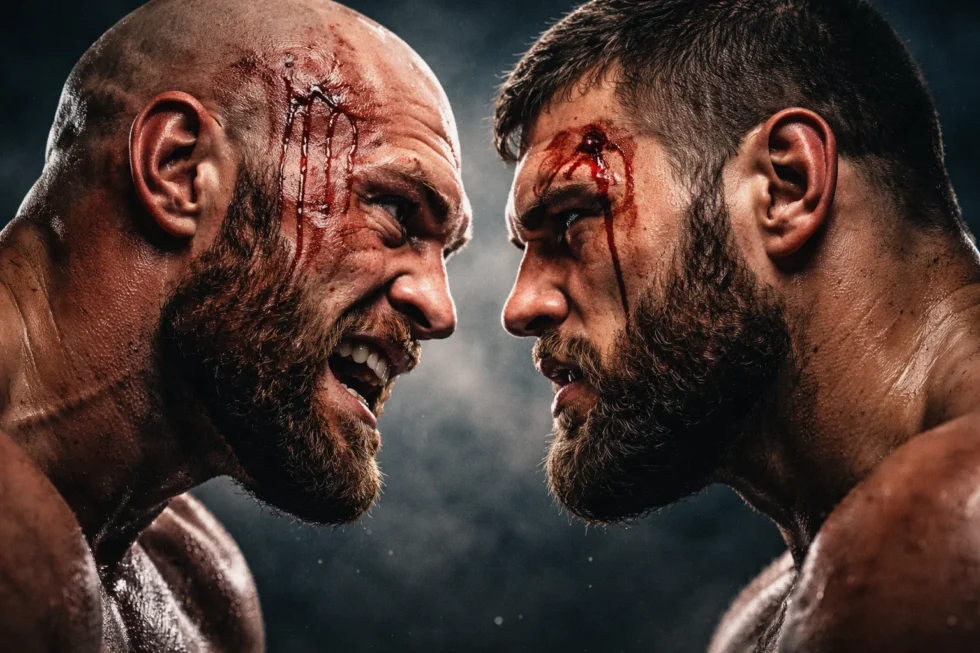
| Category | Tyson Fury | Arslanbek Makhmudov |
|---|---|---|
| Age | 37 | 36 |
| Height | 6 ft 9 in (206 cm) | 6 ft 5 in (196 cm) |
| Reach | 85 in (216 cm) | approx. 78 in (198 cm) |
| Professional record | 34–2–1 | 21–2 |
| Knockout wins | 24 | 18 |
| Knockout ratio | approx. 71% | approx. 86% |
| Stance | Orthodox | Orthodox |
| Last fight | Loss vs Oleksandr Usyk (Dec 2024) | Win vs Dave Allen (Oct 2025) |
| World titles held | WBC, WBA (Super), IBF, WBO | None |
| Experience at elite level | Extensive | Limited |
| UK fight experience | Multiple stadium bouts | Minimal |
Fury vs Makhmudov: Key Advantages, Risks and Fight Outlook
On paper, Tyson Fury holds clear structural advantages: superior height and reach, advanced ring IQ, and extensive experience at championship level against elite opposition. His ability to control distance, disrupt rhythm in the clinch and dictate tempo has historically neutralised physically aggressive heavyweights.
Arslanbek Makhmudov’s edge lies in a different dimension. His compact punching power, high knockout ratio and sustained forward pressure create a genuine tactical risk — particularly for a returning fighter coming off consecutive defeats. Unlike more conservative contenders, Makhmudov does not rely on point accumulation; his success is built on disruption, physical intensity and forcing close-range exchanges. Crucially, unpredictability favours the challenger. Fury has faced pressure fighters before, but rarely during a period of career recalibration. That combination — power without legacy pressure — makes Makhmudov a more dangerous opponent than his limited elite résumé might suggest.
From an analytical standpoint, this is a contest where experience and control meet volatility and risk. If Fury manages distance, pacing and discipline, the matchup tilts strongly in his favour. If he allows sustained pressure or early exchanges, the fight carries significantly more danger than a typical comeback bout.
Tactical Breakdown: How the Fight Is Likely to Be Fought
From a stylistic perspective, the bout presents a clear and familiar contrast: Fury’s range control and ring management versus Makhmudov’s pressure-based aggression and knockout intent. Fury is expected to base his game plan on control rather than confrontation. His likely tactical priorities include:
- A long, probing jab to dictate range and disrupt Makhmudov’s forward momentum
- Lateral movement and angle changes to prevent sustained pressure
- Selective clinch work to slow the pace, sap energy and break rhythm
- Distance management aimed at winning rounds rather than forcing early exchanges
This approach has historically allowed Fury to neutralise powerful opponents by denying them timing and clean opportunities. Makhmudov’s route to victory is narrower, but significantly more explosive. His success depends on:
- Closing distance early, before Fury establishes rhythm and control
- Targeting the body to reduce mobility and endurance
- Forcing exchanges at mid-to-close range, where his power is most effective
- Maintaining physical pressure, even at the cost of absorbing shots
The fight’s narrative is therefore likely to be shaped in the opening rounds. If Fury establishes distance and tempo early, he is well positioned to accumulate points and gradually assert control. If, however, he allows Makhmudov to compress the ring or engage in prolonged exchanges, the risk profile shifts sharply in favour of the puncher. In practical terms, this is a bout where discipline outweighs ambition. A composed Fury is favoured over the distance; a rushed or underprepared Fury exposes himself to precisely the type of contest Makhmudov is built to win.
What’s at Stake Beyond the Result
A victory on 11 April would not immediately restore Tyson Fury to world-title contention, but it would reopen several strategic pathways that currently remain closed. Promoters and broadcasters are already discussing multiple post-fight scenarios, including:
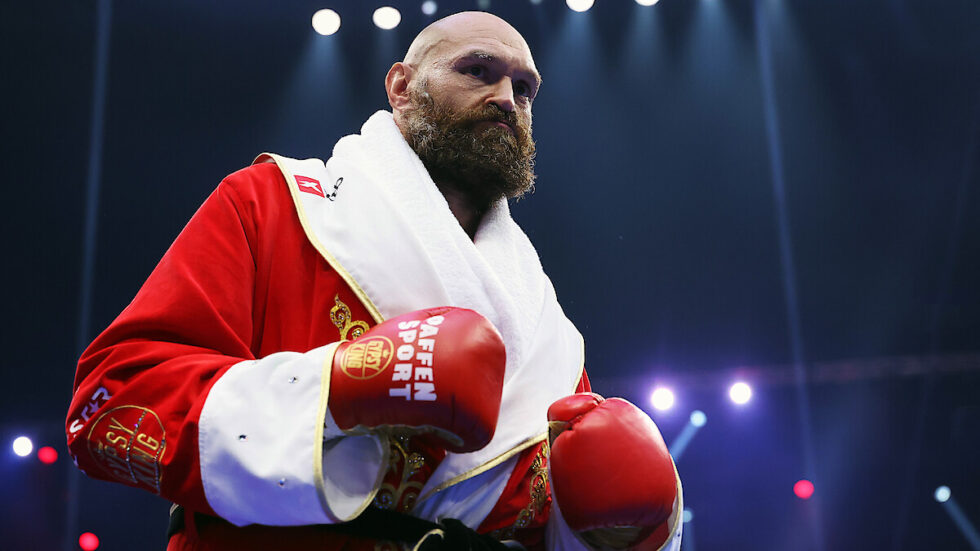
- A potential WBO title route later in 2026, should Fury demonstrate consistency and sharpness
- Renewed negotiations around a Usyk trilogy, particularly if commercial demand resurfaces
- A UK-based stadium fight, contingent on performance level and sustained public interest
In this context, the April bout functions less as an endpoint and more as a career viability assessment — a test of whether Fury can still operate within boxing’s elite ecosystem. A defeat, however, would carry far heavier consequences. Unlike earlier setbacks, a loss at this stage would come without the protective buffer of youth, momentum or undefeated mystique. It would likely signal a structural end to Fury’s ambitions at the very top of the heavyweight division, reducing future opportunities to commercially driven appearances rather than competitive campaigns.
The Netflix Factor
Netflix’s involvement is neither cosmetic nor incidental. For boxing, it represents a live test of post–pay-per-view distribution, assessing whether elite fights can generate mass engagement outside traditional broadcast models. For Fury, the platform serves a different function: it confirms that his appeal extends beyond rankings, belts and hardcore fans. With global reach measured in hundreds of millions of subscribers, Netflix transforms what could have been a conventional comeback into a mainstream cultural event.
The impact is particularly significant in the UK, where Fury has not fought since 2022. A strong performance, amplified by Netflix’s reach, could rapidly re-establish him as a central figure in British sport rather than a legacy name on the margins of contention.
Risk, Relevance and Legacy
This is not a soft return disguised as a tune-up fight. It is a calculated professional risk, selected to test Fury’s seriousness without immediately entangling him in heavyweight title politics.
Arslanbek Makhmudov offers real danger without narrative protection. He carries power, physical pressure and unpredictability, but none of the commercial insulation that comes with a marquee rival. That absence of storyline paradoxically makes him one of the most hazardous opponents Fury could face at this stage of his career. For Fury, April is not primarily about redemption. It is about relevance — about proving that his story still has competitive weight. The result will determine whether the next chapter is written in championship terms, or whether it closes quietly, without the spectacle that once defined his rise.
Read about the life of Westminster and Pimlico district, London and the world. 24/7 news with fresh and useful updates on culture, business, technology and city life: When is WWE Royal Rumble 2026, what time does it start in the UK and how can fans watch live on Netflix