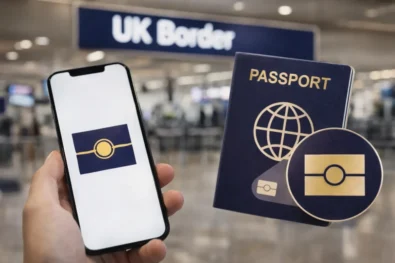
UK entry rules 2026 are no longer as simple as many travellers remember before Brexit, especially for tourists arriving from Europe, North America and visa-free countries now covered by the Electronic Travel Authorisation system. Britain has not closed its borders to visitors, and millions are still entering the country for tourism, concerts, football, shopping, business meetings and family visits, but the process has become more digital, more controlled and far less forgiving for passengers who arrive without the correct documents. Airlines are now legally responsible for checking whether passengers hold an approved ETA, visa or immigration status before boarding, meaning some travellers are being stopped before they even reach the airport gate, a major operational shift that immigration specialists say resembles systems already used in the United States and Australia, as The WP Times reports in the context of the UK’s broader border digitisation programme.
The biggest change in 2026 is not necessarily the border queue itself, but the requirement for advance permission to travel. Visitors from dozens of previously “easy-entry” countries — including EU states, the United States, Canada and Australia — now require a UK ETA before departure unless they already hold a visa or residency rights. The British government argues that the system strengthens security and modernises the border, while airlines, travel lawyers and airport operators say confusion remains widespread among tourists who still assume visa-free travel means paperwork-free travel. According to the UK Home Office, travellers without approved digital permission may now be refused boarding entirely.
What changed for tourists entering Britain in 2026
The introduction of the Electronic Travel Authorisation system has fundamentally altered how short-term travel to Britain works for many nationalities. Previously, millions of travellers could simply book a flight, arrive with a passport and pass through border control after basic questioning. That assumption is no longer safe. Since February 2026, the UK has moved to strict enforcement of ETA requirements for most visa-exempt visitors. The ETA itself is not technically a visa, but it functions as mandatory pre-clearance before travel.
The process is largely digital. Travellers apply online or through the UK ETA app, upload passport information, submit a facial image and answer security-related questions. Most decisions reportedly arrive within minutes or hours, though the government officially advises allowing several working days.
Border officials still retain the right to refuse entry even with an approved ETA, because the authorisation permits travel rather than guaranteeing admission into the country. Immigration lawyers say many tourists do not fully understand this distinction.
For travellers used to spontaneous weekend trips to London, Manchester or Edinburgh, the psychological shift is significant. Airlines now check documentation before departure, and boarding denials are becoming more common where ETA approval is missing or passport details do not match exactly. Some passengers have reportedly discovered the new requirements only at airport check-in desks.
Main UK travel rule changes affecting tourists
| Change | What it means |
|---|---|
| Mandatory ETA | Required for many visa-free visitors |
| Airline document checks | Passengers can be denied boarding |
| Digital border system | More automated immigration controls |
| Passport matching rules | ETA linked to one passport only |
| Transit restrictions | Some transit passengers also need ETA |
| Dual-national rules | British dual citizens face additional checks |
Industry observers note that Britain is following a wider international trend toward pre-screened travel systems. The European Union is also moving toward tighter digital border checks through its Entry/Exit System and ETIAS framework.
Which tourists now need a UK ETA before travel
The ETA requirement covers travellers from many countries that previously enjoyed relatively uncomplicated access to Britain for short visits. Citizens from the EU, EEA, Switzerland, the United States, Canada, Australia, Japan and several Gulf and Latin American countries are among those affected. The system applies to tourism, family visits, short business trips and certain study-related visits lasting up to six months.
Importantly, children also require an ETA. Families travelling with minors who assume one adult application covers everyone risk problems at departure gates. Several airlines and travel advisers have warned passengers to verify each traveller individually before arriving at the airport.
The cost has also become part of the discussion. Government guidance states the ETA currently costs between £16 and £20 depending on the application period and implementation stage. The authorisation generally remains valid for two years or until the passport expires. That means frequent travellers may still consider it relatively manageable financially, especially compared with full visa systems.
However, immigration specialists say confusion remains particularly high among European travellers. Many still psychologically associate Britain with pre-Brexit movement patterns and do not expect pre-authorisation requirements for short holidays.
Countries commonly affected by UK ETA rules
- United States
- Canada
- Australia
- France
- Germany
- Spain
- Italy
- Netherlands
- Switzerland
- Japan
- South Korea
- UAE
The British government says the ETA programme is designed to create a “more efficient and modern service”. Critics argue that the system effectively introduces a new administrative barrier for tourism.
Why some tourists are still finding UK entry confusing
One of the major operational problems in early 2026 has been inconsistent awareness. Many travellers still arrive at airports without understanding whether they require an ETA, a visa or additional proof of status. Travel agents say the transition period created overlapping information campaigns that confused even experienced international travellers.
Another complication involves transit passengers. Some travellers transiting through British airports without entering the country may not require an ETA, while others who pass through passport control do. Heathrow and Manchester have featured prominently in official guidance because transit procedures vary depending on route and terminal configuration.
There is also growing scrutiny around dual nationals. British citizens with dual nationality are now expected to prove British citizenship using appropriate documentation rather than travelling solely with a foreign passport. Several legal experts have criticised the communication around these changes, arguing that many people only discovered the rules shortly before planned travel.
Common reasons travellers face delays or boarding refusal
- No approved ETA before departure
- Expired passport linked to application
- Passport number mismatch
- Unclear residency status
- Incorrect transit assumptions
- Travelling on the wrong nationality passport
“Passengers could be denied boarding by their airlines if they don't have the correct documentation,” noted reporting around the fully enforced ETA rollout in Britain during February 2026.
How Britain’s airports and border checks are changing
The UK government has repeatedly framed the ETA system as part of a wider move toward a digitised border. That means border checks increasingly begin long before travellers physically arrive in Britain. Passenger information is now analysed earlier in the travel process, with airlines becoming active gatekeepers rather than merely transport operators.
At airports themselves, travellers are seeing broader use of automated e-gates and digital identity checks. However, travellers can still be referred for additional questioning, especially if their travel purpose appears inconsistent with visitor rules. Immigration specialists warn that tourists attempting informal work or extended stays without proper visas remain vulnerable to refusal.
The British border system in 2026 is therefore more layered than many tourists expect. Entry depends not only on nationality, but also on travel history, digital approval status, documentation consistency and the judgement of border officers at arrival points.
Areas where checks are becoming more digital
| Border process | 2026 trend |
|---|---|
| Passport scanning | Increased automation |
| Airline verification | Mandatory pre-checks |
| ETA approval systems | Integrated digitally |
| Traveller databases | Expanded screening |
| E-gates | Wider deployment |
| Manual questioning | More selective |
Airport operators say the overall goal is faster movement for compliant travellers and earlier interception of problematic cases. Critics counter that technical failures or misunderstandings can now disrupt trips before passengers even leave home.
Are tourists still entering Britain easily overall
Despite the stricter system, Britain remains one of Europe’s largest tourism markets. London continues to attract visitors for theatre, finance, museums, Premier League football, shopping and global business events. Edinburgh, Manchester, Liverpool and the Cotswolds also remain major draws for international travellers.
The reality is that most properly prepared tourists are still entering the country without major difficulty. The system becomes problematic mainly for travellers who assume old rules still apply. Those who apply for an ETA early, carry valid passports and understand the updated requirements are generally experiencing relatively smooth entry.
Tourism analysts also note that the UK government is attempting to balance openness with political pressure around border security and migration management. Britain wants international tourism revenue while simultaneously presenting tighter control of immigration systems domestically.
What tourists should check before flying to the UK
- ETA approval status
- Passport validity
- Exact passport used in application
- Transit requirements
- Airline documentation rules
- Visa exemption status
- Return travel evidence
- Accommodation information
Travel industry professionals increasingly advise applying for an ETA several days before departure even if official processing times appear quick. That buffer reduces the risk of missed flights due to delays or technical verification issues.
The economic and political reasons behind tighter UK border rules
The ETA system is not only about tourism logistics. It reflects a broader political and technological transformation of Britain’s immigration system after Brexit. Since leaving the European Union, the UK government has focused heavily on sovereignty, border management and digital migration controls.
Officials argue that advance travel permission allows security agencies to screen passengers before arrival, reducing pressure on border infrastructure and improving risk assessment. The approach mirrors systems used by countries including the United States with ESTA and Canada with eTA frameworks.
Airlines also face greater operational responsibility under the new structure. Carriers transporting passengers without proper permission may encounter penalties or administrative complications. As a result, airlines are becoming increasingly strict during boarding procedures.
Why airlines now matter more in UK immigration enforcement
Before 2026, many tourists viewed airline check-in staff mainly as customer service personnel. That relationship has changed significantly. Airlines now function as frontline immigration filters, because passengers lacking correct digital authorisation may never reach British soil.
This shift explains why some travellers feel UK access has become “harder” even if official visa requirements remain technically unchanged. The refusal often happens before departure rather than at passport control.
What experts say about future UK travel trends
Immigration analysts expect Britain to continue expanding digital border systems rather than reversing them. Future developments could include deeper biometric integration, faster automated gates and more detailed pre-arrival passenger profiling.
At the same time, travel associations are pressuring authorities to improve communication around the rules. Many tourism businesses fear confusion itself could discourage spontaneous city-break travel from Europe.
What tourists should realistically expect in 2026
Tourists can still visit Britain relatively easily in 2026 compared with countries operating full visa systems for all visitors. However, “easy” now depends heavily on preparation. The era of simply arriving at the airport with a passport and expecting automatic access is fading.
The practical reality is straightforward: travellers who secure an ETA in advance, travel with the correct passport and understand the updated rules are usually still entering Britain successfully. Those relying on outdated assumptions risk delays, confusion or denied boarding.
For European tourists in particular, the symbolic change is substantial. Britain remains geographically close, culturally connected and commercially open to visitors, yet the border experience increasingly resembles a controlled international entry system rather than the friction-light movement many travellers once associated with short UK trips.
The UK government insists the new approach modernises security while keeping tourism accessible. Critics say the administrative burden is growing. What is clear is that Britain’s borders in 2026 are more digital, more documented and more procedural than at any point before Brexit.
Why some European tourists now compare UK travel to the US ESTA system
For many European travellers, the psychological shift in 2026 is not the £16 ETA fee itself, but the feeling that Britain now operates a controlled permission-based entry model rather than the flexible short-trip culture that existed before Brexit. Weekend tourism between Paris and London, Amsterdam and Manchester or Berlin and Edinburgh once functioned with minimal preparation beyond a passport and ticket. That atmosphere has changed.
Travel lawyers and airline operators increasingly compare the UK system to the American ESTA structure because visitors must now secure digital approval before departure and may be blocked from boarding if documentation is incomplete.
The practical consequences are becoming more visible during busy travel periods. Airports are seeing more passengers stopped at check-in due to missing ETA approvals, incorrect passport numbers or misunderstandings around dual nationality rules.
Several carriers operating routes between continental Europe and Britain have updated their booking systems and pre-flight notifications to reduce disputes at boarding gates. British authorities insist the majority of passengers complete the process successfully and quickly, but the tourism sector fears that uncertainty itself may reduce spontaneous city-break demand.
The shift is also happening at the same time as Europe introduces its own tighter digital border systems. UK travellers heading into the EU are expected to face expanded Entry/Exit System procedures and later ETIAS authorisation requirements, creating a broader post-Brexit environment where travel across Europe is becoming more administratively layered on both sides of the Channel.
What travellers now need to prepare before a UK trip
| Requirement | Why it matters in 2026 |
|---|---|
| Approved ETA | Mandatory for many visa-free travellers |
| Correct passport | ETA linked digitally to one passport |
| Boarding verification | Airlines now enforce rules directly |
| Return travel proof | Can support visitor credibility |
| Hotel or address details | Sometimes requested at border |
| Transit clarification | Different airports apply different procedures |
How Heathrow, Eurostar and airlines are adapting to the new rules
Britain’s largest transport operators have spent months restructuring procedures around the ETA rollout. Heathrow Airport, Eurostar and major airlines are under pressure to avoid large-scale passenger disruption while also complying with strict Home Office enforcement rules. The system effectively transfers part of immigration control away from physical borders and into airline reservation systems, online check-in procedures and passport verification software.
Eurostar travellers have faced particular attention because many passengers historically associated London–Paris or London–Brussels rail travel with lighter controls than long-haul international flights. In practice, the ETA system applies equally to eligible travellers arriving by train. Transport providers can now face operational consequences if they carry passengers lacking proper authorisation.
Some airlines have responded by introducing repeated ETA reminders through email campaigns, app notifications and check-in warnings. Industry insiders say carriers want to avoid costly airport disputes and denied boarding incidents during peak summer travel. Airport staffing strategies have also shifted, with more employees trained specifically to handle documentation confusion linked to ETA enforcement.
Why transit passengers remain one of the biggest confusion points
Transit rules remain among the most misunderstood parts of the UK system. Certain travellers passing through Heathrow or Manchester without crossing the UK border may avoid ETA requirements, while others transiting through different airport layouts or terminals may still need authorisation. The distinction depends not only on nationality but also on airport infrastructure and routing.
Immigration specialists warn passengers not to rely on assumptions or outdated forum advice. A route that avoided border control in 2025 may involve different terminal procedures in 2026. Even experienced travellers are now being advised to verify transit conditions directly with airlines and official government guidance before departure.
Are UK border queues actually longer in 2026
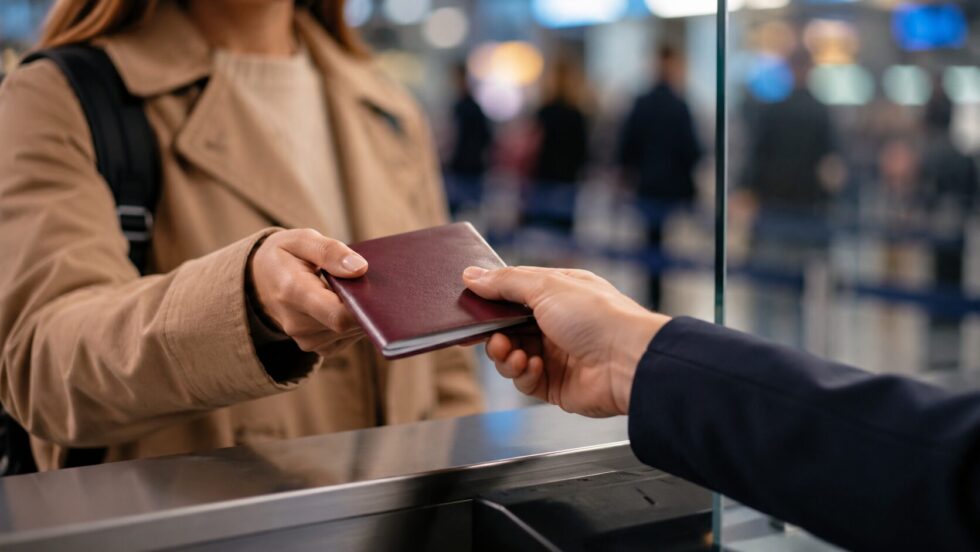
The answer depends heavily on the airport, travel season and nationality profile of arriving passengers. Britain’s digital border strategy is designed partly to reduce physical queue pressure by screening passengers earlier in the process. In theory, travellers with approved ETA status and biometric passports should pass through e-gates more efficiently than before.
In practice, however, airport operations remain uneven. During school holidays, football events, concerts and summer tourism peaks, Heathrow and Gatwick still experience significant arrival congestion.
Industry groups say the transition toward digital border systems creates short-term friction before long-term efficiency gains become visible.
Some travellers also report confusion at e-gates when passports fail to match ETA records exactly. Minor errors involving passport renewals, dual citizenship documentation or outdated applications can trigger manual intervention by Border Force officers.
Factors currently affecting arrival times in Britain
- Peak tourism periods
- Sporting and concert events
- Technical issues with e-gates
- Passport mismatches
- Additional questioning for visitors
- Staffing pressure at major airports
According to UK government messaging, the broader objective is eventually to create a more “contactless border” with greater automation and earlier security filtering. Critics argue the transition phase is creating extra complexity for ordinary tourists.
What immigration experts say tourists often misunderstand
One of the most common misconceptions is the belief that ETA approval guarantees entry. Legally, it does not. The ETA permits travel to Britain, but Border Force officers still decide whether a visitor is admitted at the border. That distinction matters particularly for travellers whose plans appear inconsistent with tourist rules.
For example, visitors carrying CVs, discussing job opportunities or appearing to intend long-term stays can still face additional scrutiny even with valid ETA approval. Immigration lawyers say some travellers underestimate how seriously Britain now treats visitor-category compliance after Brexit and post-pandemic border restructuring.
Another frequent misunderstanding concerns passport validity. Because the ETA is digitally attached to a specific passport, renewing a passport can invalidate the previous travel authorisation link. Travellers who change passports before departure may need a completely new ETA application.
Common misconceptions about UK travel in 2026
| Misconception | Reality |
|---|---|
| ETA guarantees entry | Border officers still decide |
| One family ETA covers all | Every traveller needs one |
| EU citizens travel freely | ETA required for many |
| Transit always exempt | Depends on airport setup |
| Old passport still works | ETA linked to active passport |
| Approval means no questioning | Visitors can still be interviewed |
“There isn't a specific legal requirement for British citizens to travel on a British passport, but in practice pre-departure checks make it difficult without one,” noted a House of Commons briefing referenced during reporting on the dual-nationality controversy in early 2026.
Why tourism businesses are worried despite stable visitor demand
Hotels, airlines, tour operators and event organisers are watching the ETA rollout carefully because Britain depends heavily on international tourism revenue. London alone attracts millions of visitors annually for theatre, shopping, museums, Premier League football and global business events.
The concern inside the industry is not necessarily that tourists will stop coming altogether, but that friction reduces impulse travel.
A family deciding between Amsterdam, Paris and London for a quick weekend break may now view Britain as administratively more complicated than EU destinations. That psychological effect matters in highly competitive tourism markets.
Travel associations have therefore pressured the British government to simplify public communication around the rules. Several organisations argue that confusion, rather than the ETA itself, is the greatest commercial risk to tourism flows.
Sectors most sensitive to tourism disruption
- Airlines
- Budget city-break tourism
- Concert and sports tourism
- Hotels near airports
- Retail and luxury shopping
- Short-term business travel
Britain remains one of Europe’s strongest cultural and financial travel destinations, but the border experience now forms a more visible part of the visitor journey than before Brexit.
What tourists should realistically do before booking UK travel
Travel advisers increasingly recommend treating UK trips in the same way travellers already approach destinations such as the United States or Canada: verify digital permissions first, then book travel with confidence afterward. Waiting until the final 24 hours before departure now carries greater risk than in previous years.
Experts also recommend checking official government guidance directly rather than relying solely on social media videos or outdated travel blogs. Rules around dual nationality, transit and exemptions continue evolving as the ETA system matures.
For most tourists, the process remains manageable if handled early and correctly. The overwhelming majority of approved travellers still enter Britain successfully every day. The difference in 2026 is that preparation now matters far more than before.
Practical 2026 UK travel checklist
- Apply for ETA several days early
- Use the exact passport for travel
- Verify airline documentation rules
- Check transit airport procedures
- Carry accommodation details
- Keep return ticket information accessible
- Ensure passport validity covers trip period
The broader reality is that Britain is no longer operating a low-friction European travel model. Instead, it is building a digitally managed border system closer to North American and Australian approaches to visitor control. Tourists can still enter relatively easily — but only if they understand the new rules before arriving at the airport.
Read about the life of Westminster and Pimlico district, London and the world. 24/7 news with fresh and useful updates on culture, business, technology and city life: UK Visa Changes 2026: What Foreign Workers Need To Know About New Salary Rules, English Tests And Settlement Delays