
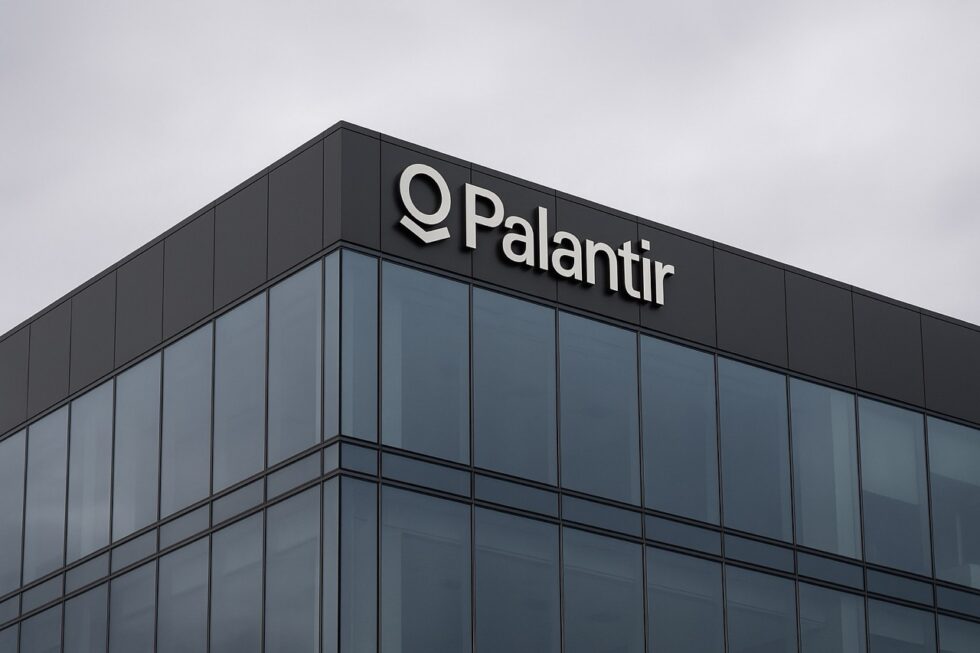
The UK government has officially confirmed a landmark $2 billion defence and AI agreement with the controversial American software company Palantir Technologies. The five-year contract will see Palantir supply advanced military platforms, expand its European defence headquarters in Britain and channel billions directly into the UK economy. According to government press statements, the deal is expected to create up to 350 high-skilled jobs in data science, software engineering and cybersecurity. As reported by The WP Times, citing original government sources and British media including The Financial Times, the announcement came just days after Donald Trump’s visit to London — a timing widely interpreted by analysts as a deliberate signal of strengthened transatlantic defence and technology ties.
Why Palantir matters
Founded in 2003 in Silicon Valley by tech billionaire Peter Thiel and a group of ex-PayPal engineers, Palantir specialises in big data analytics and AI platforms. Its software allows huge datasets—from police reports to satellite imagery—to be processed in real time to identify patterns, suspects or military targets. The company first received funding from In-Q-Tel, the CIA’s venture capital arm, and has since become a global supplier to governments, intelligence agencies and Fortune 500 firms.
In the UK, Palantir’s systems have already been used by the NHS during the Covid-19 pandemic for vaccine distribution, and by law enforcement for crime analysis. The new defence deal marks a major expansion into military AI, with a focus on battlefield decision-making, logistics and drone targeting.
AI and military applications
The partnership aims to fast-track AI capabilities tested in Ukraine, such as:
- real-time battlefield mapping integrating satellite, drone and ground data
- predictive logistics to optimise supply chains under combat conditions
- target recognition for faster, AI-assisted strike planning
- command dashboards enabling military leaders to simulate scenarios before acting
The Ministry of Defence says these tools will improve decision-making and reduce risk for personnel.
Wider tech investment in Britain
The Palantir agreement is part of a broader surge in American technology spending across the UK. Just two days before the deal was signed, major US companies including Microsoft, Salesforce and Nvidia jointly announced a package of investments worth around $42 billion. According to government officials, the funds will be directed into several strategic areas:
- New data centres to expand Britain’s cloud computing capacity and support AI-driven services.
- AI research hubs designed to train talent and accelerate innovation in machine learning and automation.
- Funding programmes for start-ups, particularly those developing defence, fintech and healthtech solutions.
- Digital infrastructure upgrades to improve nationwide connectivity and strengthen Britain’s position in the global data economy.
Industry observers noted that many of these commitments had likely been planned months in advance, but their simultaneous announcement with Trump’s state visit gave them a strong political signal. The Register, a leading UK tech publication, suggested that the timing was deliberately chosen to showcase Britain as a preferred destination for American tech giants, particularly as the EU intensifies competition for AI investment.
Together with Palantir’s $2bn contract, the wider tech pledges underline the UK’s ambition to cement its status as Europe’s top hub for digital innovation and AI defence applications. For policymakers in London, these deals are also intended to send a message to international markets: Britain remains open, competitive and attractive for high-tech capital even after Brexit.
Controversy and criticism
Palantir remains deeply divisive. Supporters praise its platforms for enabling data-driven decision-making across healthcare, policing and defence. Critics warn of mass surveillance, lack of transparency, and “vendor lock-in” that ties governments to expensive proprietary systems. Civil liberties groups in Europe have repeatedly questioned whether Palantir’s use complies with strict privacy laws like GDPR.
Economic impact for the UK
The agreement is being positioned not only as a defence partnership but also as a catalyst for Britain’s wider technology sector. By committing to create 350 high-skilled IT and engineering jobs, Palantir will directly strengthen the domestic workforce in areas such as cybersecurity, software development, data science and AI research. The government emphasises that these are “future-proof” professions with high demand, particularly as AI-driven defence and security tools become mainstream.
In addition, Palantir has pledged to mentor and support British SMEs and start-ups, helping them secure contracts within the US defence supply chain. This could open the door for smaller UK firms to access billion-dollar US markets that are otherwise difficult to enter. Analysts believe this aspect of the deal may be as important as the military component, since it integrates Britain’s tech ecosystem into global supply chains.
The presence of Palantir’s European defence HQ in Britain also has a symbolic and practical dimension: it signals confidence in the UK as a hub for cutting-edge IT and defence technology, despite competition from Germany and France. Combined with the announced $42 billion investments from Microsoft, Nvidia and Salesforce in cloud and AI infrastructure, the UK is positioning itself as Europe’s most attractive destination for US tech capital.
Economists warn, however, that the benefits may depend on how effectively the government ensures knowledge transfer to British companies, rather than allowing Palantir to dominate the market. Civil liberties advocates also argue that economic gains should not overshadow concerns about data privacy and overreliance on a single US vendor.
Read about the life of Westminster and Pimlico district, London and the world. 24/7 news with fresh and useful updates on culture, business, technology and city life: The Unseen Revolution: How 5G and 6G are Reshaping Our World.