HM Revenue & Customs (HMRC) is rolling out a new “penalty points” system for taxpayers in the United Kingdom, set to start in 2026. The scheme aims to replace the current self-assessment fines with a points-based mechanism that penalises repeated late submissions rather than occasional delays. Initially, the system will affect sole traders and landlords with annual self-employment or property income over £50,000, with the rollout expanding to lower thresholds in subsequent years. Each late quarterly or annual submission will earn penalty points, with fines applied once thresholds are met. This is reported by The WP Times based on HMRC.
Overview of the new penalty points system
The new system, proposed by HMRC in 2024 and first tested on a pilot group of around 100 taxpayers under the Making Tax Digital (MTD) scheme, introduces quarterly filing deadlines for sole traders and an end-of-year “final declaration” instead of the traditional self-assessment tax return.
Key elements of the system:
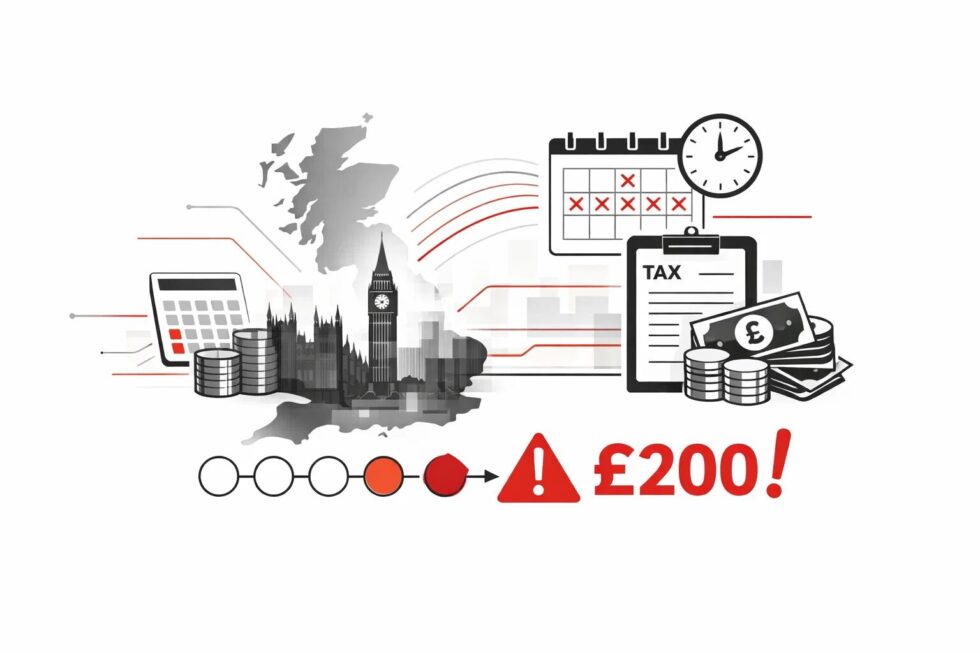
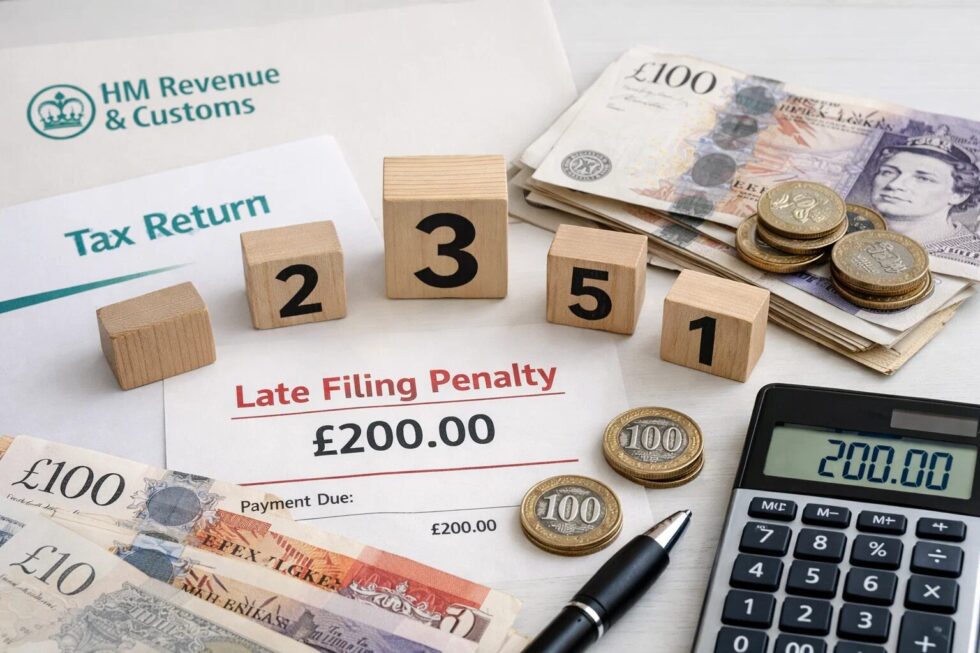
- Quarterly submissions: each late submission earns 1 penalty point. Four points (i.e., four missed quarterly deadlines) result in a £200 fine.
- Annual submissions: each late final declaration earns 1 penalty point, with two points triggering a £200 fine.
- Initial rollout: only affects taxpayers with income over £50,000; threshold will drop to £30,000 in 2027 and £20,000 in 2028.
- First-year adaptation: quarterly points do not apply in the first year to allow taxpayers to adjust.
HMRC states that the system is intended to be fairer and simpler, targeting those who repeatedly miss deadlines while being lenient toward occasional errors.
Comparison of old and new fines
| Submission type | Old system (£) | New system (penalty points) | Fine threshold |
|---|---|---|---|
| Quarterly update | Automatic fine not applied | 1 point per late submission | 4 points → £200 |
| Annual self-assessment | £100 after 31 Jan | 1 point per late submission | 2 points → £200 |
| Additional fines | £10/day after 3 months | Not applied under points system | N/A |
| Six-month penalty | £300 | Replaced by points system | N/A |
This table illustrates how HMRC intends to shift from immediate monetary penalties to a point-based approach, which focuses on persistent non-compliance.
Who will be affected first
The initial rollout targets:
- Sole traders with annual self-employment income above £50,000.
- Landlords with property income above £50,000.
In 2027, the threshold will decrease to £30,000, and in 2028 to £20,000. Initially, the scheme only affects taxpayers registered under Making Tax Digital.
HMRC also warned that 3.3 million people had not yet filed their self-assessment return as of the last week before the January 31 deadline, highlighting the scale of the potential impact.
Step-by-step guide for taxpayers
Taxpayers should take the following steps to avoid penalty points and fines:
- Check eligibility: Confirm whether you are subject to MTD and whether your income exceeds the threshold.
- Review deadlines: Track quarterly updates and end-of-year final declaration deadlines.
- Submit updates on time: Ensure quarterly submissions are filed by the specified date to avoid accumulating points.
- Monitor points: Keep a record of submitted updates; one late quarterly or annual submission equals one point.
- Seek HMRC guidance: Visit www.gov.uk/hmrc for detailed instructions and deadlines.
- Contact HMRC for issues: If unable to file, request advice or support from HMRC to prevent fines.
Expected timeline and rollout plan
- Pilot phase: 2025 – around 100 taxpayers under Making Tax Digital.
- Full rollout: April 2026 – sole traders and landlords over £50,000 income.
- Threshold adjustments: 2027 – £30,000; 2028 – £20,000.
- Quarterly points: not applied in the first year of the scheme.
HMRC expects the points-based system to streamline compliance and reduce administrative burden while ensuring persistent non-compliance is penalised.
Implications for taxpayers
For taxpayers, the new system means:
- More predictable fines: penalties are applied only after repeated non-compliance.
- Greater accountability: quarterly submissions increase frequency of reporting, requiring consistent record-keeping.
- Reduced immediate financial risk: occasional late submissions will not trigger automatic fines.
This approach encourages proactive engagement with tax obligations, particularly for those using Making Tax Digital software to track income and expenses.
Official guidance and resources
For accurate information, taxpayers should consult:
- HMRC official site: www.gov.uk/hmrc
- Making Tax Digital guidance: www.gov.uk/guidance/making-tax-digital
- Self-assessment deadlines and penalties: www.gov.uk/self-assessment-tax-returns/deadlines
HMRC advises regular review of updates, as failing to comply repeatedly will result in penalty points leading to fines.
Practical examples
- Example 1: A sole trader misses three quarterly updates but submits the annual declaration on time. Result: 3 points, no fine.
- Example 2: A landlord misses two annual submissions. Result: 2 points → £200 fine.
- Example 3: A taxpayer misses one quarterly update and one annual declaration. Result: 2 points → if thresholds for each type are reached separately, £200 fine applies for the annual.
This demonstrates how points accumulate differently for quarterly and annual submissions, and fines are applied only after set thresholds.
HMRC’s new penalty points system introduces a structured, points-based approach to tax compliance, replacing immediate monetary fines for occasional late submissions. It targets persistent non-compliance and provides a grace period for taxpayers to adjust, particularly in the first year of rollout. Sole traders and landlords with higher incomes will be the first affected, with thresholds gradually lowering to include more taxpayers by 2028. Proper planning, timely submissions, and regular monitoring of points are crucial to avoid fines.
Read about the life of Westminster and Pimlico district, London and the world. 24/7 news with fresh and useful updates on culture, business, technology and city life: What the Gold and Silver Prices Today UK Mean for Investors and Consumers